Kuceyeski A, Shah S, Dyke J P, Bickel S, Abdelnour F, Schiff N D, Voss H U, Raj A
Department of Radiology, Weill Cornell Medical College, 1300 York Ave., New York, NY 10065, United States; The Feil Family Brain and Mind Research Institute, Weill Cornell Medical College, 1300 York Ave., New York, NY 10065, United States.
Department of Neurology, Weill Cornell Medical College, 1300 York Ave., New York, NY 10065, United States.
Neuroimage Clin. 2016 Apr 14;11:635-647. doi: 10.1016/j.nicl.2016.04.006. eCollection 2016.
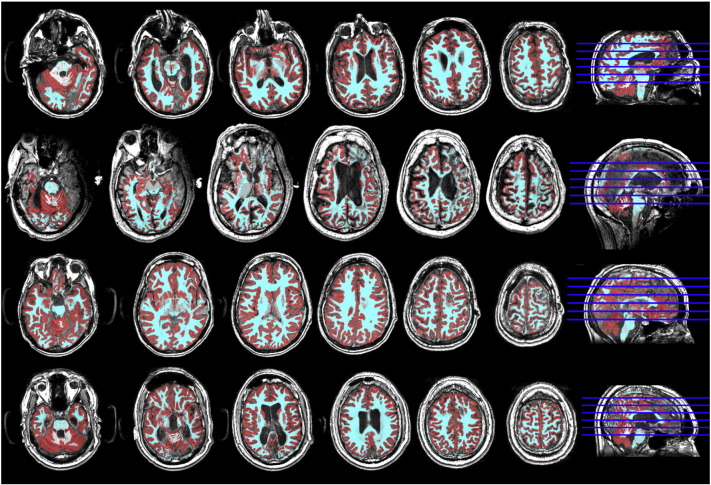
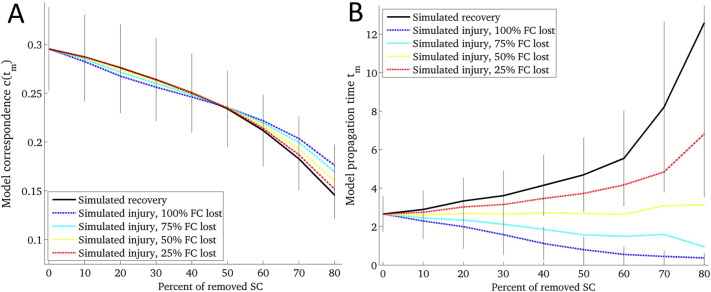
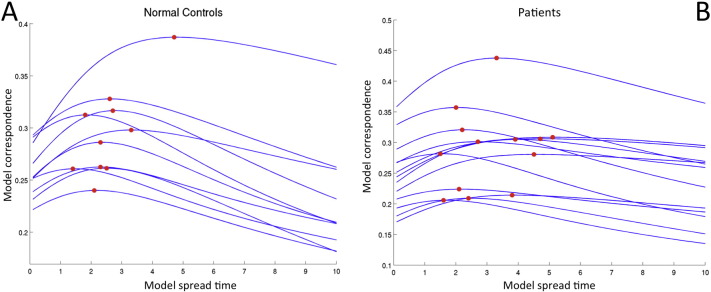
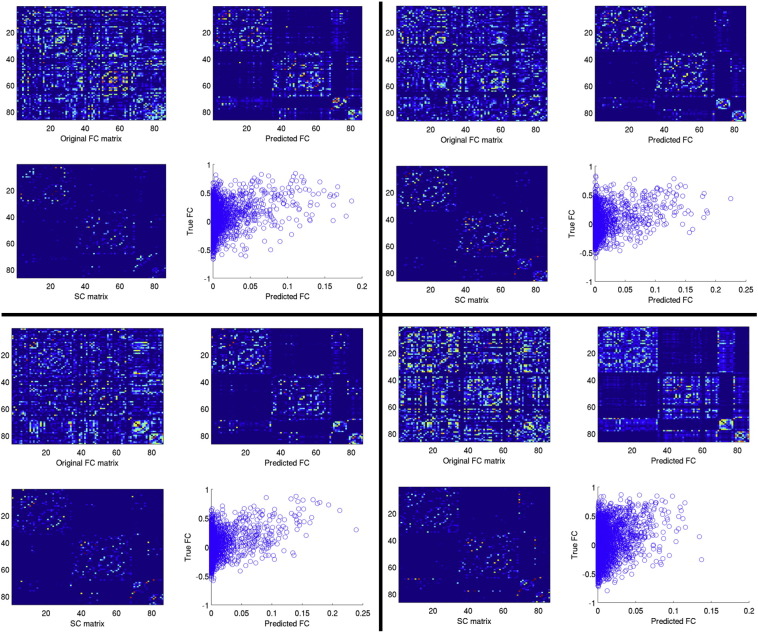
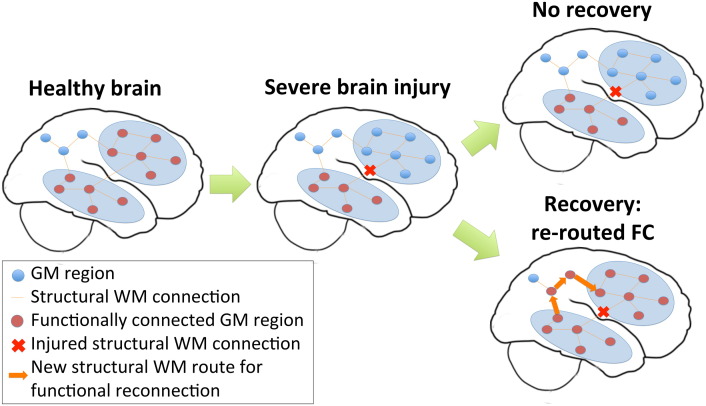
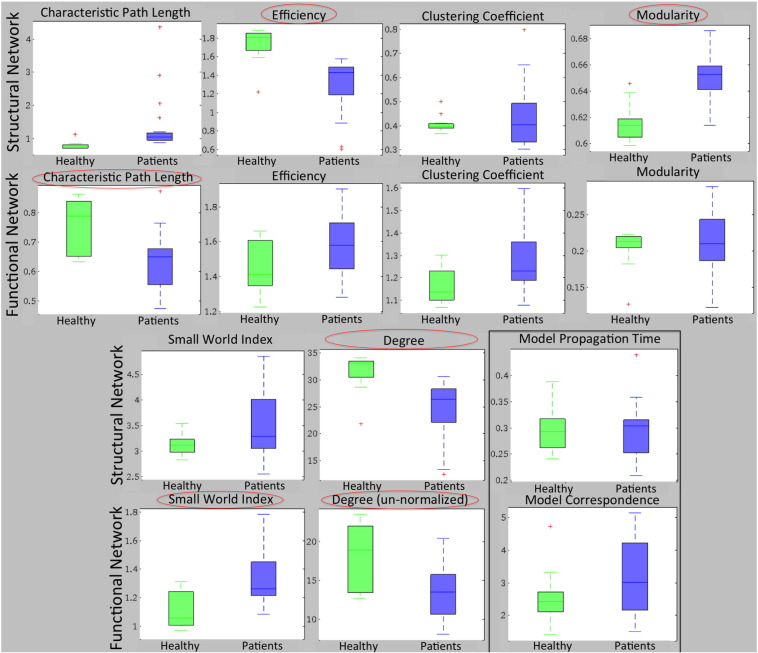
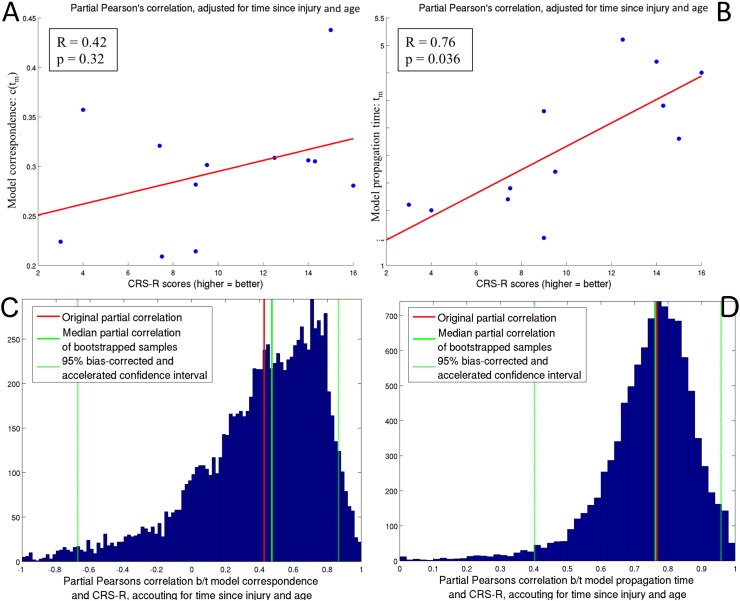
Following severe injuries that result in disorders of consciousness, recovery can occur over many months or years post-injury. While post-injury synaptogenesis, axonal sprouting and functional reorganization are known to occur, the network-level processes underlying recovery are poorly understood. Here, we test a network-level functional rerouting hypothesis in recovery of patients with disorders of consciousness following severe brain injury. This hypothesis states that the brain recovers from injury by restoring normal functional connections via alternate structural pathways that circumvent impaired white matter connections. The so-called network diffusion model, which relates an individual's structural and functional connectomes by assuming that functional activation diffuses along structural pathways, is used here to capture this functional rerouting. We jointly examined functional and structural connectomes extracted from MRIs of 12 healthy and 16 brain-injured subjects. Connectome properties were quantified via graph theoretic measures and network diffusion model parameters. While a few graph metrics showed groupwise differences, they did not correlate with patients' level of consciousness as measured by the Coma Recovery Scale - Revised. There was, however, a strong and significant partial Pearson's correlation (accounting for age and years post-injury) between level of consciousness and network diffusion model propagation time (r = 0.76, p < 0.05, corrected), i.e. the time functional activation spends traversing the structural network. We concluded that functional rerouting via alternate (and less efficient) pathways leads to increases in network diffusion model propagation time. Simulations of injury and recovery in healthy connectomes confirmed these results. This work establishes the feasibility for using the network diffusion model to capture network-level mechanisms in recovery of consciousness after severe brain injury.
在导致意识障碍的严重损伤后,恢复可能在受伤后的数月或数年中发生。虽然已知受伤后会发生突触形成、轴突发芽和功能重组,但对恢复背后的网络层面过程却知之甚少。在这里,我们测试了一个关于严重脑损伤后意识障碍患者恢复的网络层面功能重新布线假说。该假说指出,大脑通过经由绕过受损白质连接的替代结构路径恢复正常功能连接来从损伤中恢复。这里使用所谓的网络扩散模型,该模型通过假设功能激活沿着结构路径扩散来关联个体的结构和功能连接组,以捕捉这种功能重新布线。我们联合检查了从12名健康受试者和16名脑损伤受试者的磁共振成像(MRI)中提取的功能和结构连接组。通过图论测量和网络扩散模型参数对连接组特性进行了量化。虽然一些图指标显示出组间差异,但它们与通过昏迷恢复量表修订版测量的患者意识水平无关。然而,意识水平与网络扩散模型传播时间(即功能激活在结构网络中传播所花费的时间)之间存在强烈且显著的偏皮尔逊相关性(考虑年龄和受伤后的年数)(r = 0.76,p < 0.05,校正)。我们得出结论,通过替代(且效率较低)路径进行的功能重新布线会导致网络扩散模型传播时间增加。对健康连接组中的损伤和恢复进行的模拟证实了这些结果。这项工作确立了使用网络扩散模型来捕捉严重脑损伤后意识恢复中的网络层面机制的可行性。