Das T K, Abeyasinghe P M, Crone J S, Sosnowski A, Laureys S, Owen A M, Soddu A
Physics & Astronomy Department, Brain & Mind Institute, Western University, London, ON, Canada N6A 3K7.
Neuroscience Institute & Centre for Neurocognitive Research, Christian Doppler Klinik, Paracelsus Medical University, 5020 Salzburg, Austria ; Centre for Neurocognitive Research & Department of Psychology, University of Salzburg, 5020 Salzburg, Austria ; Department of Neurology, Christian Doppler Klinik, Paracelsus Medical University, 5020 Salzburg, Austria.
Biomed Res Int. 2014;2014:237898. doi: 10.1155/2014/237898. Epub 2014 Sep 4.
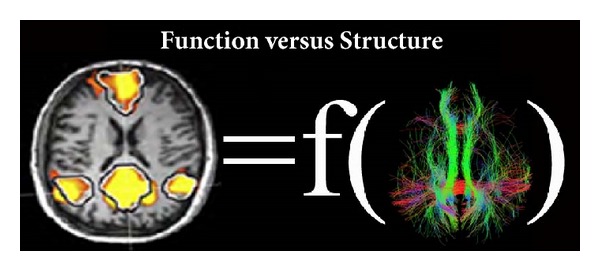
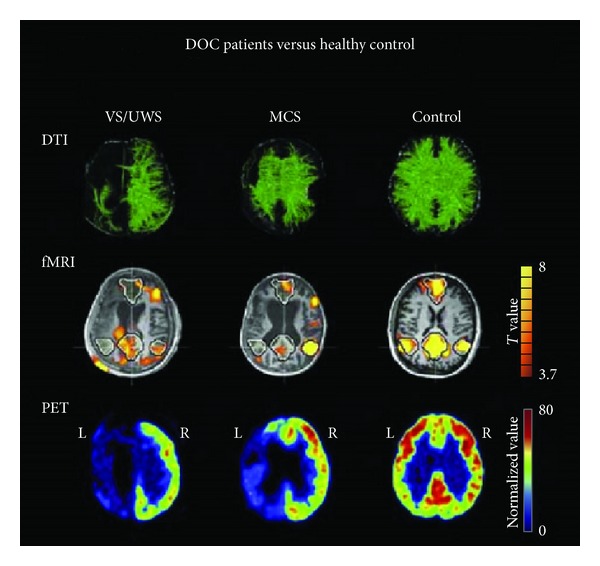
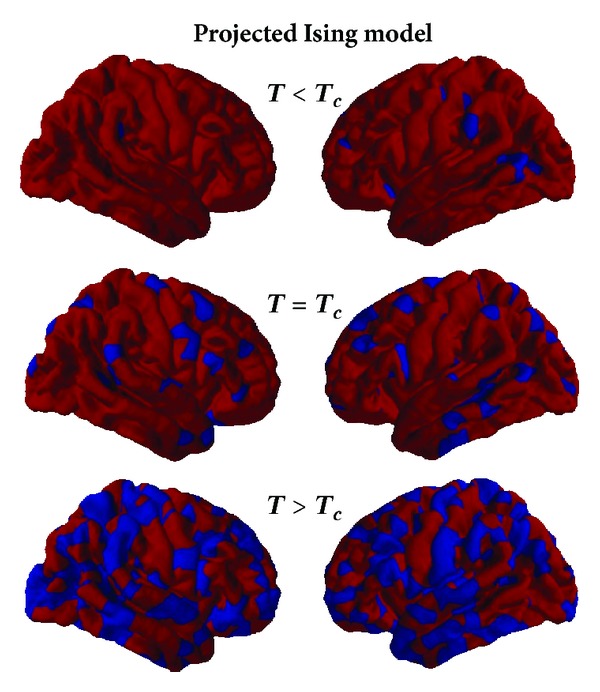
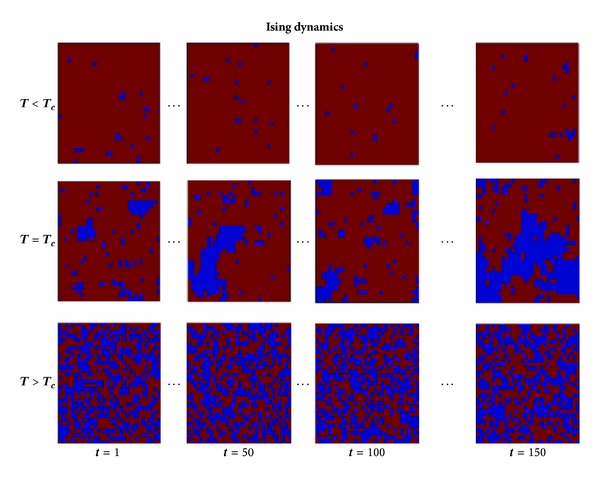
With the advent of neuroimaging techniques, it becomes feasible to explore the structure-function relationships in the brain. When the brain is not involved in any cognitive task or stimulated by any external output, it preserves important activities which follow well-defined spatial distribution patterns. Understanding the self-organization of the brain from its anatomical structure, it has been recently suggested to model the observed functional pattern from the structure of white matter fiber bundles. Different models which study synchronization (e.g., the Kuramoto model) or global dynamics (e.g., the Ising model) have shown success in capturing fundamental properties of the brain. In particular, these models can explain the competition between modularity and specialization and the need for integration in the brain. Graphing the functional and structural brain organization supports the model and can also highlight the strategy used to process and organize large amount of information traveling between the different modules. How the flow of information can be prevented or partially destroyed in pathological states, like in severe brain injured patients with disorders of consciousness or by pharmacological induction like in anaesthesia, will also help us to better understand how global or integrated behavior can emerge from local and modular interactions.
随着神经成像技术的出现,探索大脑中的结构-功能关系变得可行。当大脑不参与任何认知任务或未受到任何外部输出刺激时,它会保持遵循明确空间分布模式的重要活动。从大脑的解剖结构来理解其自组织,最近有人提出从白质纤维束的结构对观察到的功能模式进行建模。研究同步性(如Kuramoto模型)或全局动力学(如Ising模型)的不同模型已成功捕捉到大脑的基本特性。特别是,这些模型可以解释模块化与专业化之间的竞争以及大脑中整合的必要性。绘制大脑的功能和结构组织图支持该模型,还可以突出用于处理和组织在不同模块之间传输的大量信息的策略。在病理状态下,如在患有意识障碍的严重脑损伤患者中或通过麻醉等药物诱导,信息流动如何被阻止或部分破坏,这也将有助于我们更好地理解全局或整合行为是如何从局部和模块化相互作用中产生的。