Latifpour Mohammad, Gholipour Abolfazl, Damavandi Mohammad Sadegh
Department of Microbiology and Immunology, Cellular and Molecular Research Center, Shahrekord University of Medical Sciences, Shahrekord, IR Iran.
Jundishapur J Microbiol. 2016 Mar 12;9(3):e31179. doi: 10.5812/jjm.31179. eCollection 2016 Mar.
Klebsiella pneumoniae is a family member of Enterobacteriaceae. Isolates of K. pneumoniae produce enzymes that cause decomposition of third generation cephalosporins. These enzymes are known as extended-spectrum beta-lactamase (ESBL). Resistance of K. pneumoniae to beta-lactamase antibiotics is commonly mediated by beta-lactamase genes.
The aim of this study was to identify the ESBL produced by K. pneumoniae isolates that cause community-acquired and nosocomial urinary tract infections within a one-year period (2013 to 2014) in Kashani and Hajar university hospitals of Shahrekord, Iran.
From 2013 to 2014, 150 strains of K. pneumoniae isolate from two different populations with nosocomial and community-acquired infections were collected. The strains were then investigated by double disk synergism and multiplex polymerase chain reaction (PCR).
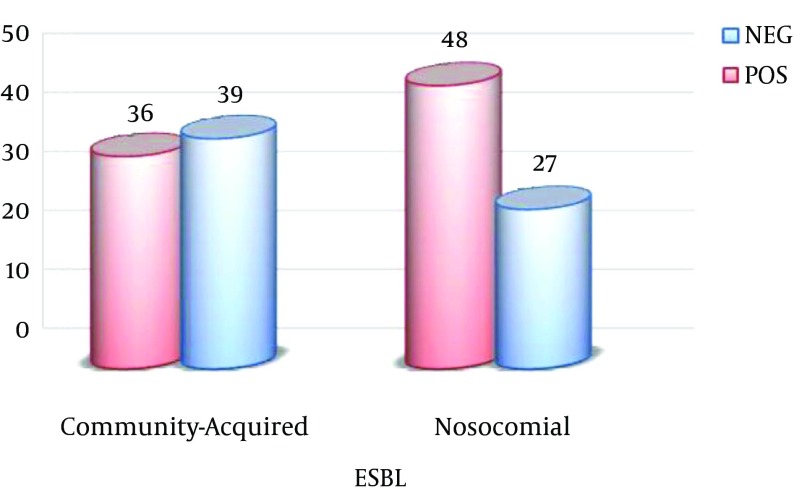
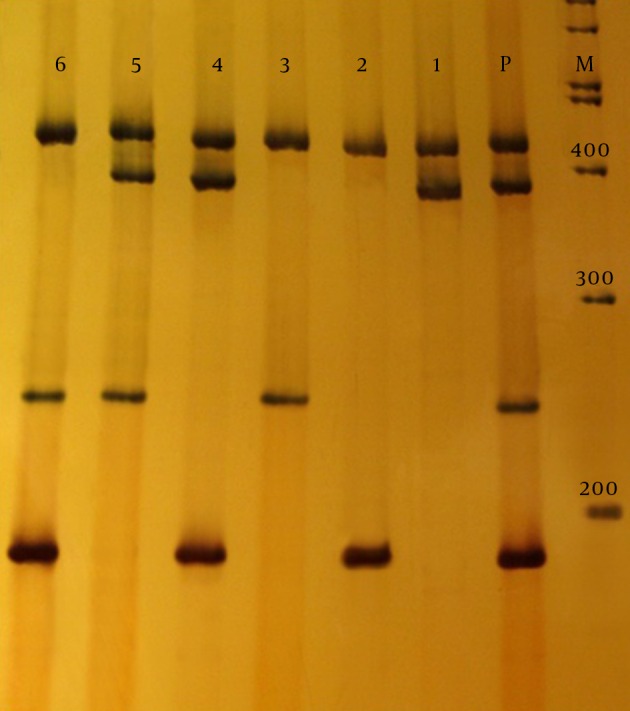
The study population of 150 patients with nosocomial and community-acquired infections were divided to two groups of 75 each. We found that 48 of the K. pneumoniae isolates in the patients with nosocomial infection and 39 isolates in those with community-acquired infections produced ESBL. The prevalence of TEM1, SHV1 and VEB1 in ESBL-producing isolates in nosocomial patients was 24%, 29.3% and 10.6%, and in community-acquired patients, 17.3%, 22.7% and 8%, respectively.
The prevalence of ESBL-producing K. pneumoniae isolate is of great concern; therefore, continuous investigation seems essential to monitor ESBL-producing bacteria in patients with nosocomial and community-acquired infections.
肺炎克雷伯菌是肠杆菌科的一员。肺炎克雷伯菌分离株产生的酶可导致第三代头孢菌素分解。这些酶被称为超广谱β-内酰胺酶(ESBL)。肺炎克雷伯菌对β-内酰胺酶抗生素的耐药性通常由β-内酰胺酶基因介导。
本研究的目的是鉴定2013年至2014年期间在伊朗设拉子的卡沙尼和哈贾尔大学医院引起社区获得性和医院获得性尿路感染的肺炎克雷伯菌分离株所产生的ESBL。
2013年至2014年,收集了来自医院获得性感染和社区获得性感染两个不同人群的150株肺炎克雷伯菌分离株。然后通过双纸片协同试验和多重聚合酶链反应(PCR)对这些菌株进行研究。
150例医院获得性感染和社区获得性感染患者的研究人群被分为两组,每组75例。我们发现,医院获得性感染患者中的48株肺炎克雷伯菌分离株和社区获得性感染患者中的39株分离株产生了ESBL。医院获得性感染患者中产生ESBL的分离株中TEM1、SHV1和VEB1的流行率分别为24%、29.3%和10.6%,社区获得性感染患者中分别为17.3%、22.7%和8%。
产ESBL肺炎克雷伯菌分离株的流行率令人高度关注;因此,持续调查对于监测医院获得性感染和社区获得性感染患者中产ESBL细菌似乎至关重要。