Daakour Sarah, Hajingabo Leon Juvenal, Kerselidou Despoina, Devresse Aurelie, Kettmann Richard, Simonis Nicolas, Dequiedt Franck, Twizere Jean-Claude
Laboratory of Protein Signaling and Interactions, Molecular Biology in Diseases Unit, GIGA-Research, University of Liège, Liège, B-4000, Belgium.
Laboratoire de Bioinformatique des Génomes et des Réseaux (BiGRe), Université Libre de Bruxelles (ULB), Bruxelles, B-1050, Belgium.
BMC Cancer. 2016 May 26;16:335. doi: 10.1186/s12885-016-2374-2.
Perturbed genotypes in cancer can now be identified by whole genome sequencing of large number of diverse tumor samples, and observed gene mutations can be used for prognosis and classification of cancer subtypes. Although mutations in a few causative genes are directly linked to key signaling pathways perturbation, a global understanding of how known cancer genes drive oncogenesis in human is difficult to assess.
We collected available information about mutated genes in Acute Lymphoblastic Leukemia (ALL). Validated human protein interactions (PPI) were collected from IntAct, HPRD and BioGRID interactomics databases, or obtained using yeast two-hybrid screening assay.
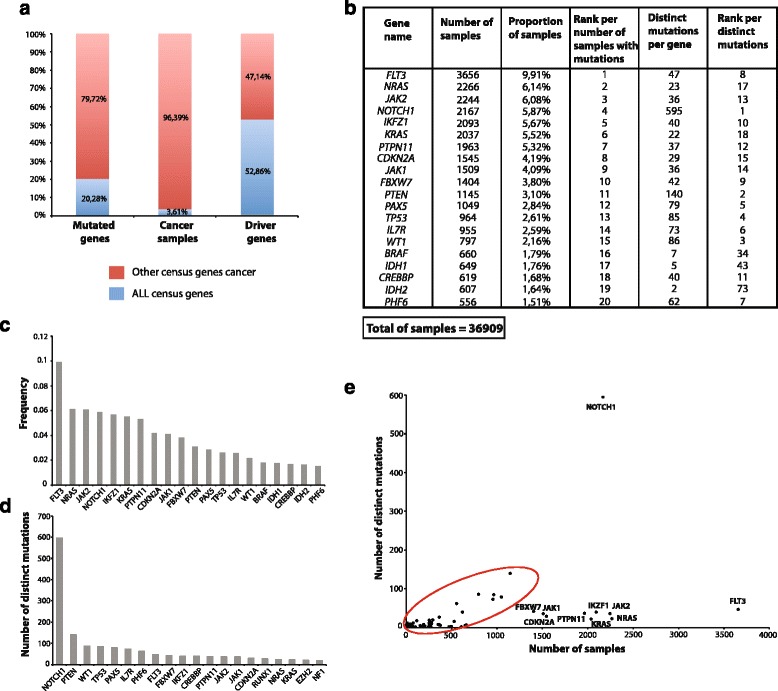
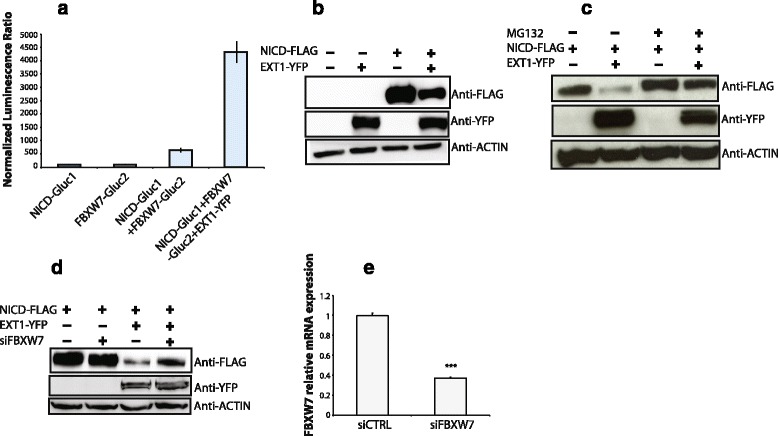
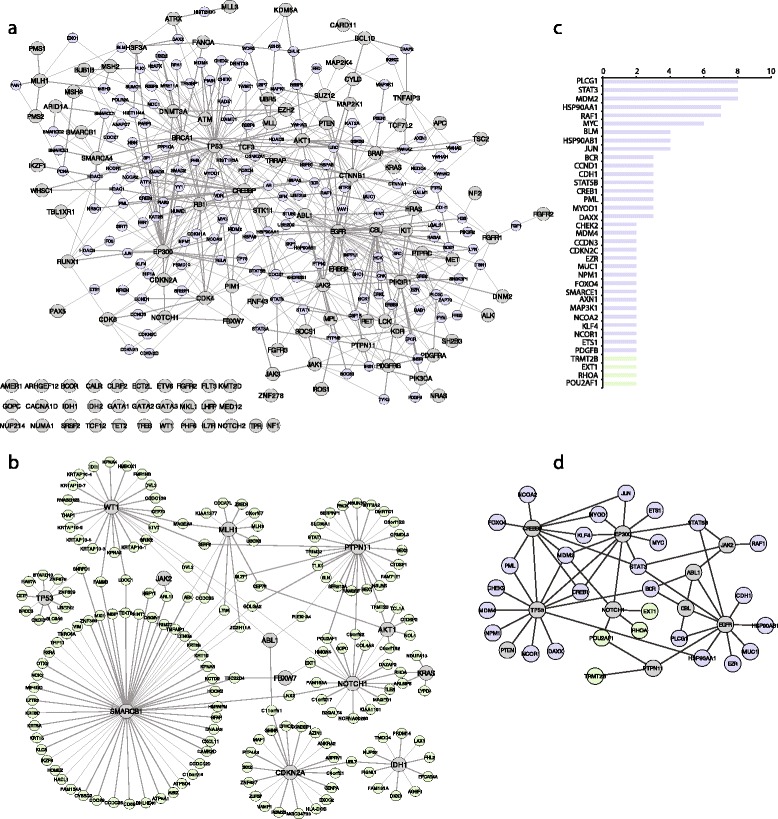
We have mapped interconnections between 116 cancer census gene products associated with ALL. Combining protein-protein interactions data and cancer-specific gene mutations information, we observed that 63 ALL-gene products are interconnected and identified 37 human proteins interacting with at least 2 ALL-gene products. We highlighted exclusive and coexistence genetic alterations in key signaling pathways including the PI3K/AKT and the NOTCH pathways. We then used different cell lines and reporter assay systems to validate the involvement of EXT1 in the Notch pathway.
We propose that novel ALL-gene candidates can be identified based on their functional association with well-known cancer genes. We identified EXT1, a gene not previously linked to ALL via mutations, as a common interactor of NOTCH1 and FBXW7 regulating the NOTCH pathway in an FBXW7-dependend manner.
如今,通过对大量不同肿瘤样本进行全基因组测序,可以识别癌症中受干扰的基因型,并且观察到的基因突变可用于癌症亚型的预后评估和分类。尽管少数致病基因的突变与关键信号通路的扰动直接相关,但要全面了解已知癌症基因如何驱动人类肿瘤发生却很难评估。
我们收集了有关急性淋巴细胞白血病(ALL)中突变基因的现有信息。从IntAct、HPRD和BioGRID相互作用组学数据库收集经过验证的人类蛋白质相互作用(PPI),或使用酵母双杂交筛选试验获得。
我们绘制了与ALL相关的116个癌症普查基因产物之间的相互联系。结合蛋白质-蛋白质相互作用数据和癌症特异性基因突变信息,我们观察到63个ALL基因产物相互连接,并鉴定出37种与至少2个ALL基因产物相互作用的人类蛋白质。我们强调了关键信号通路(包括PI3K/AKT和NOTCH通路)中的排他性和共存性基因改变。然后,我们使用不同的细胞系和报告基因检测系统来验证EXT1在Notch通路中的作用。
我们提出,可以基于新的ALL基因候选物与已知癌症基因的功能关联来识别它们。我们鉴定出EXT1,这是一个以前未通过突变与ALL相关联的基因,它是NOTCH1和FBXW7的共同相互作用因子,以FBXW7依赖的方式调节NOTCH通路。