Lu Rong, Wu Shaoping, Zhang Yong-Guo, Xia Yinglin, Zhou Zhongren, Kato Ikuko, Dong Hui, Bissonnette Marc, Sun Jun
Department of Biochemistry, Rush University, 1735 W Harrison St, Chicago, IL 60612. USA; Department of Medicine, University of Illinois at Chicago, Chicago, IL, 60612, USA.
Department of Biochemistry, Rush University, 1735 W Harrison St, Chicago, IL 60612. USA.
Neoplasia. 2016 May;18(5):307-316. doi: 10.1016/j.neo.2016.04.001.
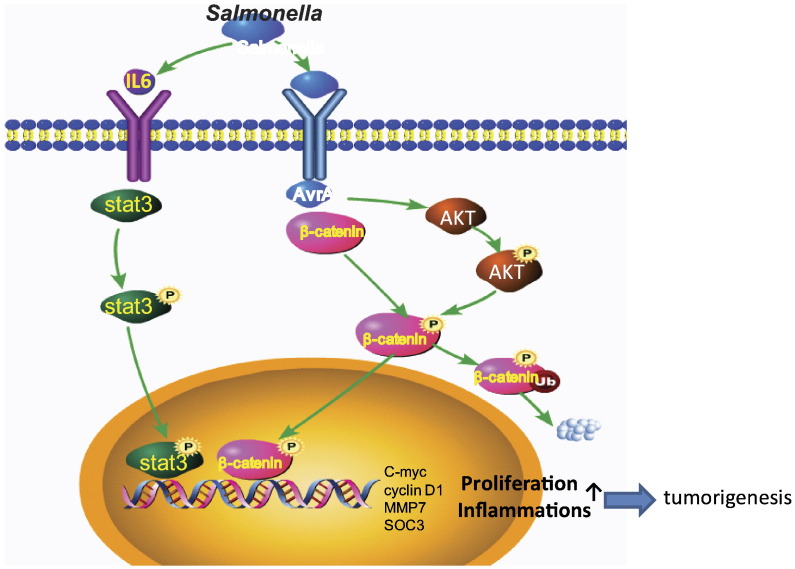
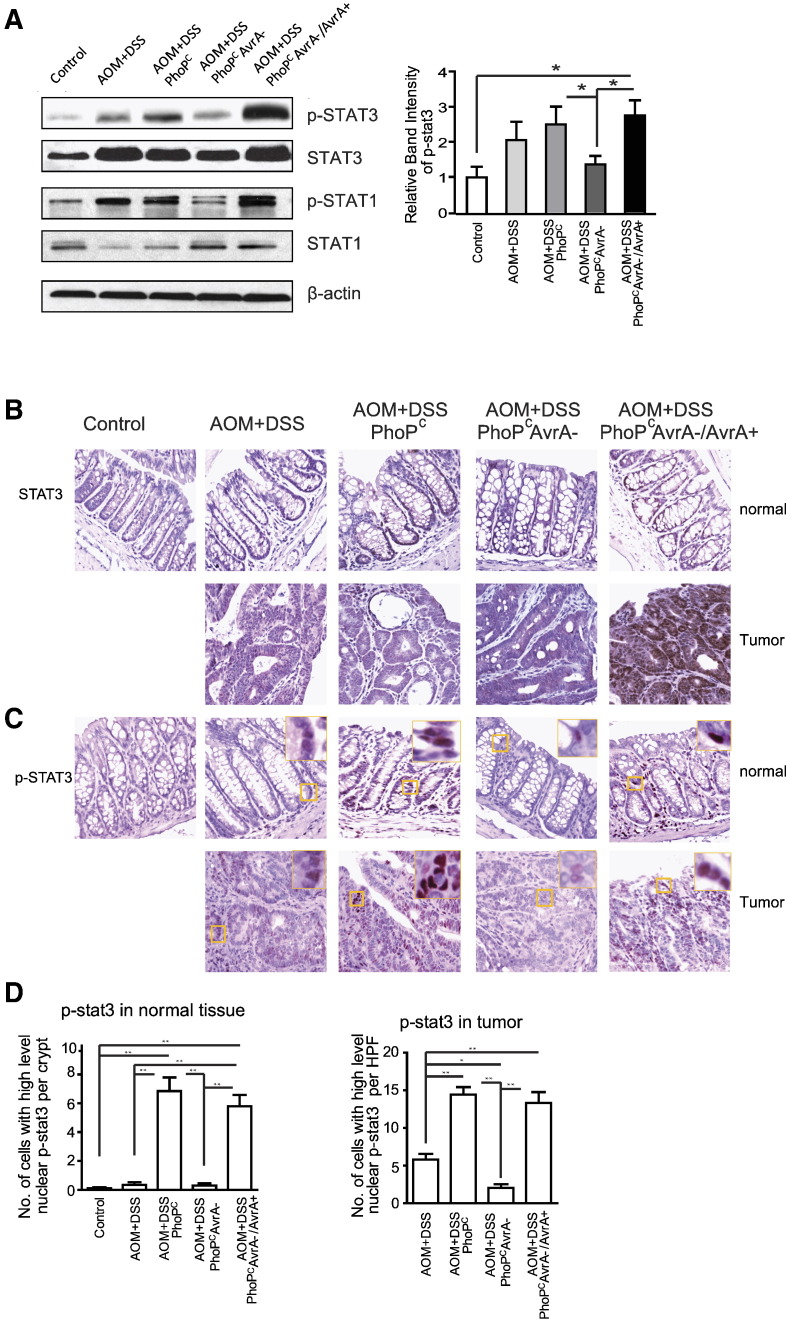
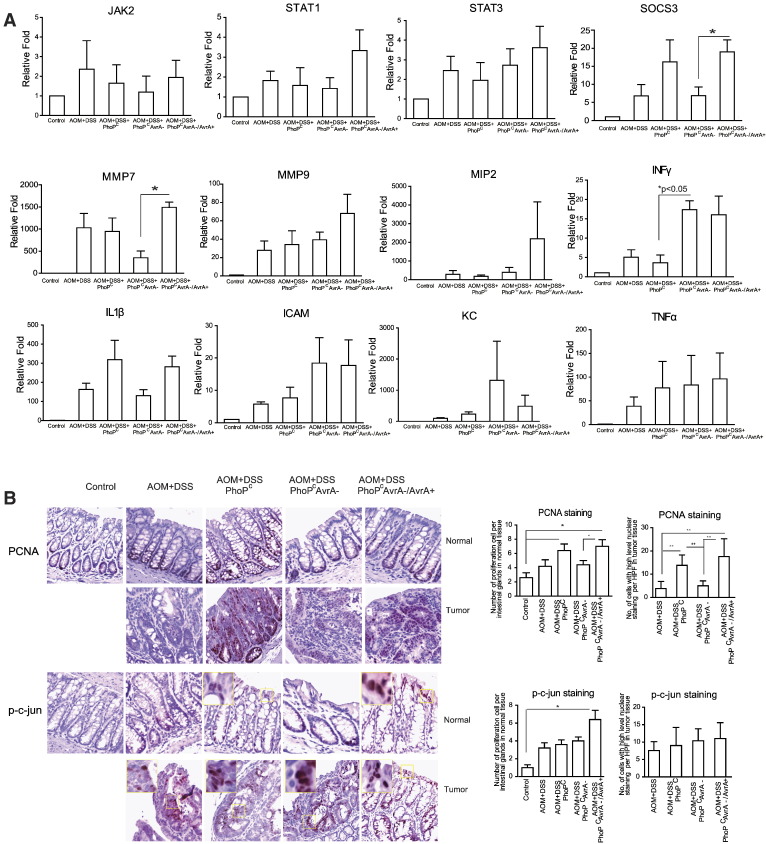
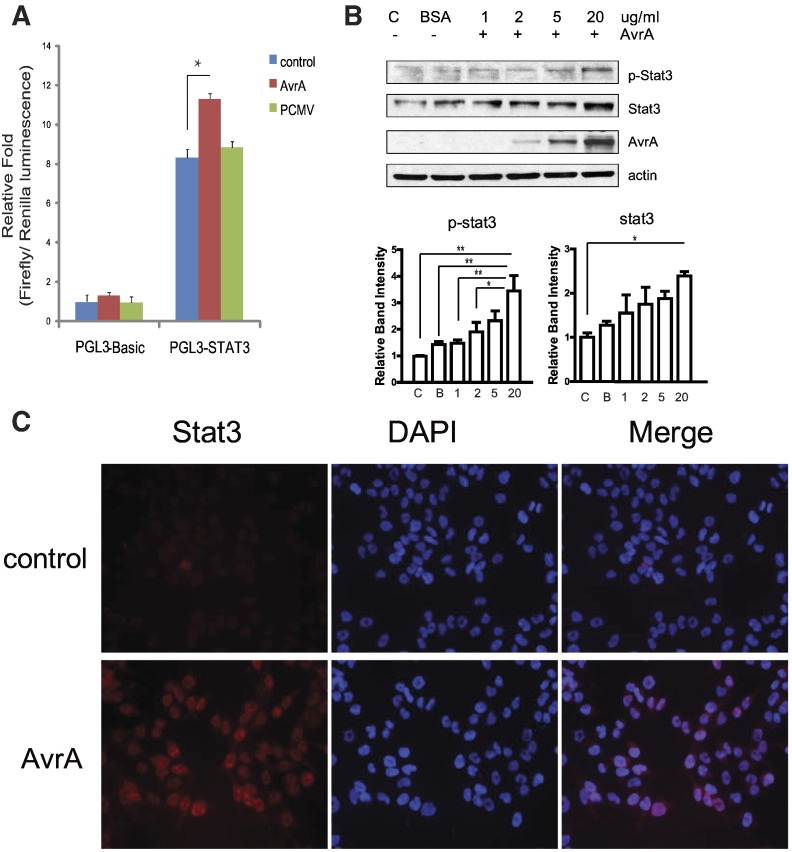
Salmonella infection in humans can become chronic, which leads to low-grade persistent inflammation. These chronic infections increase the risk of several gastrointestinal diseases, including cancer. Salmonella AvrA is a multifunctional protein that influences eukaryotic cell pathways by regulating ubiquitination and acetylation. In an animal model, we have demonstrated that infection with AvrA-expressing Salmonella induces beta-catenin signals and enhances colonic tumorigenesis. Beta-catenin signaling is a key player in intestinal proliferation and tumorigenesis. The relative contributions of AvrA-induced proliferation and inflammation on tumorigenesis, however, are unknown. STAT3 is activated in chronically inflamed intestines in human inflammatory bowel diseases and in colitis-associated colon cancer. In the current study, mice were colonized with Salmonella AvrA-sufficient or AvrA-deficient bacterial strains. Then, inflammation-associated colon cancer was induced through the use of azoxymethane/dextran sulfate sodium. We determined that AvrA-expressing bacteria activated the STAT3 pathway, which is predicted to enhance proliferation and promote tumorigenesis. Transcriptional activity of STAT3 and its target genes were upregulated by Salmonella expressing AvrA, thus promoting proliferation and intestinal tumorigenesis. Our findings provide new insights regarding a STAT3-dependent mechanism by which the specific bacterial product AvrA enhances the development of infection-associated colon cancer. These insights might suggest future biomarkers to risk assessment and early detection of infection-related cancer.
人类沙门氏菌感染可转为慢性,导致低度持续性炎症。这些慢性感染会增加包括癌症在内的几种胃肠道疾病的风险。沙门氏菌AvrA是一种多功能蛋白,通过调节泛素化和乙酰化来影响真核细胞通路。在动物模型中,我们已证明感染表达AvrA的沙门氏菌会诱导β-连环蛋白信号并增强结肠肿瘤发生。β-连环蛋白信号在肠道增殖和肿瘤发生中起关键作用。然而,AvrA诱导的增殖和炎症对肿瘤发生的相对贡献尚不清楚。在人类炎症性肠病和结肠炎相关结肠癌的慢性炎症肠道中,信号转导和转录激活因子3(STAT3)被激活。在本研究中,用表达AvrA或缺乏AvrA的沙门氏菌菌株对小鼠进行定殖。然后,通过使用氧化偶氮甲烷/葡聚糖硫酸钠诱导炎症相关结肠癌。我们确定表达AvrA的细菌激活了STAT3通路,预计该通路会增强增殖并促进肿瘤发生。表达AvrA的沙门氏菌上调了STAT3及其靶基因的转录活性,从而促进增殖和肠道肿瘤发生。我们的研究结果为特定细菌产物AvrA增强感染相关结肠癌发展的STAT3依赖性机制提供了新见解。这些见解可能为感染相关癌症的风险评估和早期检测提示未来的生物标志物。