Dhanasekaran Renumathy, Bandoh Salome, Roberts Lewis R
Division of Gastroenterology and Hepatology, Stanford University, Stanford, CA, USA.
Department of Medicine, Korle-Bu Teaching Hospital, Accra, Ghana.
F1000Res. 2016 May 12;5. doi: 10.12688/f1000research.6946.1. eCollection 2016.
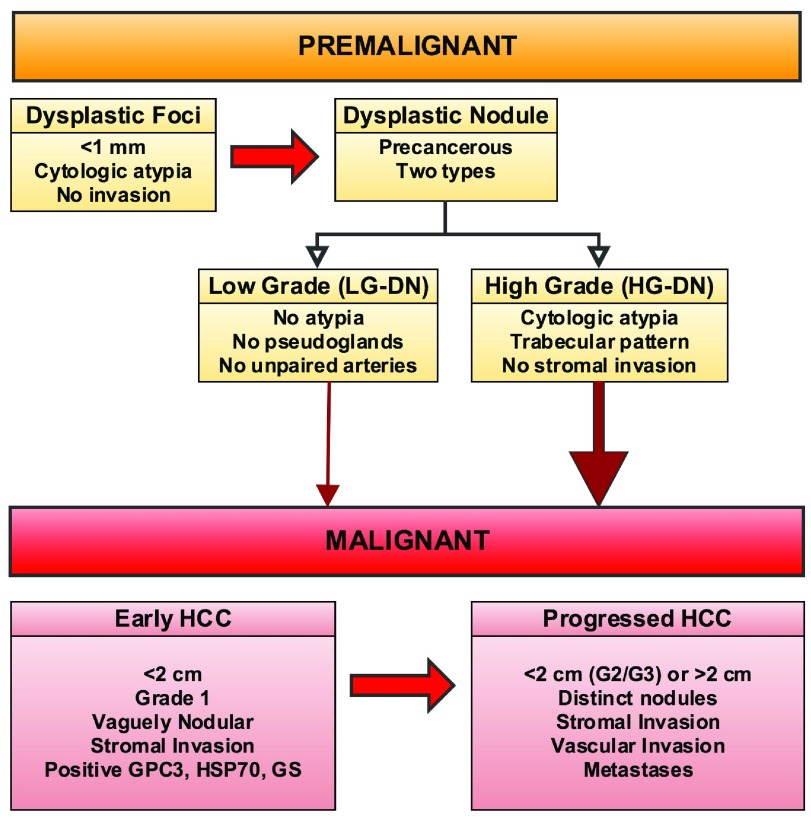
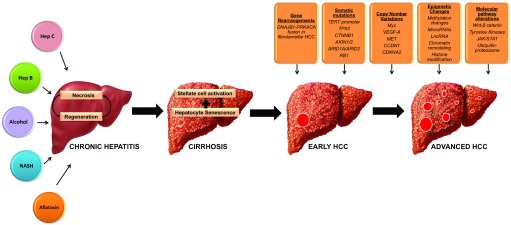
Hepatocellular carcinoma (HCC) is a leading cause of cancer mortality and has an increasing incidence worldwide. HCC can be induced by multiple etiologies, is influenced by many risk factors, and has a complex pathogenesis. Furthermore, HCCs exhibit substantial heterogeneity, which compounds the difficulties in developing effective therapies against this highly lethal cancer. With advances in cancer biology and molecular and genetic profiling, a number of different mechanisms involved in the development and progression of HCC have been identified. Despite the advances in this area, the molecular pathogenesis of hepatocellular carcinoma is still not completely understood. This review aims to elaborate our current understanding of the most relevant genetic alterations and molecular pathways involved in the development and progression of HCC, and anticipate the potential impact of future advances on therapeutic drug development.
肝细胞癌(HCC)是导致癌症死亡的主要原因,且在全球范围内发病率不断上升。HCC可由多种病因诱发,受多种危险因素影响,发病机制复杂。此外,HCC表现出显著的异质性,这使得开发针对这种高致死性癌症的有效疗法变得更加困难。随着癌症生物学以及分子和基因谱分析技术的进步,已确定了一些参与HCC发生和发展的不同机制。尽管该领域取得了进展,但肝细胞癌的分子发病机制仍未完全明确。本综述旨在阐述我们目前对参与HCC发生和发展的最相关基因改变和分子途径的理解,并预测未来进展对治疗药物开发的潜在影响。