Weegman Mitch D, Bearhop Stuart, Hilton Geoff M, Walsh Alyn, Fox Anthony David
Centre for Ecology and Conservation, University of Exeter, Cornwall Campus, Penryn, Cornwall, United Kingdom; Wildfowl & Wetlands Trust, Slimbridge, Gloucestershire, United Kingdom.
Centre for Ecology and Conservation, University of Exeter, Cornwall Campus , Penryn, Cornwall , United Kingdom.
PeerJ. 2016 May 24;4:e2044. doi: 10.7717/peerj.2044. eCollection 2016.
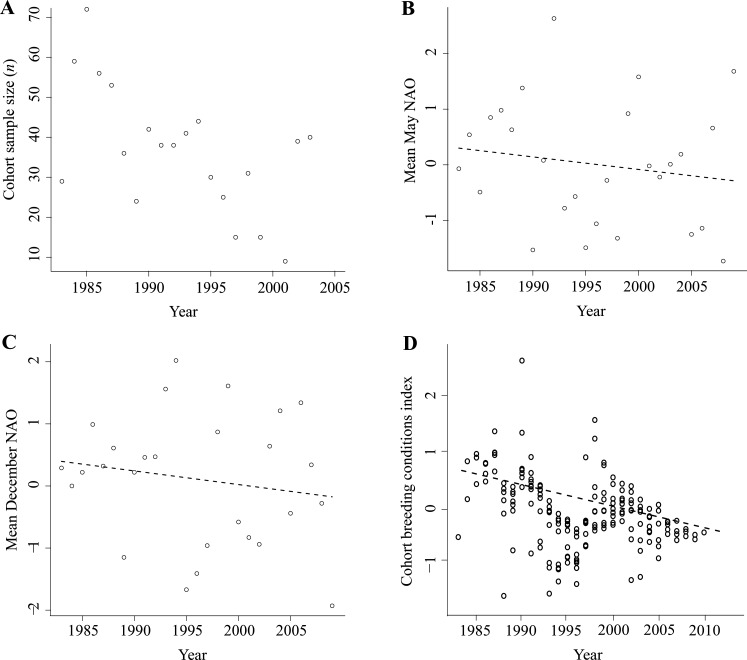
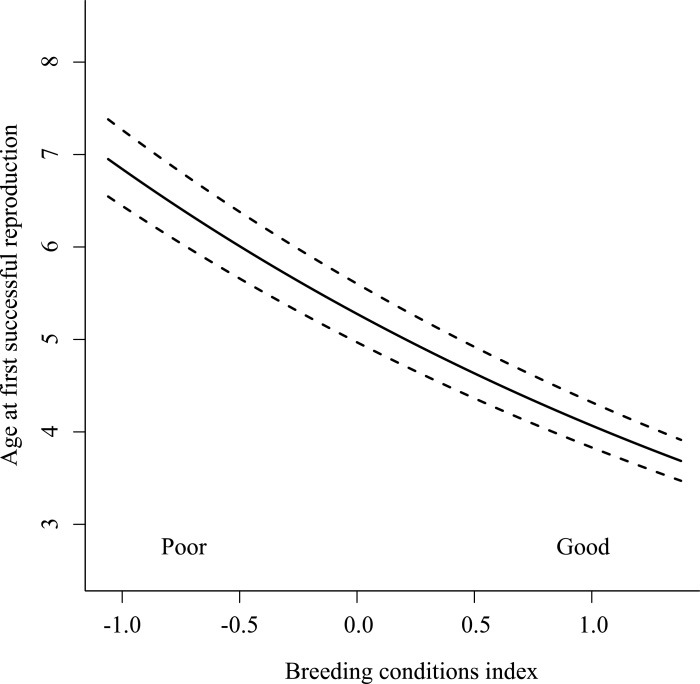
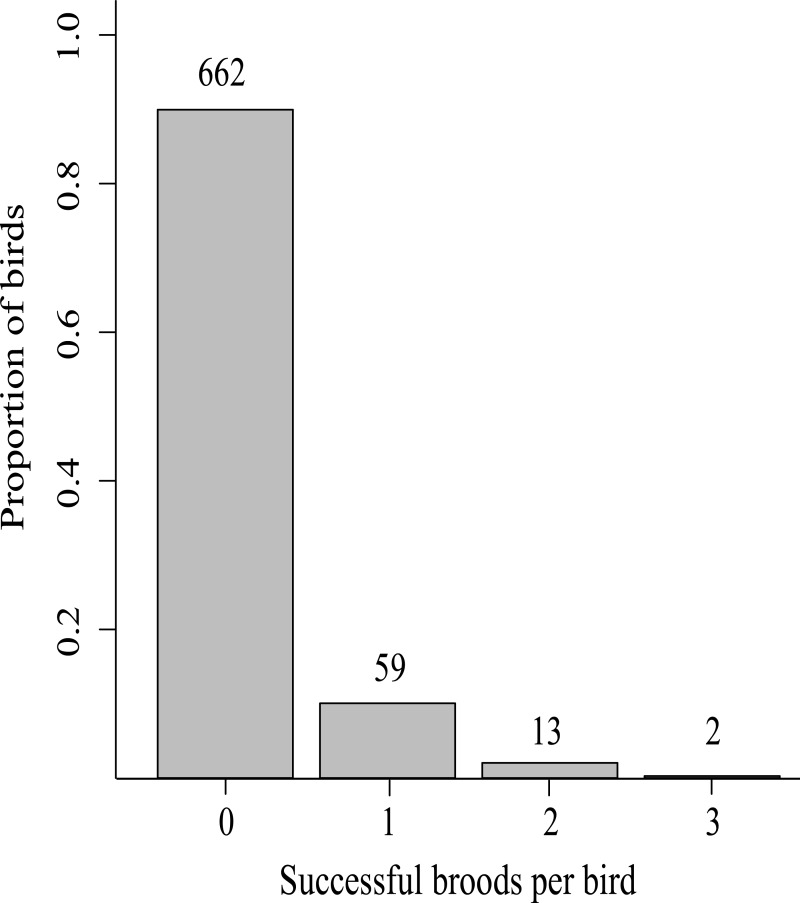
Variation in fitness between individuals in populations may be attributed to differing environmental conditions experienced among birth (or hatch) years (i.e., between cohorts). In this study, we tested whether cohort fitness could also be explained by environmental conditions experienced in years post-hatch, using 736 lifelong resighting histories of Greenland white-fronted geese (Anser albifrons flavirostris) marked in their first winter. Specifically, we tested whether variation in age at first successful reproduction, the size of the first successful brood and the proportion of successful breeders by cohort was explained by environmental conditions experienced on breeding areas in west Greenland during hatch year, those in adulthood prior to successful reproduction and those in the year of successful reproduction, using North Atlantic Oscillation indices as proxies for environmental conditions during these periods. Fifty-nine (8%) of all marked birds reproduced successfully (i.e., were observed on wintering areas with young) only once in their lifetime and 15 (2%) reproduced successfully twice or thrice. Variation in age at first successful reproduction was explained by the environmental conditions experienced during adulthood in the years prior to successful reproduction. Birds bred earliest (mean age 4) when environmental conditions were 'good' prior to the year of successful reproduction. Conversely, birds successfully reproduced at older ages (mean age 7) if they experienced adverse conditions prior to the year of successful reproduction. Hatch year conditions and an interaction between those experienced prior to and during the year of successful reproduction explained less (marginally significant) variation in age at first successful reproduction. Environmental conditions did not explain variation in the size of the first successful brood or the proportion of successful breeders. These findings show that conditions during adulthood prior to the year of successful reproduction are most important in determining the age at first successful reproduction in Greenland white-fronted geese. Very few birds bred successfully at all (most only once), which suggests that May environmental conditions on breeding areas have cohort effects that influence lifetime (and not just annual) reproductive success.
种群中个体间的适合度差异可能归因于出生(或孵化)年份(即不同队列之间)所经历的不同环境条件。在本研究中,我们利用736只在首个冬季被标记的格陵兰白额雁(Anser albifrons flavirostris)的终生重捕记录,测试了孵化后年份所经历的环境条件是否也能解释队列适合度。具体而言,我们使用北大西洋涛动指数作为这些时期环境条件的代理指标,测试了首个成功繁殖的年龄、首个成功育雏的规模以及按队列划分的成功繁殖者比例的差异,是否能由格陵兰西部繁殖地在孵化年份、成功繁殖前成年期以及成功繁殖年份所经历的环境条件来解释。所有被标记的鸟类中有59只(8%)一生中仅成功繁殖过一次(即在越冬地被观察到带着幼鸟),15只(2%)成功繁殖过两次或三次。首个成功繁殖的年龄差异可由成功繁殖前成年期所经历的环境条件来解释。在成功繁殖年份之前环境条件“良好”时,鸟类最早开始繁殖(平均年龄4岁)。相反,如果在成功繁殖年份之前经历不利条件,鸟类会在较晚年龄成功繁殖(平均年龄7岁)。孵化年份条件以及成功繁殖前和繁殖年份所经历条件之间的相互作用,对首个成功繁殖年龄差异的解释较少(边缘显著)。环境条件无法解释首个成功育雏规模或成功繁殖者比例的差异。这些发现表明,在成功繁殖年份之前的成年期条件对于确定格陵兰白额雁首个成功繁殖的年龄最为重要。很少有鸟类能成功繁殖(大多数仅一次),这表明繁殖地5月的环境条件具有队列效应,会影响终生(而非仅仅年度)繁殖成功率。