Wilkins Jordan, Zheng Yi-Min, Yu Jingyou, Liang Chen, Liu Shan-Lu
Department of Molecular Microbiology and Immunology, Bond Life Sciences Center, University of Missouri, Columbia, Missouri, United States of America.
Lady Davis Institute, Jewish General Hospital, Montreal, Quebec, Canada.
PLoS One. 2016 Jun 3;11(6):e0156739. doi: 10.1371/journal.pone.0156739. eCollection 2016.
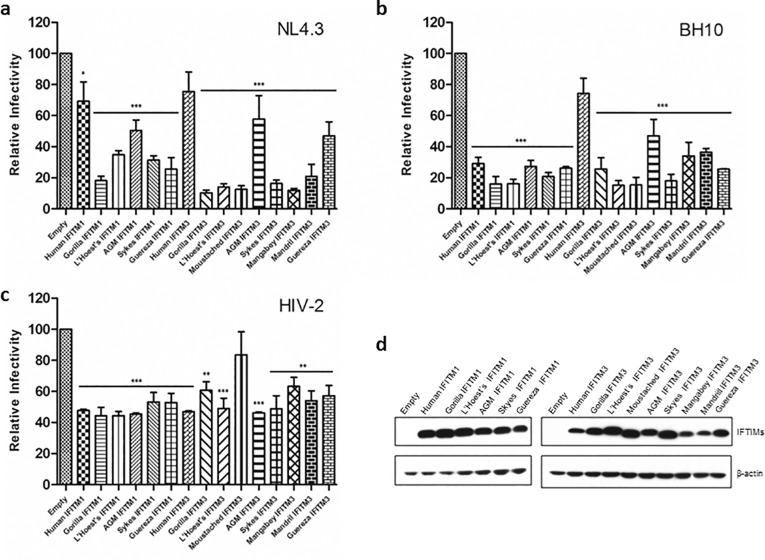
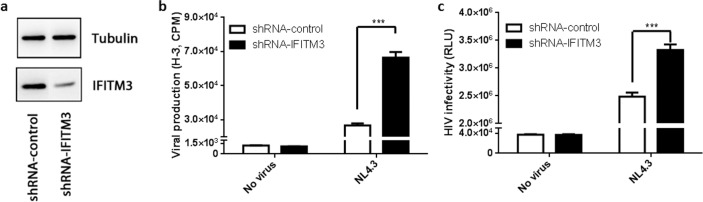
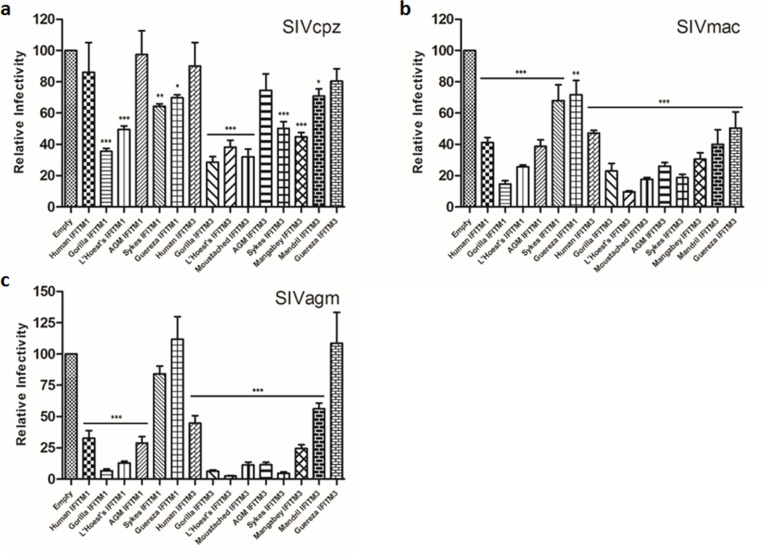
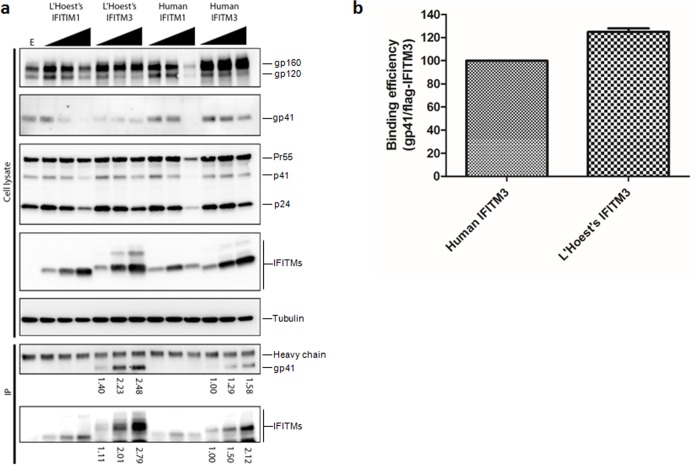
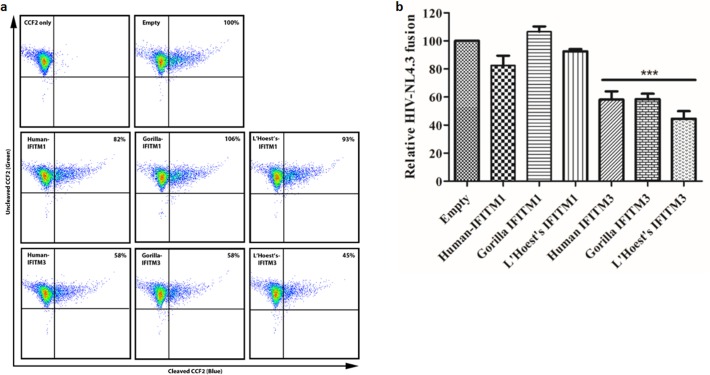
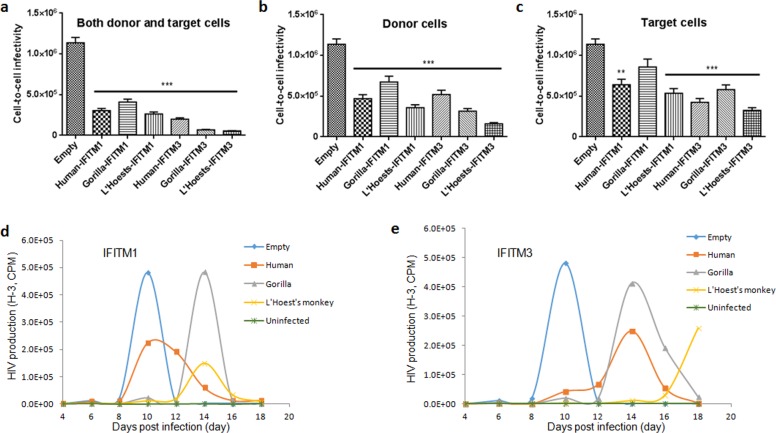
Interferon-induced transmembrane (IFITM) proteins are potent antiviral factors shown to restrict the infection of many enveloped viruses, including HIV. Here we report cloning and characterization of a panel of nonhuman primate IFITMs. We show that, similar to human IFITM, nonhuman primate IFITM proteins inhibit HIV and other primate lentiviruses. While some nonhuman primate IFITM proteins are more potent than human counterparts to inhibit HIV-1, they are generally not effective against HIV-2 similar to that of human IFITMs. Notably, depending on SIV strains and also IFITM species tested, nonhuman primate IFITM proteins exhibit distinct activities against SIVs; no correlation was found to support the notion that IFITM proteins are most active in non-natural primate hosts. Consistent with our recent findings for human IFITMs, nonhuman primate IFITM proteins interact with HIV-1 Env and strongly act in viral producer cells to impair viral infectivity and block cell-to-cell transmission. Accordingly, knockdown of primate IFITM3 increases HIV-1 replication in nohuman primate cells. Interestingly, analysis of DNA sequences of human and nonhuman primate IFITMs suggest that IFITM proteins have been undergoing purifying selection, rather than positive selection typical for cellular restriction factors. Overall, our study reveals some new and unexpected features of IFITMs in restricting primate lentiviruses, which enhances our understanding of virus-host interaction and AIDS pathogenesis.
干扰素诱导跨膜(IFITM)蛋白是一种有效的抗病毒因子,已被证明可限制包括HIV在内的多种包膜病毒的感染。在此,我们报告了一组非人灵长类IFITM的克隆和特性分析。我们发现,与人类IFITM相似,非人灵长类IFITM蛋白可抑制HIV和其他灵长类慢病毒。虽然一些非人灵长类IFITM蛋白在抑制HIV-1方面比人类对应蛋白更有效,但它们通常对HIV-2无效,这与人类IFITM的情况类似。值得注意的是,根据所测试的SIV毒株以及IFITM种类的不同,非人灵长类IFITM蛋白对SIV表现出不同的活性;未发现相关性支持IFITM蛋白在非天然灵长类宿主中最具活性这一观点。与我们最近对人类IFITM的研究结果一致,非人灵长类IFITM蛋白与HIV-1 Env相互作用,并在病毒产生细胞中强烈发挥作用,损害病毒感染性并阻断细胞间传播。因此,敲低灵长类IFITM3会增加HIV-1在非人灵长类细胞中的复制。有趣的是,对人类和非人灵长类IFITM的DNA序列分析表明,IFITM蛋白一直在经历纯化选择,而不是细胞限制因子典型的正选择。总体而言,我们的研究揭示了IFITM在限制灵长类慢病毒方面的一些新的和意想不到的特征,这增强了我们对病毒-宿主相互作用和艾滋病发病机制的理解。