Institut für Physik, Humboldt-Universität zu Berlin , Brook-Taylor-Straße 6, 12489 Berlin, Germany.
ACS Cent Sci. 2016 May 25;2(5):309-15. doi: 10.1021/acscentsci.6b00073. Epub 2016 Apr 29.
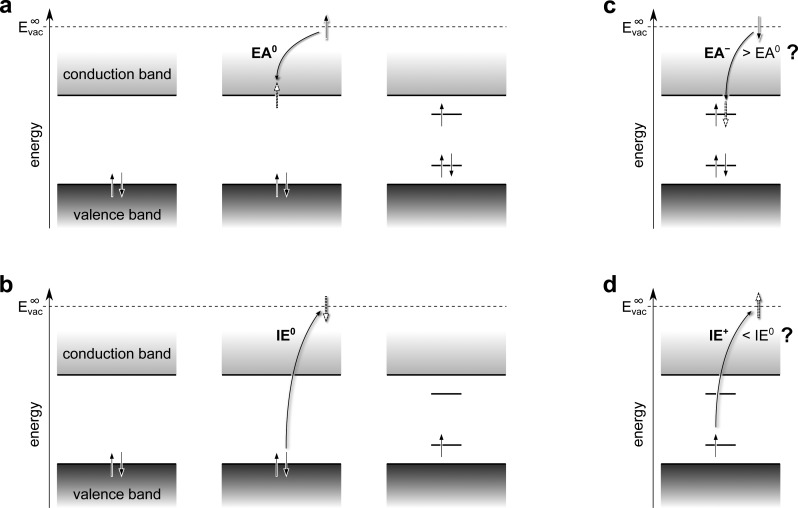
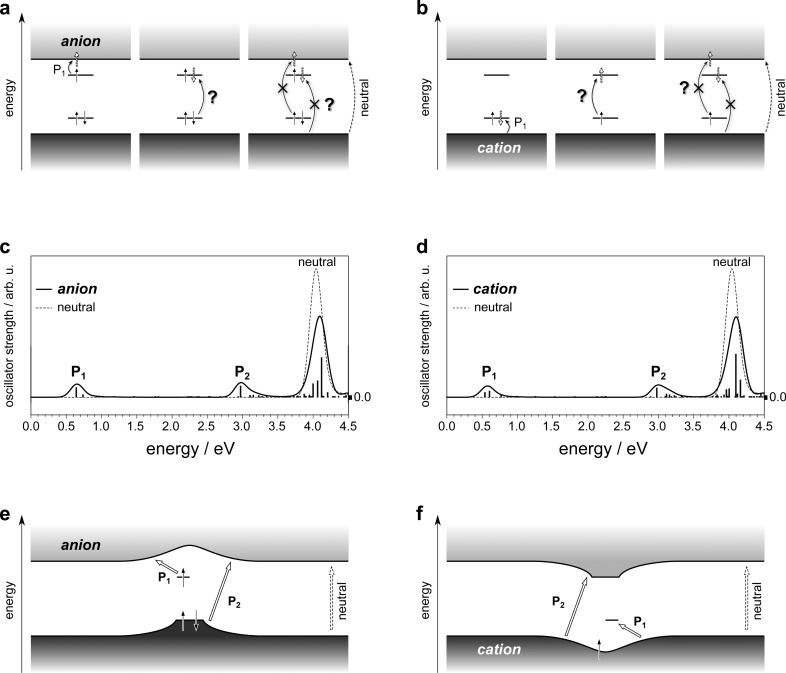
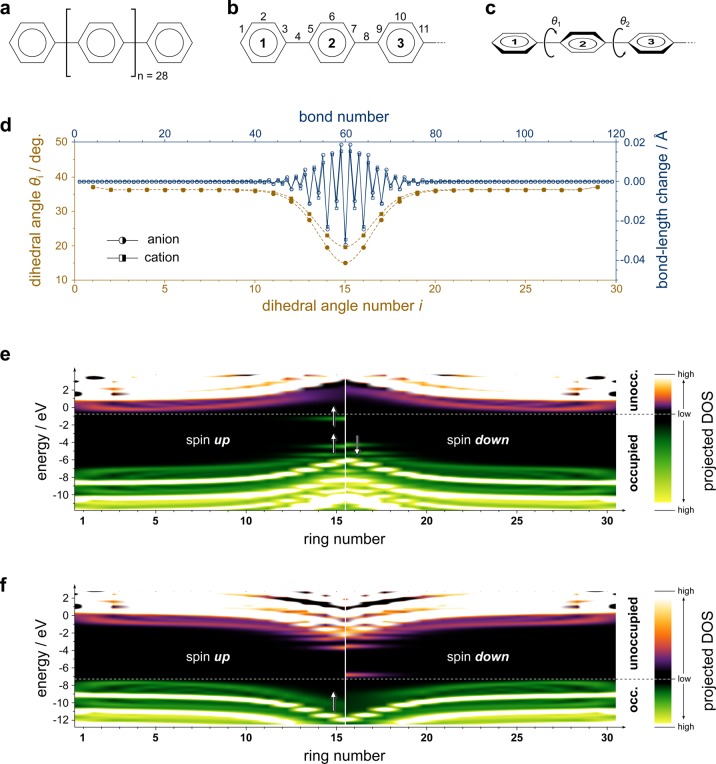
Electrical charge flowing through organic semiconductors drives many of today's mobile phone displays and television screens, suggesting an internally consistent model of charge-carrier properties in these materials to have manifested. In conjugated polymers, charges give rise to additional absorption of light at wavelengths longer than those absorbed by the electrically neutral species. These characteristic absorption bands are universally being related to the emergence of localized energy levels shifted into the forbidden gap of organic semiconductors due to local relaxation of the molecular geometry. However, the traditional view on these energy levels and their occupation is incompatible with expected changes in electron removal and addition energies upon charging molecules. Here, I demonstrate that local Coulomb repulsion, as captured by nonempirically optimized electronic-structure calculations, restores compatibility and suggests a different origin of the charge-induced optical transitions. These results challenge a widely accepted and long-established picture, but an improved understanding of charge carriers in molecular materials promises a more targeted development of organic and hybrid organic/inorganic (opto-)electronic devices.
电流通过有机半导体流动,驱动了当今许多手机显示屏和电视机屏幕,这表明这些材料中的载流子特性已经表现出了内在一致的模型。在共轭聚合物中,电荷会导致对波长比电中性物质吸收的更长的光的额外吸收。这些特征吸收带普遍与由于分子几何结构的局部弛豫而导致的局部能级出现在有机半导体的禁带中有关。然而,传统上对这些能级及其占据的看法与分子充电时电子去除和添加能量的预期变化不兼容。在这里,我证明了局部库仑排斥作用(由非经验优化的电子结构计算捕捉)恢复了兼容性,并提出了电荷诱导光学跃迁的不同起源。这些结果挑战了一个被广泛接受和长期确立的观点,但对分子材料中载流子的更好理解有望更有针对性地开发有机和混合有机/无机(光电)电子器件。