Sridhar Sushmita, Steele-Mortimer Olivia
Laboratory of Bacteriology, Rocky Mountain Labs, National Institutes of Allergy and Infectious Diseases, National Institutes of Health, Hamilton, Montana, United States of America.
PLoS One. 2016 Jun 9;11(6):e0157043. doi: 10.1371/journal.pone.0157043. eCollection 2016.
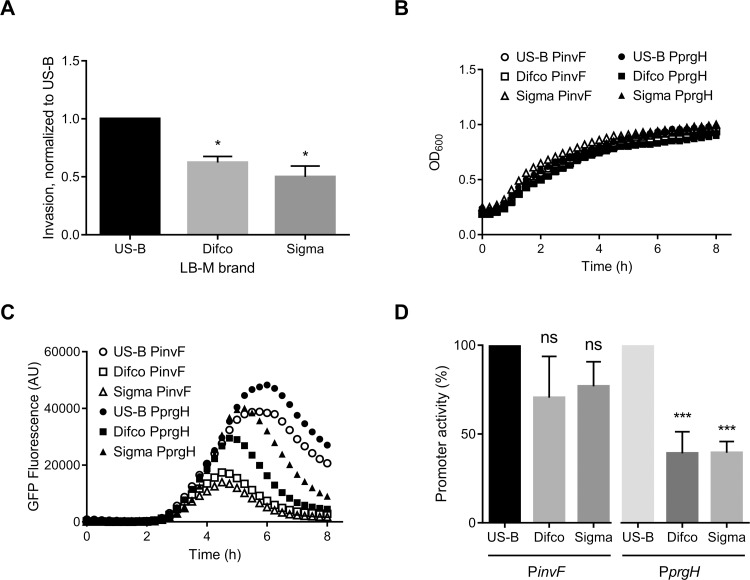
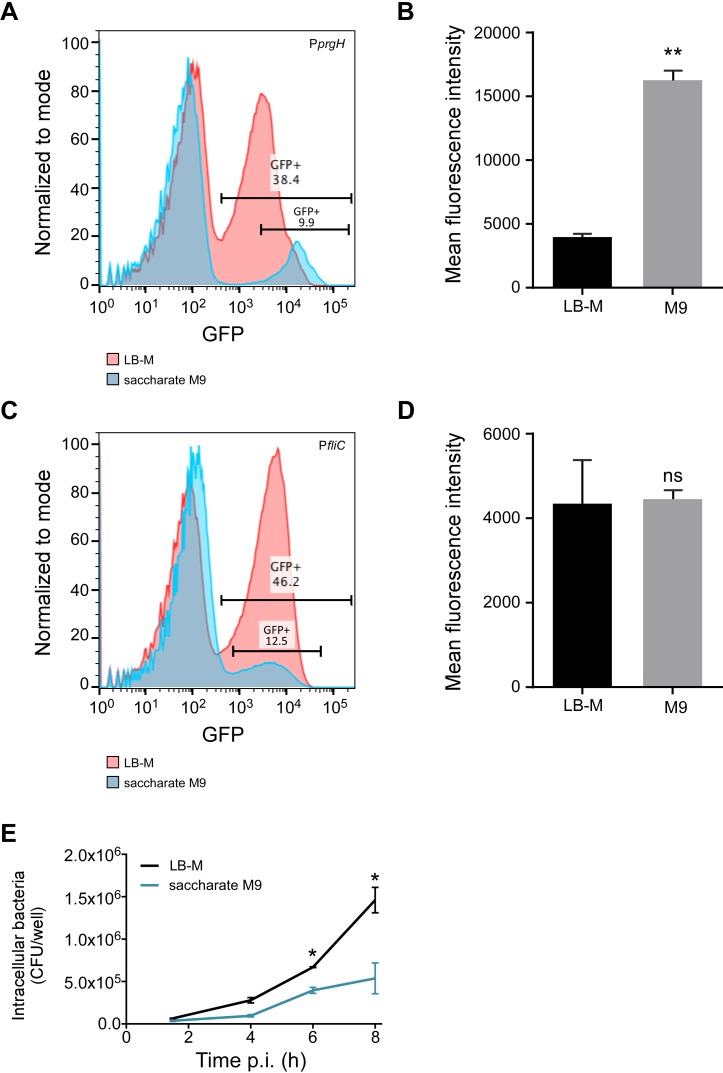
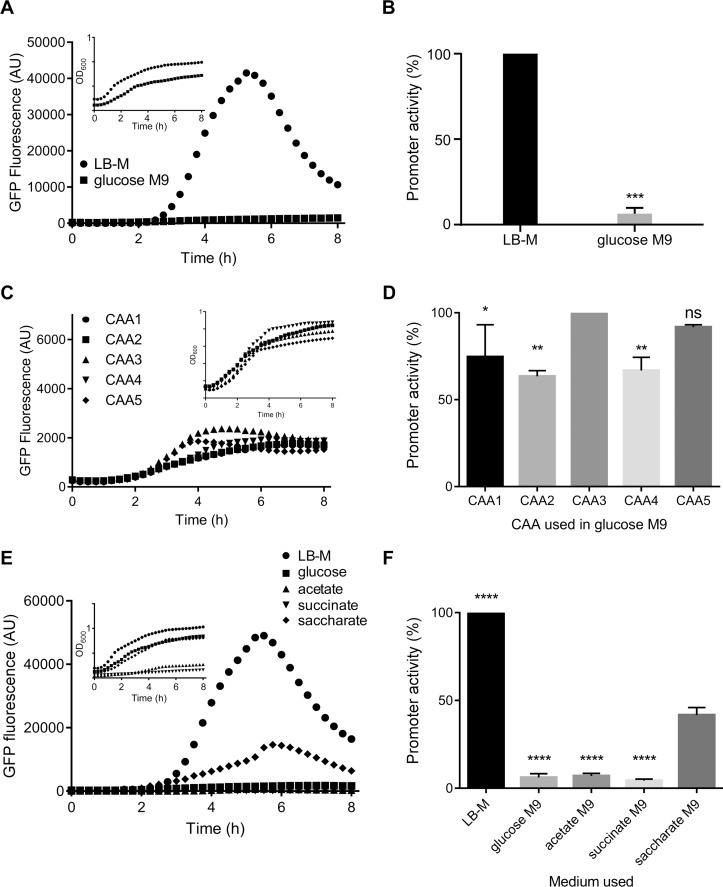
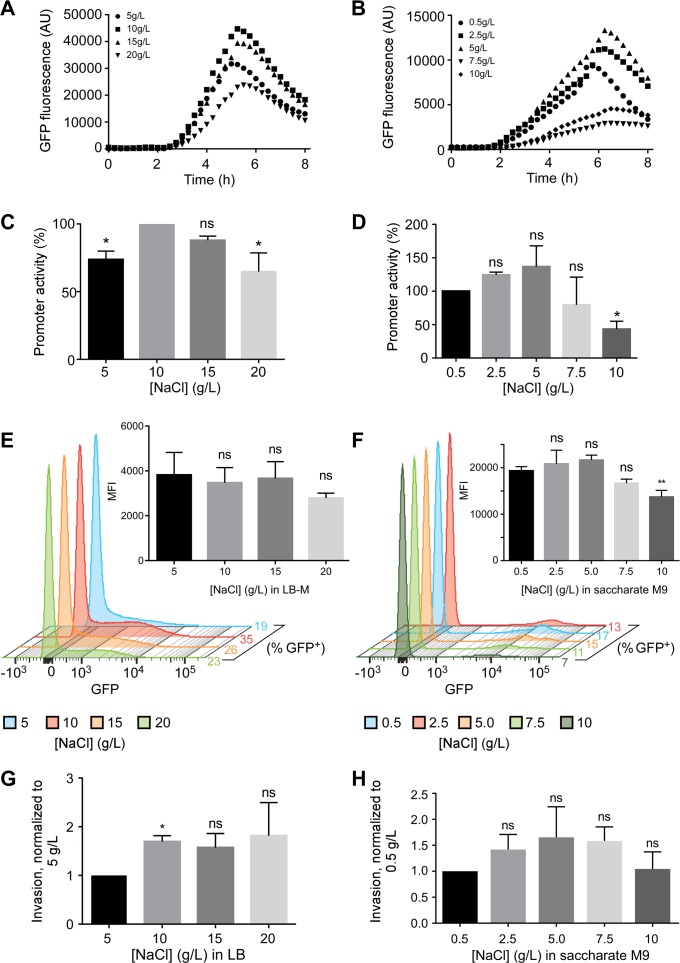
Efficient invasion of non-phagocytic cells, such as intestinal epithelial cells, by Salmonella Typhimurium is dependent on the Salmonella Pathogenicity Island 1 (SPI-1)-encoded Type Three Secretion System. The environmental cues involved in SPI-1 induction are not well understood. In vitro, various conditions are used to induce SPI-1 and the invasive phenotype. Although lysogeny broth (LB) is widely used, multiple formulations exist, and variation can arise due to intrinsic differences in complex components. Minimal media are also susceptible to variation. Still, the impact of these inconsistencies on Salmonella virulence gene expression has not been well studied. The goal of this project is to identify growth conditions in LB and minimal medium that affect SPI-1 induction in vitro using both whole population and single cell analysis. Here we show, using a fluorescent reporter of the SPI-1 gene prgH, that growth of Salmonella in LB yields variable induction. Deliberate modification of media components can influence the invasive profile. Finally, we demonstrate that changes in SPI-1 inducing conditions can affect the ability of Salmonella to replicate intracellularly. These data indicate that the specific media growth conditions impact how the bacteria interact with host cells.
鼠伤寒沙门氏菌对非吞噬细胞(如肠道上皮细胞)的有效侵袭依赖于沙门氏菌致病岛1(SPI-1)编码的三型分泌系统。目前对参与SPI-1诱导的环境线索了解尚少。在体外,人们使用各种条件来诱导SPI-1和侵袭表型。尽管溶菌肉汤(LB)被广泛使用,但存在多种配方,并且由于复杂成分的内在差异可能会出现变化。基本培养基也容易出现变化。然而,这些不一致性对沙门氏菌毒力基因表达的影响尚未得到充分研究。本项目的目标是使用全群体和单细胞分析来确定LB和基本培养基中影响体外SPI-1诱导的生长条件。在此我们表明,使用SPI-1基因prgH的荧光报告基因,沙门氏菌在LB中的生长会产生可变的诱导。对培养基成分的有意改变可影响侵袭情况。最后,我们证明SPI-1诱导条件的变化会影响沙门氏菌在细胞内复制的能力。这些数据表明特定的培养基生长条件会影响细菌与宿主细胞相互作用的方式。