Departamento de Genética, Facultad de Biología, Universidad de Sevilla, Apartado 1095, 41080, Sevilla, Spain.
Sci Rep. 2018 Oct 5;8(1):14875. doi: 10.1038/s41598-018-33137-z.
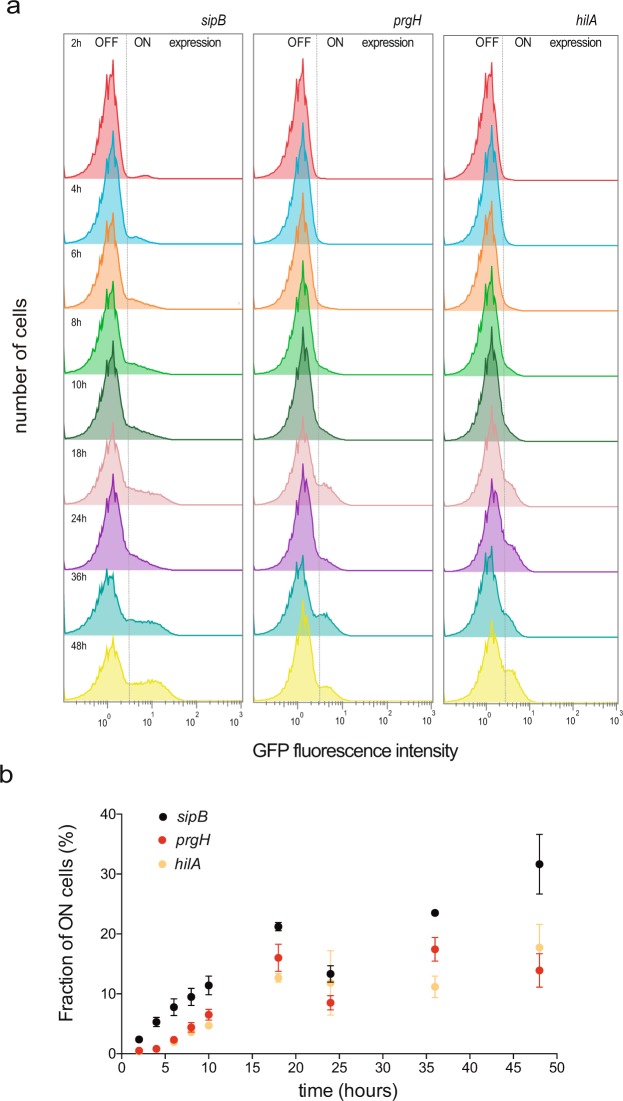
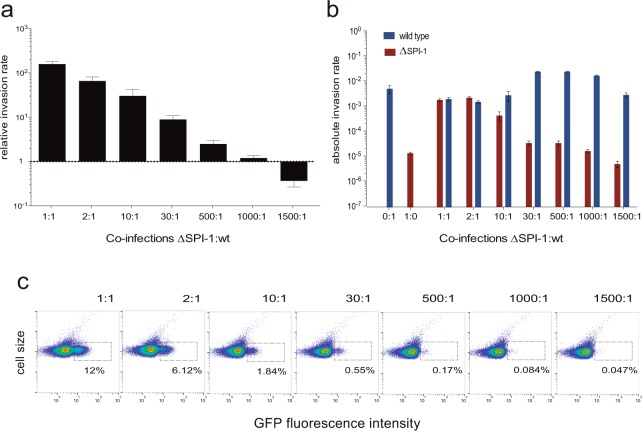
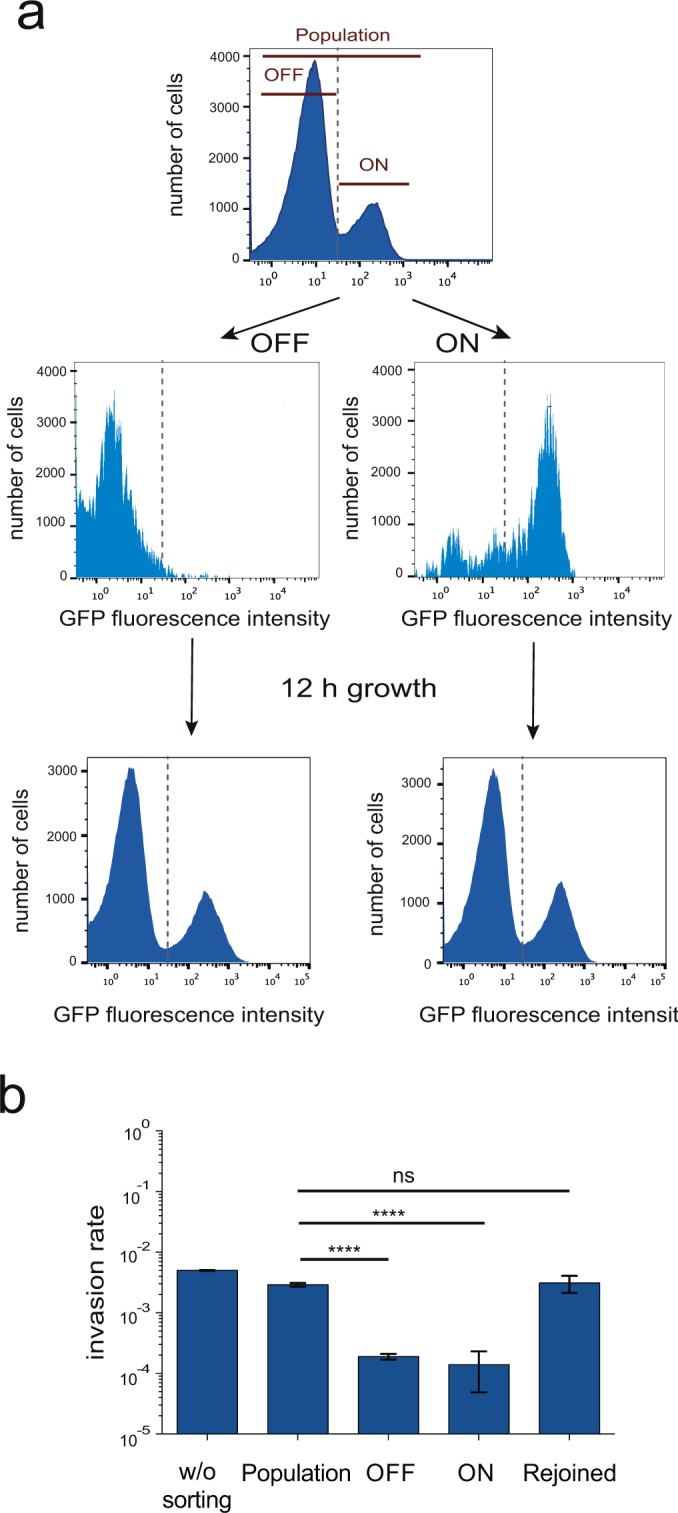
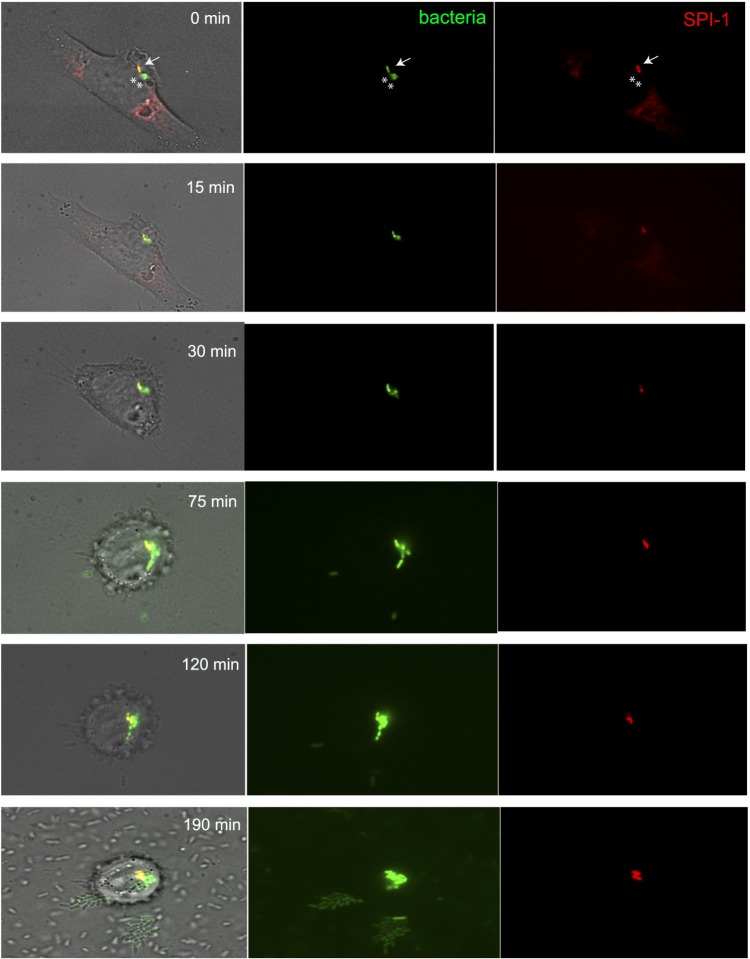
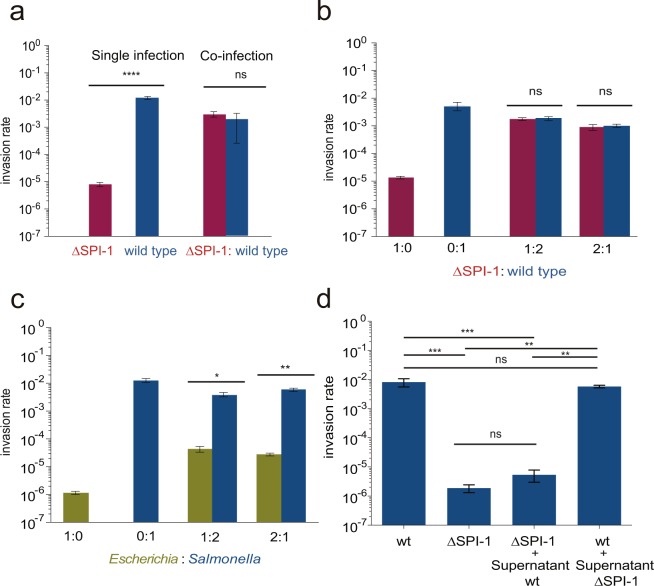
Salmonella enterica pathogenicity island 1 (SPI-1) is a gene cluster that encodes a type III secretion system and effectors involved in epithelial cell invasion. SPI-1 undergoes bistable expression, with concomitant formation of SPI-1 and SPI-1 lineages. This study describes single cell analysis of SP1-1 bistability and epithelial cell invasion, and reports the unsuspected observation that optimal invasion of epithelial cells requires the presence of both SPI-1 and SPI-1 subpopulations. The contribution of SPI-1 cells to optimal invasion may rely on their ability to invade epithelial cells if a SPI-1 subpopulation is present. In fact, Salmonella SPI-1 mutants are also able to invade epithelial cells in the presence of SPI-1 Salmonellae, a phenomenon described in the 1990's by Galán and co-workers. Invasion by SPI-1 cells does not seem to involve a diffusible factor. A small number of SPI-1 cells is sufficient to endow the bacterial population with invasion capacity, a feature that may permit host colonization regardless of the bottlenecks encountered by Salmonella populations inside animals.
肠炎沙门氏菌致病岛 1(SPI-1)是一个基因簇,编码一种 III 型分泌系统和参与上皮细胞入侵的效应物。SPI-1 经历双稳态表达,同时形成 SPI-1 和 SPI-1 谱系。本研究描述了 SPI-1 双稳态和上皮细胞入侵的单细胞分析,并报告了一个意外的观察结果,即上皮细胞的最佳入侵需要同时存在 SPI-1 和 SPI-1 亚群。如果存在 SPI-1 亚群,SPI-1 细胞对最佳入侵的贡献可能依赖于它们入侵上皮细胞的能力。事实上,SPI-1 突变体沙门氏菌在存在 SPI-1 沙门氏菌的情况下也能够入侵上皮细胞,这一现象早在 20 世纪 90 年代就被 Galán 及其同事描述过。SPI-1 细胞的入侵似乎不涉及可扩散因子。少量的 SPI-1 细胞足以赋予细菌群体入侵能力,这一特征可能允许宿主定植,而不管沙门氏菌在动物体内遇到的瓶颈如何。