Greville-Harris Maddy, Bostock Jennifer, Din Amy, Graham Cynthia A, Lewith George, Liossi Christina, O'Riordan Tim, White Peter, Yardley Lucy, Bishop Felicity L
Psychology Department, Faculty of Social and Human Sciences, University of Southampton, Southampton, United Kingdom.
JMIR Res Protoc. 2016 Jun 10;5(2):e106. doi: 10.2196/resprot.5627.
According to established ethical principles and guidelines, patients in clinical trials should be fully informed about the interventions they might receive. However, information about placebo-controlled clinical trials typically focuses on the new intervention being tested and provides limited and at times misleading information about placebos.
We aimed to create an informative, scientifically accurate, and engaging website that could be used to improve understanding of placebo effects among patients who might be considering taking part in a placebo-controlled clinical trial.
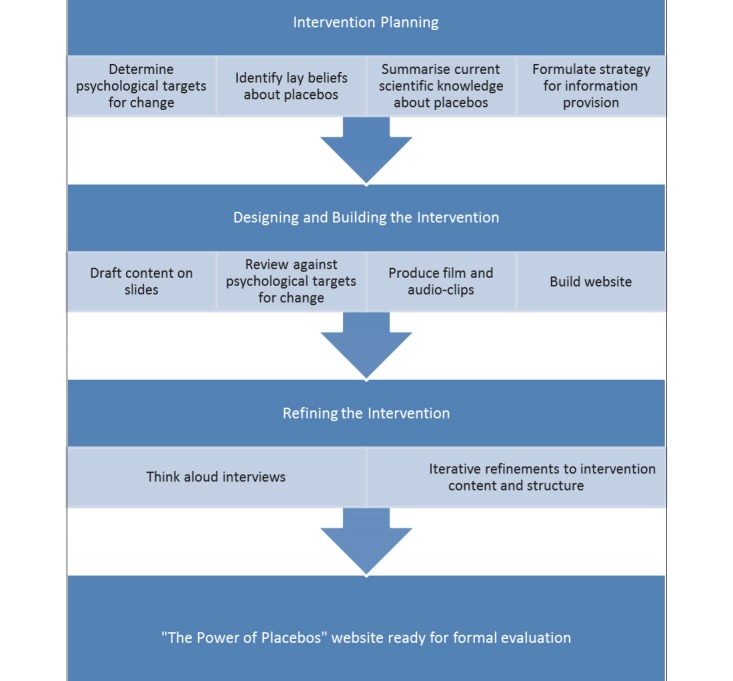
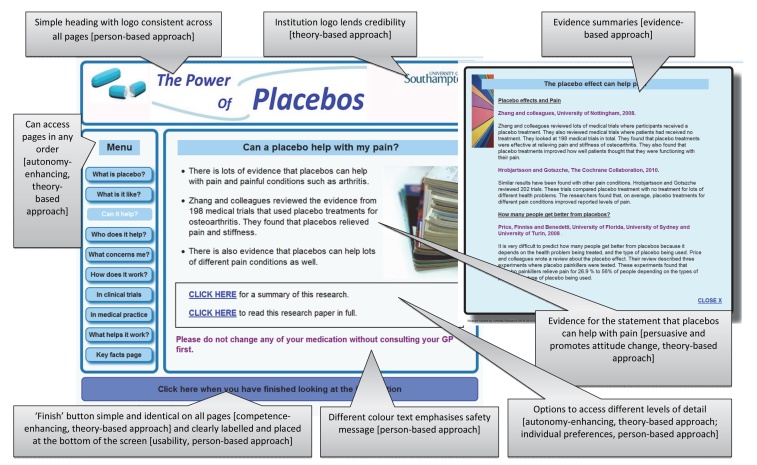
Our approach drew on evidence-, theory-, and person-based intervention development. We used existing evidence and theory about placebo effects to develop content that was scientifically accurate. We used existing evidence and theory of health behavior to ensure our content would be communicated persuasively, to an audience who might currently be ignorant or misinformed about placebo effects. A qualitative 'think aloud' study was conducted in which 10 participants viewed prototypes of the website and spoke their thoughts out loud in the presence of a researcher.
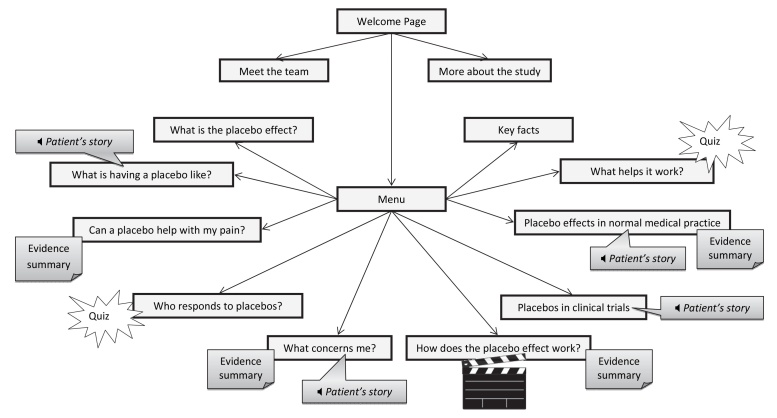
The website provides information about 10 key topics and uses text, evidence summaries, quizzes, audio clips of patients' stories, and a short film to convey key messages. Comments from participants in the think aloud study highlighted occasional misunderstandings and off-putting/confusing features. These were addressed by modifying elements of content, style, and navigation to improve participants' experiences of using the website.
We have developed an evidence-based website that incorporates theory-based techniques to inform members of the public about placebos and placebo effects. Qualitative research ensured our website was engaging and convincing for our target audience who might not perceive a need to learn about placebo effects. Before using the website in clinical trials, it is necessary to test its effects on key outcomes including patients' knowledge and capacity for making informed choices about placebos.
根据既定的伦理原则和指南,临床试验中的患者应充分了解他们可能接受的干预措施。然而,关于安慰剂对照临床试验的信息通常侧重于正在测试的新干预措施,而关于安慰剂的信息有限,有时甚至具有误导性。
我们旨在创建一个内容丰富、科学准确且引人入胜的网站,用于提高可能考虑参与安慰剂对照临床试验的患者对安慰剂效应的理解。
我们的方法借鉴了基于证据、理论和人的干预措施开发。我们利用关于安慰剂效应的现有证据和理论来开发科学准确的内容。我们利用健康行为的现有证据和理论,以确保我们的内容能够有说服力地传达给那些目前可能对安慰剂效应一无所知或了解有误的受众。我们进行了一项定性的“出声思考”研究,10名参与者观看了网站原型,并在研究人员面前大声说出他们的想法。
该网站提供了关于10个关键主题的信息,并使用文本、证据摘要、测验、患者故事的音频片段和一部短片来传达关键信息。出声思考研究参与者的评论突出了偶尔出现的误解以及令人反感/困惑的特征。通过修改内容、风格和导航元素来改善参与者使用网站的体验,从而解决了这些问题。
我们开发了一个基于证据的网站,该网站采用基于理论的技术,向公众介绍安慰剂和安慰剂效应。定性研究确保了我们的网站对我们的目标受众具有吸引力且令人信服,这些受众可能认为没有必要了解安慰剂效应。在临床试验中使用该网站之前,有必要测试其对关键结果的影响,包括患者对安慰剂的了解以及做出明智选择的能力。