Rossettini Giacomo, Palese Alvisa, Geri Tommaso, Mirandola Mattia, Tortella Fabio, Testa Marco
Department of Neuroscience, Rehabilitation, Ophthalmology, Genetics, Maternal and Child Health, University of Genova, Savona, Italy.
Department of Medical Sciences, University of Udine, Udine, Italy.
Front Psychiatry. 2019 Jul 4;10:478. doi: 10.3389/fpsyt.2019.00478. eCollection 2019.
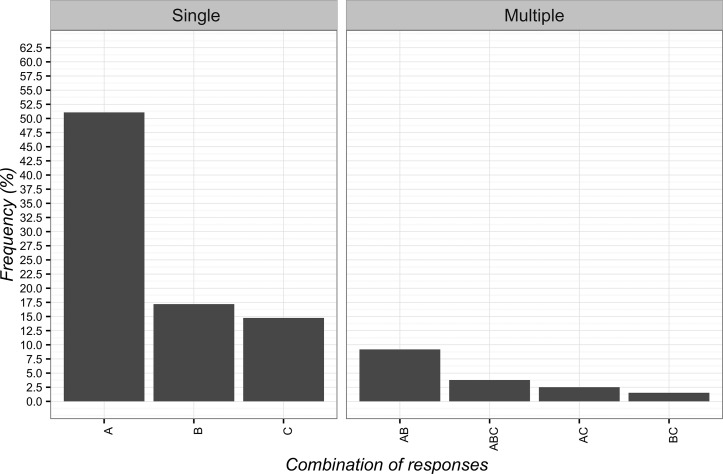
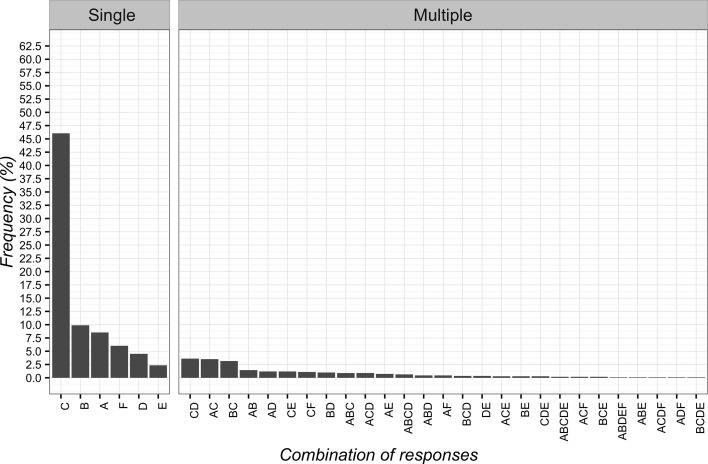
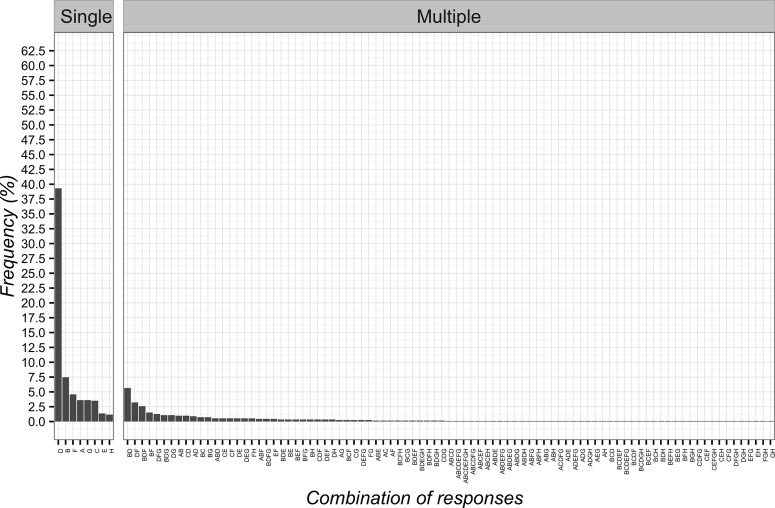
Contextual factors (CFs) have been recently proposed as triggers of placebo and nocebo effects in musculoskeletal pain. CFs encompass the features of the clinician (e.g. uniform), patient (e.g. expectations), patient-clinician relationship (e.g. verbal communication), treatment (e.g. overt therapy), and healthcare setting (e.g. design). To date, the researchers' understanding of Italian patients' knowledge about the role of CFs in musculoskeletal pain is lacking. The aim of this study was to investigate attitudes and beliefs of Italian patients with musculoskeletal pain about the use of CFs in clinical practice. A national sample of Italian patients with musculoskeletal pain was recruited from 12 outpatient private clinics in Italy. An invitation to participate in an online survey was sent to patients: a) exhibiting musculoskeletal pain; b) aged 18-75; c) with a valid e-mail account; and d) understanding Italian language. Survey Monkey software was used to deliver the survey. The questionnaire was self-reported and included 17 questions and 2 clinical vignettes on the patients' behavior, beliefs, and attitudes towards the adoption of CFs in clinical practice. Descriptive statistics and frequencies described the actual number of respondents to each question. One thousand one hundred twelve patients participated in the survey. Five hundred seventy-four participants were female (52%). The average age of patients was 41.7 ± 15.2 years. Patients defined CFs as an intervention with an unspecific effect (64.3%), but they believed in their clinical effectiveness. They identified several therapeutic effects of CFs for different health problems. Their use was considered ethically acceptable when it exerts beneficial psychological effects (60.4%), but it was banned if considered deceptive (51.1%). During clinical practice, patients wanted to be informed about the use of CFs (46.0%) that are accepted as an addition to other interventions to optimize clinical responses (39.3%). Moreover, patients explained the power of CFs through body-mind connections (37.1%). Patients with musculoskeletal pain had positive attitudes towards the use and effectiveness of CFs when associated with evidence-based therapy. They mostly perceived the adoption of CFs in clinical practice as ethical.
情境因素(CFs)最近被认为是肌肉骨骼疼痛中安慰剂和反安慰剂效应的触发因素。情境因素包括临床医生的特征(如一致性)、患者的特征(如期望)、医患关系(如言语交流)、治疗(如公开治疗)以及医疗环境(如设计)。迄今为止,研究人员对意大利患者关于情境因素在肌肉骨骼疼痛中作用的了解尚不足。本研究的目的是调查意大利肌肉骨骼疼痛患者对临床实践中情境因素使用的态度和信念。从意大利的12家私立门诊诊所招募了全国范围内的意大利肌肉骨骼疼痛患者样本。向患者发送了参与在线调查的邀请:a)患有肌肉骨骼疼痛;b)年龄在18 - 75岁之间;c)拥有有效的电子邮件账户;d)懂意大利语。使用Survey Monkey软件进行调查。问卷采用自我报告形式,包括17个问题以及2个关于患者在临床实践中对采用情境因素的行为、信念和态度的临床案例。描述性统计和频率描述了每个问题的实际受访者数量。1112名患者参与了调查。574名参与者为女性(52%)。患者的平均年龄为41.7 ± 15.2岁。患者将情境因素定义为具有非特异性效果的干预措施(64.3%),但他们相信其临床有效性。他们确定了情境因素对不同健康问题的几种治疗效果。当情境因素产生有益的心理效应时,其使用在伦理上被认为是可接受的(60.4%),但如果被认为具有欺骗性则被禁止(51.1%)。在临床实践中,患者希望了解情境因素的使用情况(46.0%),情境因素被视为其他干预措施的补充以优化临床反应时是可接受的(39.3%)。此外,患者通过身心联系来解释情境因素的作用(37.1%)。肌肉骨骼疼痛患者在与循证治疗相关时,对情境因素的使用和有效性持积极态度。他们大多认为在临床实践中采用情境因素是符合伦理的。