Fura Jonathan M, Pidgeon Sean E, Birabaharan Morgan, Pires Marcos M
Department of Chemistry, Lehigh University , Bethlehem, Pennsylvania 18015, United States.
ACS Infect Dis. 2016 Apr 8;2(4):302-309. doi: 10.1021/acsinfecdis.6b00007. Epub 2016 Feb 2.
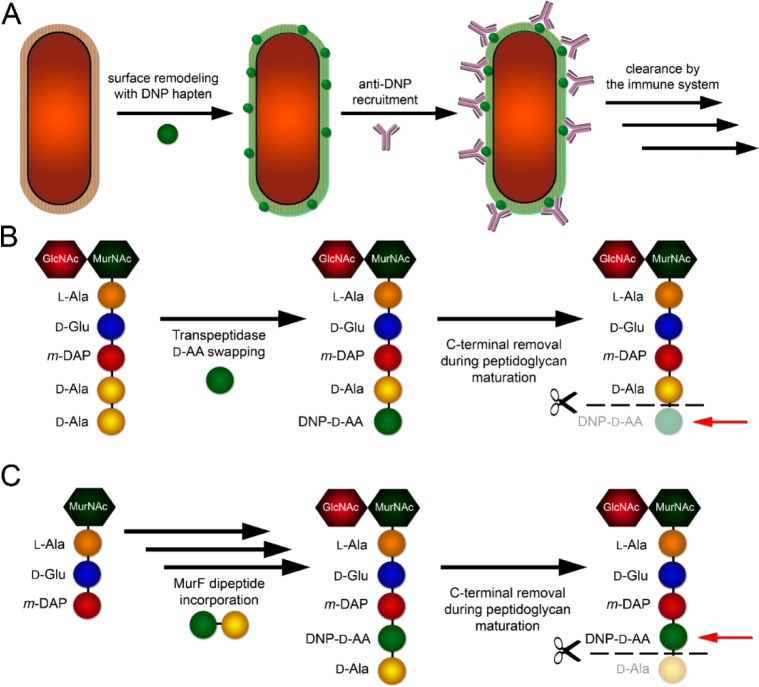
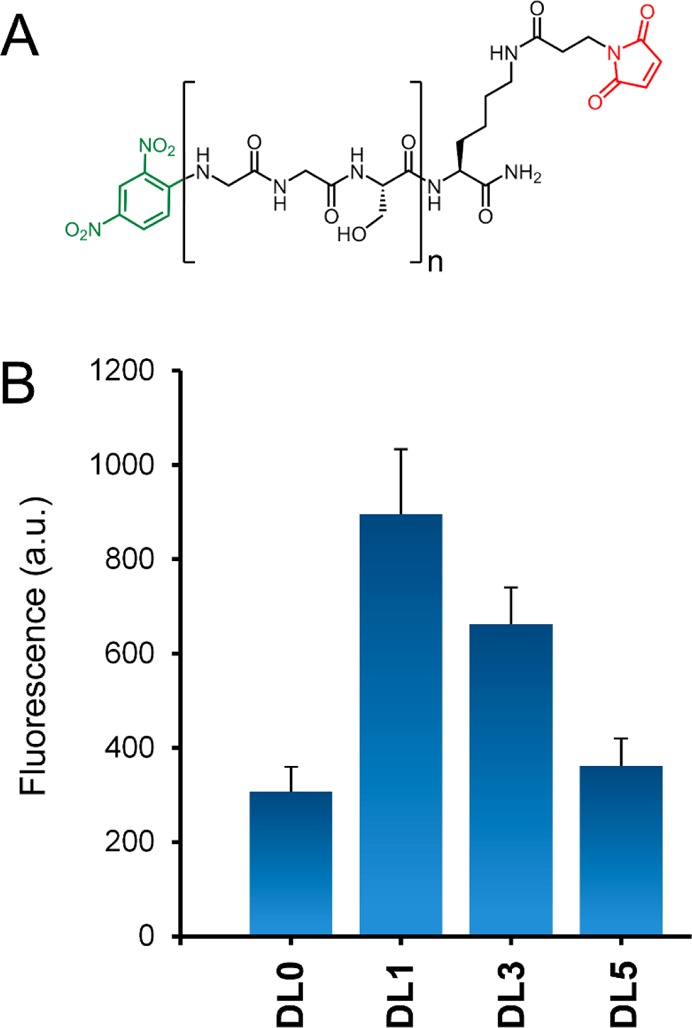
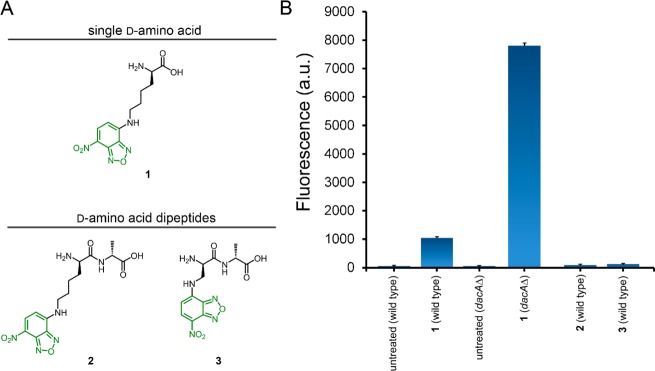
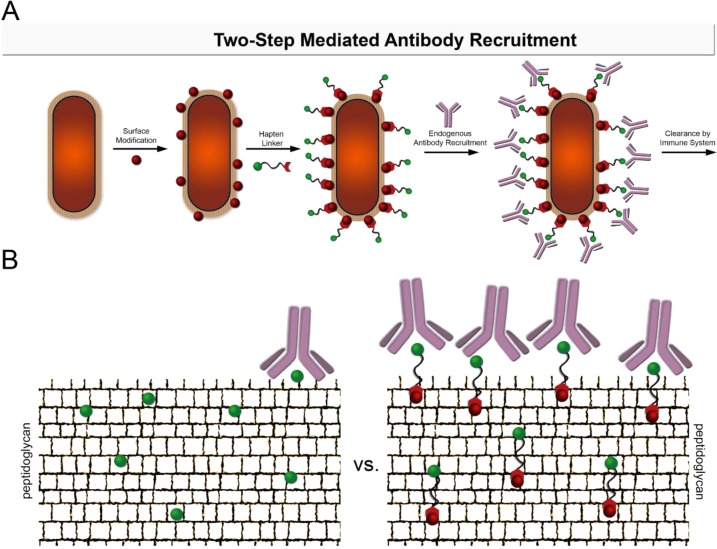
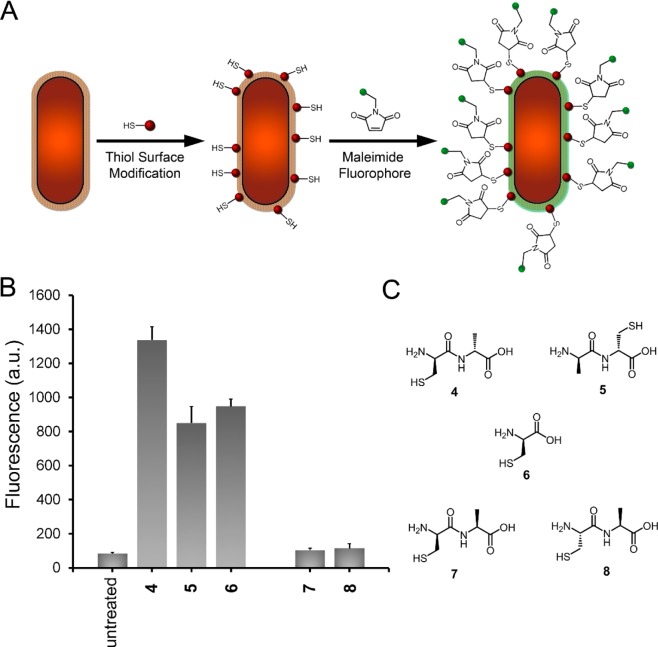
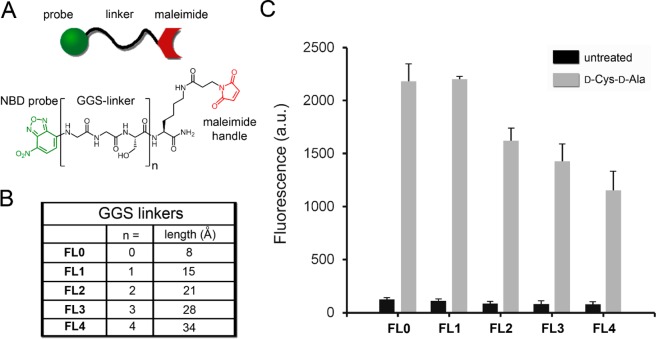
The number of antibiotic-resistant bacterial infections has increased dramatically over the past decade. To combat these pathogens, novel antimicrobial strategies must be explored and developed. We previously reported a strategy based on hapten-modified cell wall analogues to induce recruitment of endogenous antibodies to bacterial cell surfaces. Cell surface remodeling using unnatural single d-amino acid cell wall analogues led to modification at the C-terminus of the peptidoglycan stem peptide. During peptidoglycan processing, installed hapten-displaying amino acids can be subsequently removed by cell wall enzymes. Herein, we disclose a two-step dipeptide peptidoglycan remodeling strategy aimed at introducing haptens at an alternative site within the stem peptide to improve retention and diminish removal by cell wall enzymes. Through this redesigned strategy, we determined size constraints of peptidoglycan remodeling and applied these constraints to attain hapten-linker conjugates that produced high levels of antibody recruitment to bacterial cell surfaces.
在过去十年中,抗生素耐药性细菌感染的数量急剧增加。为了对抗这些病原体,必须探索和开发新的抗菌策略。我们之前报道了一种基于半抗原修饰细胞壁类似物的策略,以诱导内源性抗体募集到细菌细胞表面。使用非天然单d-氨基酸细胞壁类似物进行细胞表面重塑导致肽聚糖茎肽的C末端发生修饰。在肽聚糖加工过程中,安装的展示半抗原的氨基酸随后可被细胞壁酶去除。在此,我们公开了一种两步二肽肽聚糖重塑策略,旨在在茎肽的另一个位点引入半抗原,以提高保留率并减少细胞壁酶的去除。通过这种重新设计的策略,我们确定了肽聚糖重塑的尺寸限制,并应用这些限制来获得能在细菌细胞表面产生高水平抗体募集的半抗原-连接子缀合物。