Balasubramanian Mukundh N, Panserat Stephane, Dupont-Nivet Mathilde, Quillet Edwige, Montfort Jerome, Le Cam Aurelie, Medale Francoise, Kaushik Sadasivam J, Geurden Inge
INRA, UR1067 NUMEA Nutrition, Métabolisme et Aquaculture, Pôle d'Hydrobiologie INRA, 64310, Saint Pée-sur-Nivelle, France.
INRA, UMR1313 GABI Génétique Animale et Biologie Intégrative, 78350, Jouy-en-Josas, France.
BMC Genomics. 2016 Jun 13;17:449. doi: 10.1186/s12864-016-2804-1.
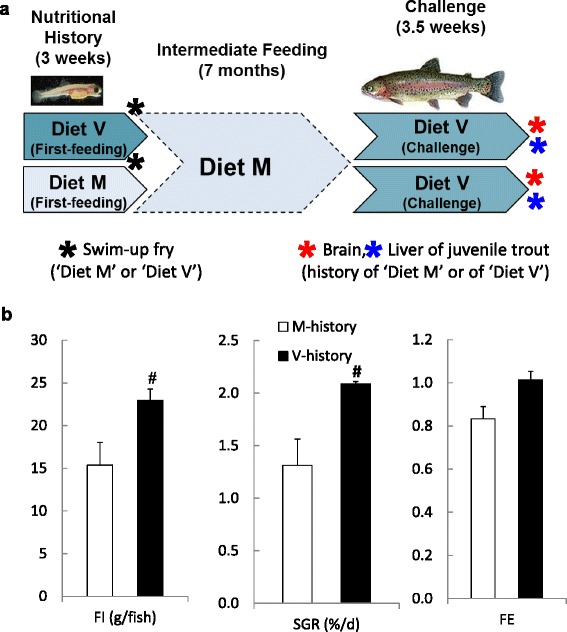
The achievement of sustainable feeding practices in aquaculture by reducing the reliance on wild-captured fish, via replacement of fish-based feed with plant-based feed, is impeded by the poor growth response seen in fish fed high levels of plant ingredients. Our recent strategy to nutritionally program rainbow trout by early short-term exposure to a plant-based (V) diet versus a control fish-based (M) diet at the first-feeding fry stage when the trout fry start to consume exogenous feed, resulted in remarkable improvements in feed intake, growth and feed utilization when the same fish were challenged with the diet V (V-challenge) at the juvenile stage, several months following initial exposure. We employed microarray expression analysis at the first-feeding and juvenile stages to deduce the mechanisms associated with the nutritional programming of plant-based feed acceptance in trout.
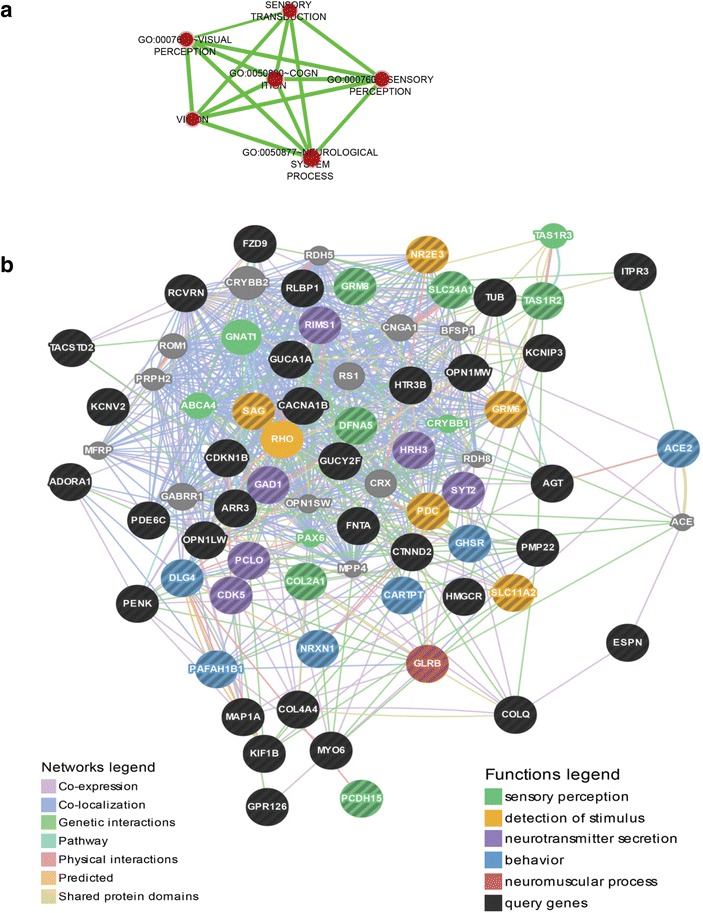
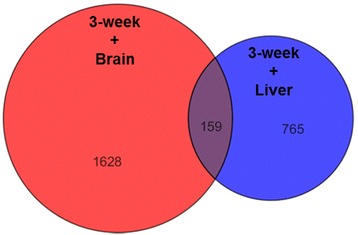
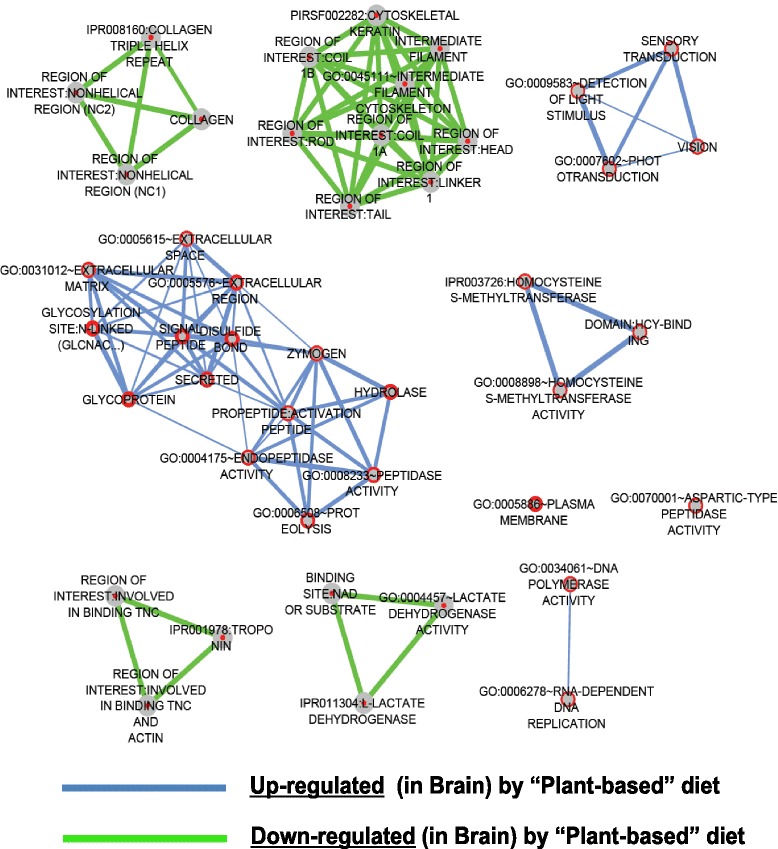
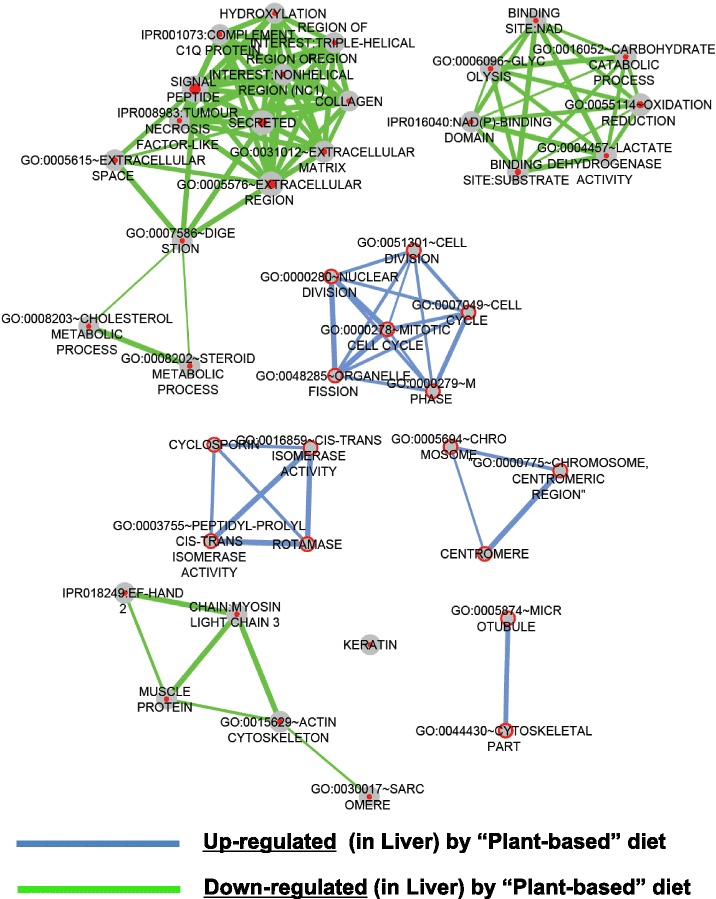
Transcriptomic analysis was performed on rainbow trout whole fry after 3 weeks exposure to either diet V or diet M at the first feeding stage (3-week), and in the whole brain and liver of juvenile trout after a 25 day V-challenge, using a rainbow trout custom oligonucleotide microarray. Overall, 1787 (3-week + Brain) and 924 (3-week + Liver) mRNA probes were affected by the early-feeding exposure. Gene ontology and pathway analysis of the corresponding genes revealed that nutritional programming affects pathways of sensory perception, synaptic transmission, cognitive processes and neuroendocrine peptides in the brain; whereas in the liver, pathways mediating intermediary metabolism, xenobiotic metabolism, proteolysis, and cytoskeletal regulation of cell cycle are affected. These results suggest that the nutritionally programmed enhanced acceptance of a plant-based feed in rainbow trout is driven by probable acquisition of flavour and feed preferences, and reduced sensitivity to changes in hepatic metabolic and stress pathways.
This study outlines the molecular mechanisms in trout brain and liver that accompany the nutritional programming of plant-based diet acceptance in trout, reinforces the notion of the first-feeding stage in oviparous fish as a critical window for nutritional programming, and provides support for utilizing this strategy to achieve improvements in sustainability of feeding practices in aquaculture.
通过用植物性饲料替代鱼粉饲料来减少对野生捕捞鱼类的依赖,从而在水产养殖中实现可持续喂养方式,但给鱼类投喂高水平植物性成分饲料时生长反应不佳,阻碍了这一目标的实现。我们最近采用的策略是,在虹鳟鱼苗开始摄食外源饲料的初次投喂阶段,让其短期接触植物性(V)饲料而非对照鱼粉性(M)饲料,对虹鳟进行营养编程。当这些鱼在初次接触几个月后的幼鱼阶段接受V饲料(V挑战)时,其采食量、生长和饲料利用率都有显著提高。我们在初次投喂和幼鱼阶段进行了微阵列表达分析,以推断虹鳟对植物性饲料接受的营养编程相关机制。
在初次投喂阶段(3周龄)让虹鳟鱼苗接触V饲料或M饲料3周后,以及在25天V挑战后对幼鱼的全脑和肝脏进行转录组分析,使用定制的虹鳟寡核苷酸微阵列。总体而言,1787个(3周龄+脑)和924个(3周龄+肝脏)mRNA探针受到早期投喂暴露的影响。对相应基因的基因本体论和通路分析表明,营养编程影响大脑中的感官感知、突触传递、认知过程和神经内分泌肽通路;而在肝脏中,介导中间代谢、异生物质代谢、蛋白水解和细胞周期细胞骨架调节的通路受到影响。这些结果表明,虹鳟对植物性饲料接受度的营养编程增强可能是由于获得了风味和饲料偏好,以及对肝脏代谢和应激通路变化的敏感性降低。
本研究概述了虹鳟大脑和肝脏中伴随对植物性饲料接受的营养编程的分子机制,强化了卵生鱼类初次投喂阶段作为营养编程关键窗口的概念,并为利用该策略实现水产养殖喂养方式可持续性的改善提供了支持。