Winstanley C, Morgan J A, Pickup R W, Jones J G, Saunders J R
Department of Genetics and Microbiology, University of Liverpool, United Kingdom.
Appl Environ Microbiol. 1989 Apr;55(4):771-7. doi: 10.1128/aem.55.4.771-777.1989.
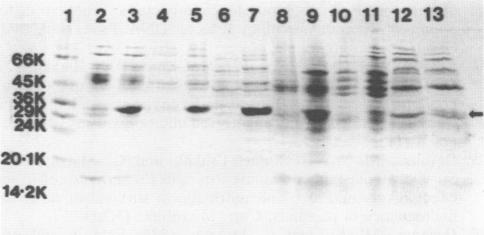
Plasmid systems with unique markers were constructed to assess the fate of recombinant DNA and genetically manipulated bacteria in soil and freshwater model environments. On such constructs the marker gene, xylE (for catechol 2,3-dioxygenase), is expressed from the lambda promoter pL or pR, each of which is controlled by the temperature-sensitive lambda repressor c1857. Combinations of these elements were cloned into the broad-host-range plasmid pKT230 to form pLV1010 (pL-xylE), pLV1011 (pL-xylE-c1857), and pLV1013 (pR-xylE-c1857). The recombinant plasmids were introduced into different gram-negative bacteria. The thermoregulated system of pLV1013 functioned well in a range of species, with xylE induction being readily achieved by elevation of the temperature from 28 to 37 degrees C. There was a difference in the induction of catechol 2,3-dioxygenase activity, depending on whether xylE was expressed from pL (pLV1011) or pR (pLV1013). Our observations on testing the different systems in a number of hosts suggest that genes carried by the DNA of genetically engineered microorganisms may not be expressed in a predictable manner following transfer from the release host to other species.
构建了具有独特标记的质粒系统,以评估重组DNA和基因工程改造细菌在土壤和淡水模型环境中的命运。在这些构建体上,标记基因xylE(编码儿茶酚2,3-双加氧酶)由λ启动子pL或pR表达,每个启动子由温度敏感型λ阻遏物c1857控制。将这些元件的组合克隆到广宿主范围质粒pKT230中,形成pLV1010(pL-xylE)、pLV1011(pL-xylE-c1857)和pLV1013(pR-xylE-c1857)。将重组质粒导入不同的革兰氏阴性细菌中。pLV1013的温度调节系统在一系列物种中功能良好,通过将温度从28℃升高到37℃很容易实现xylE的诱导。儿茶酚2,3-双加氧酶活性的诱导存在差异,这取决于xylE是从pL(pLV1011)还是pR(pLV1013)表达。我们在多个宿主中测试不同系统的观察结果表明,基因工程微生物DNA携带的基因在从释放宿主转移到其他物种后,可能不会以可预测的方式表达。