Kinsella Elaine, Dora Natalie, Mellis David, Lettice Laura, Deveney Paul, Hill Robert, Ditzel Mark
Edinburgh CRUK Cancer Research Centre, MRC Institute of Genetics and Molecular Medicine at the University of Edinburgh, Western General Hospital, Edinburgh, UK.
MRC Human Genetics Unit, MRC Institute of Genetics and Molecular Medicine at the University of Edinburgh, Western General Hospital, Edinburgh, UK.
PLoS One. 2016 Jun 14;11(6):e0157079. doi: 10.1371/journal.pone.0157079. eCollection 2016.
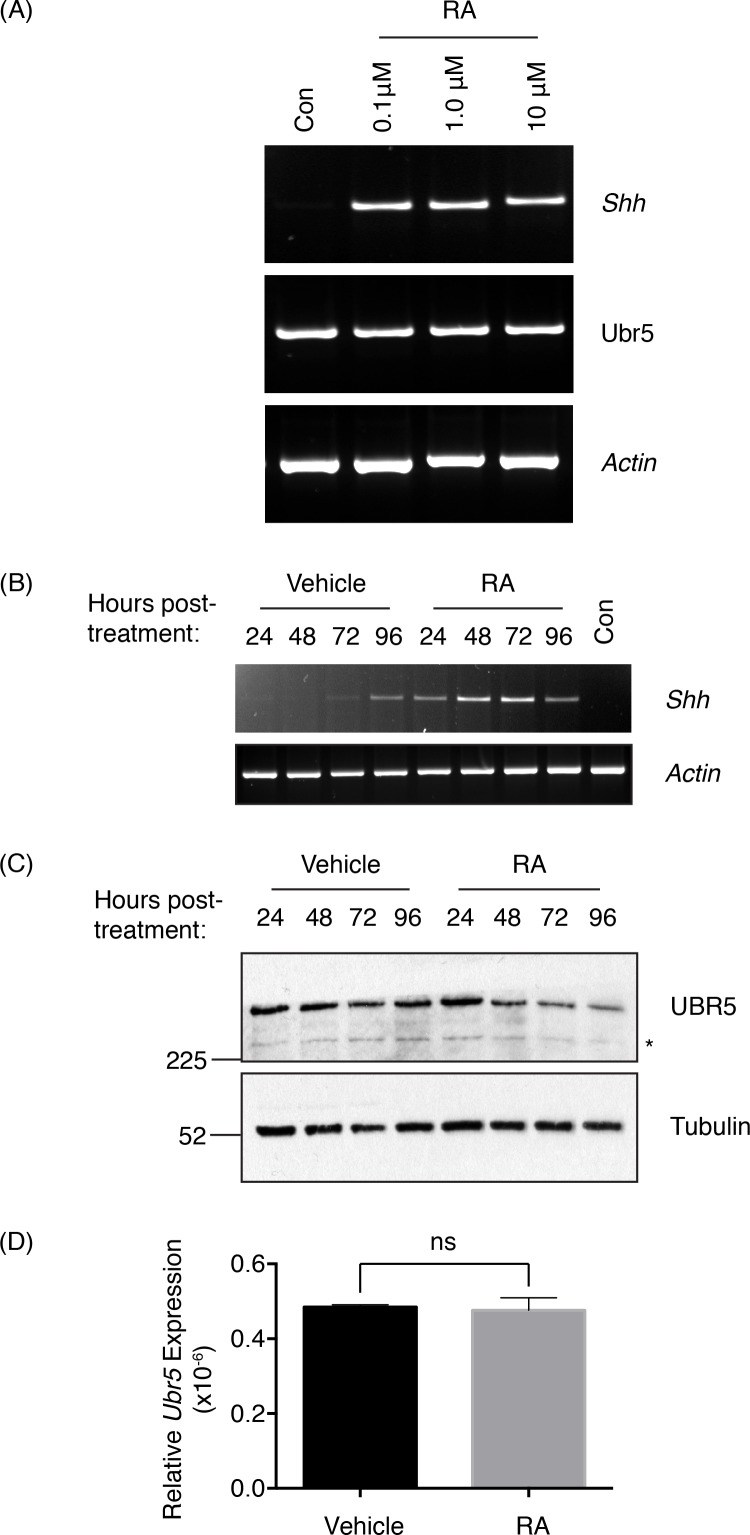
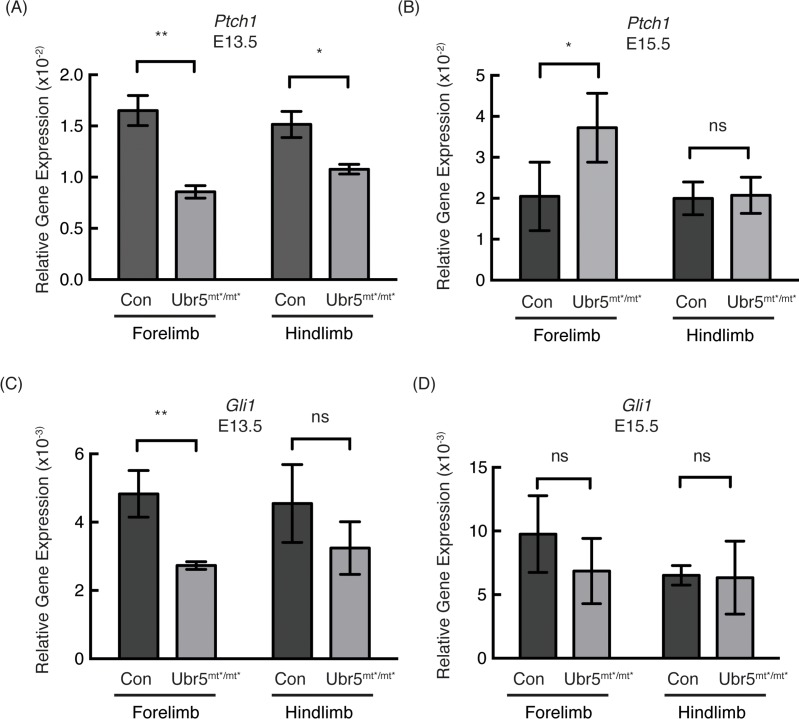
Hedgehog (Hh) signalling is a potent regulator of cell fate and function. While much is known about the events within a Hh-stimulated cell, far less is known about the regulation of Hh-ligand production. Drosophila Hyperplastic Discs (Hyd), a ubiquitin-protein ligase, represents one of the few non-transcription factors that independently regulates both hh mRNA expression and pathway activity. Using a murine embryonic stem cell system, we revealed that shRNAi of the mammalian homologue of hyd, Ubr5, effectively prevented retinoic-acid-induced Sonic hedgehog (Shh) expression. We next investigated the UBR5:Hh signalling relationship in vivo by generating and validating a mouse bearing a conditional Ubr5 loss-of-function allele. Conditionally deleting Ubr5 in the early embryonic limb-bud mesenchyme resulted in a transient decrease in Indian hedgehog ligand expression and decreased Hh pathway activity, around E13.5. Although Ubr5-deficient limbs and digits were, on average, shorter than control limbs, the effects were not statistically significant. Hence, while loss of UBR5 perturbed Hedgehog signalling in the developing limb, there were no obvious morphological defects. In summary, we report the first conditional Ubr5 mutant mouse and provide evidence for a role for UBR5 in influencing Hh signalling, but are uncertain to whether the effects on Hedgehog signaling were direct (cell autonomous) or indirect (non-cell-autonomous). Elaboration of the cellular/molecular mechanism(s) involved may help our understanding on diseases and developmental disorders associated with aberrant Hh signalling.
刺猬信号通路(Hh)是细胞命运和功能的有力调节因子。虽然我们对Hh刺激细胞内的事件了解很多,但对Hh配体产生的调节却知之甚少。果蝇增生性盘(Hyd)是一种泛素蛋白连接酶,是少数几个独立调节hh mRNA表达和信号通路活性的非转录因子之一。利用小鼠胚胎干细胞系统,我们发现hyd的哺乳动物同源物Ubr5的短发夹RNA干扰(shRNAi)能有效阻止视黄酸诱导的音猬因子(Shh)表达。接下来,我们通过构建和验证携带条件性Ubr5功能缺失等位基因的小鼠,在体内研究了UBR5与Hh信号通路的关系。在胚胎早期肢芽间充质中条件性删除Ubr5,在大约E13.5时导致印度刺猬配体表达短暂下降和Hh信号通路活性降低。虽然Ubr5缺陷的四肢和指(趾)平均比对照四肢短,但这种影响在统计学上并不显著。因此,虽然UBR5的缺失扰乱了发育中肢体的刺猬信号通路,但没有明显的形态缺陷。总之,我们报道了第一只条件性Ubr5突变小鼠,并提供了UBR5在影响Hh信号通路中起作用的证据,但不确定对刺猬信号通路的影响是直接的(细胞自主的)还是间接的(非细胞自主的)。对所涉及的细胞/分子机制进行阐述可能有助于我们理解与异常Hh信号通路相关的疾病和发育障碍。