Department of Ecology and Evolutionary Biology, Cornell University, 215 Tower Road, Ithaca, New York 14853-7202, USA.
Nat Commun. 2016 Jun 15;7:11769. doi: 10.1038/ncomms11769.
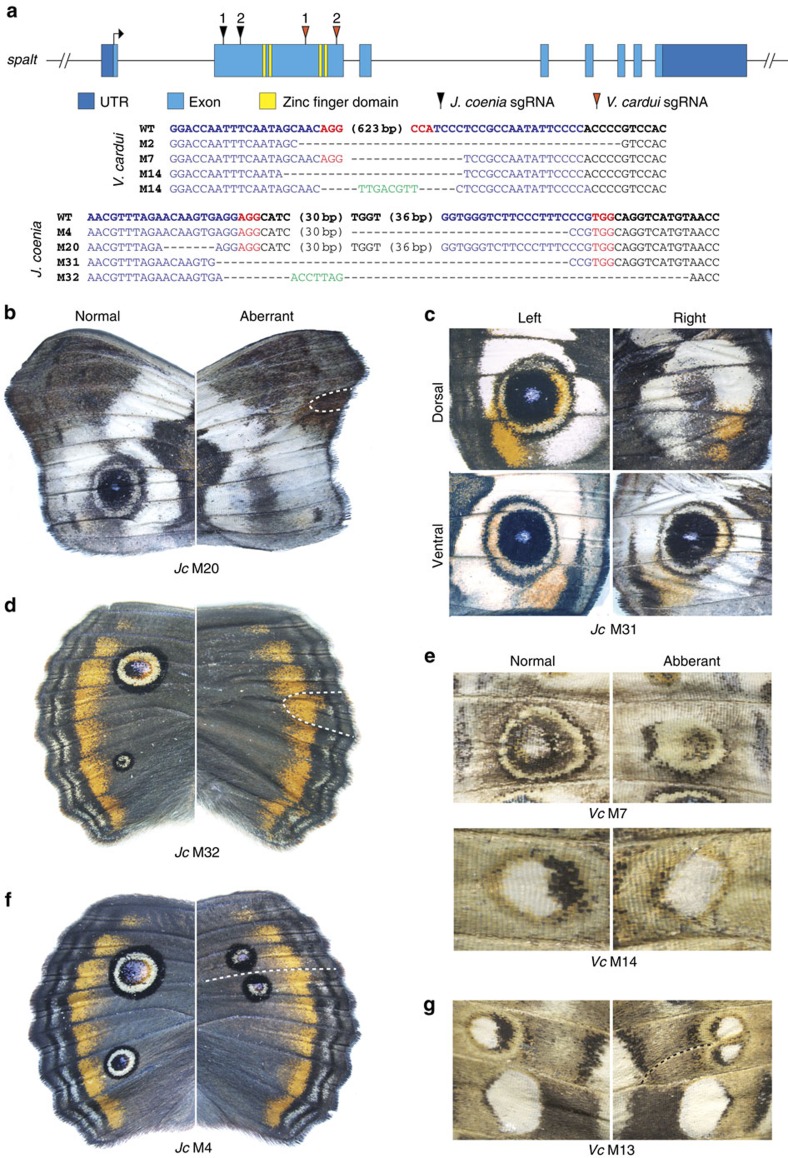
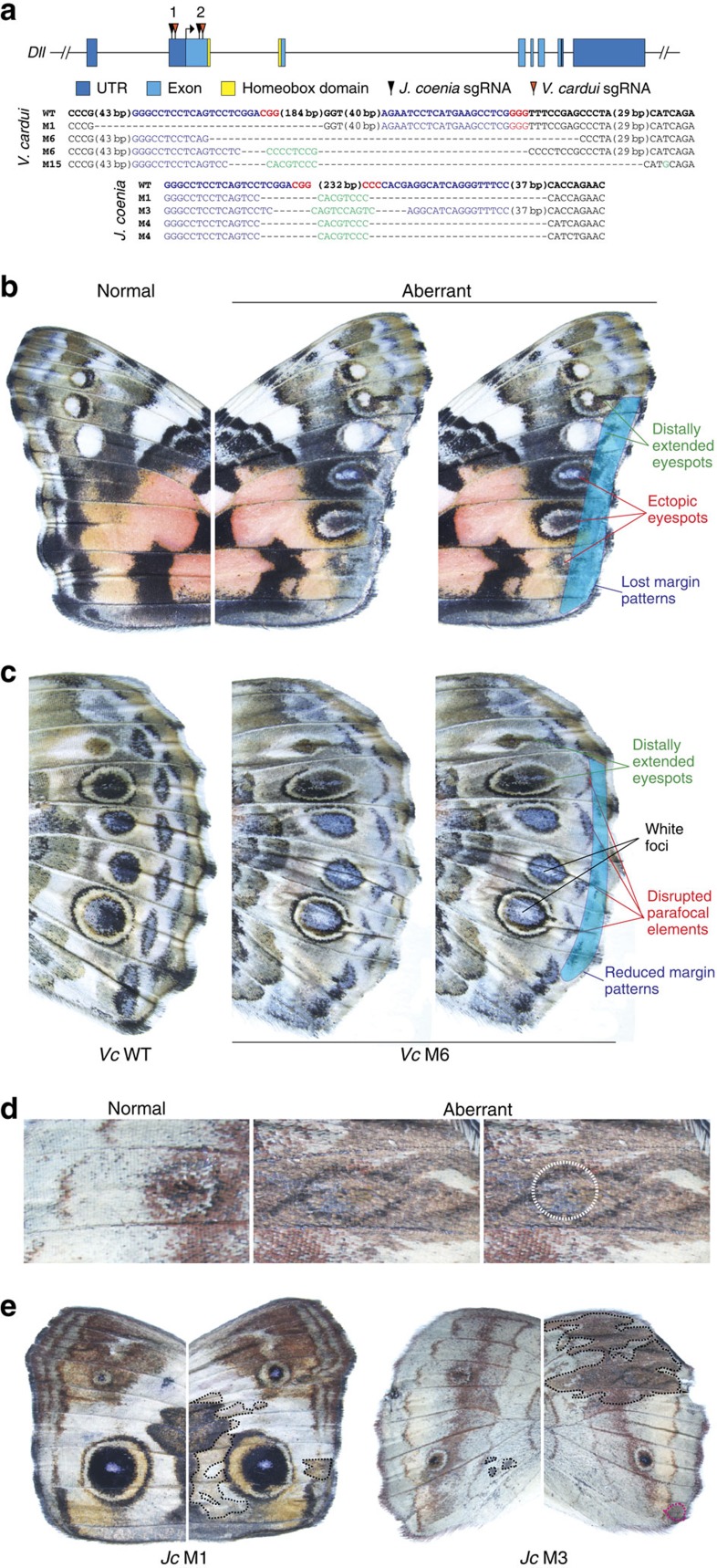
Butterfly eyespot colour patterns are a key example of how a novel trait can appear in association with the co-option of developmental patterning genes. Little is known, however, about how, or even whether, co-opted genes function in eyespot development. Here we use CRISPR/Cas9 genome editing to determine the roles of two co-opted transcription factors that are expressed during early eyespot determination. We found that deletions in a single gene, spalt, are sufficient to reduce or completely delete eyespot colour patterns, thus demonstrating a positive regulatory role for this gene in eyespot determination. Conversely, and contrary to previous predictions, deletions in Distal-less (Dll) result in an increase in the size and number of eyespots, illustrating a repressive role for this gene in eyespot development. Altogether our results show that the presence, absence and shape of butterfly eyespots can be controlled by the activity of two co-opted transcription factors.
蝴蝶眼斑的颜色图案是一个很好的例子,说明了一个新的特征是如何与发育模式基因的共同适应相关联而出现的。然而,人们对共同适应的基因如何在眼斑发育中发挥作用,甚至是否发挥作用知之甚少。在这里,我们使用 CRISPR/Cas9 基因组编辑来确定在早期眼斑确定过程中表达的两个共同适应转录因子的作用。我们发现,单个基因 spalt 的缺失足以减少或完全消除眼斑的颜色图案,从而证明该基因在眼斑确定中具有正向调节作用。相反,与之前的预测相反,Distal-less (Dll) 缺失导致眼斑的大小和数量增加,说明了该基因在眼斑发育中具有抑制作用。总之,我们的结果表明,蝴蝶眼斑的存在、缺失和形状可以由两个共同适应的转录因子的活性来控制。