Lombardo Giovanni Enrico, Arcidiacono Biagio, De Rose Roberta Francesca, Lepore Saverio Massimo, Costa Nicola, Montalcini Tiziana, Brunetti Antonio, Russo Diego, De Sarro Giovambattista, Celano Marilena
Department of Health Sciences, University "Magna Graecia" of Catanzaro , Catanzaro , Italy.
Department of Medical and Surgical Sciences, University "Magna Graecia" of Catanzaro , Catanzaro , Italy.
Front Endocrinol (Lausanne). 2016 May 27;7:49. doi: 10.3389/fendo.2016.00049. eCollection 2016.
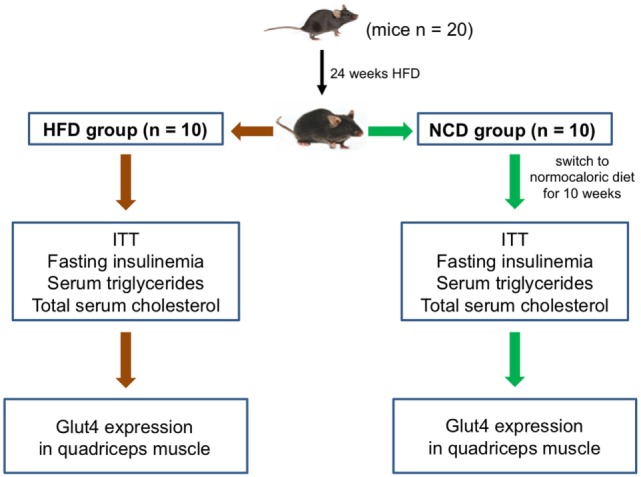
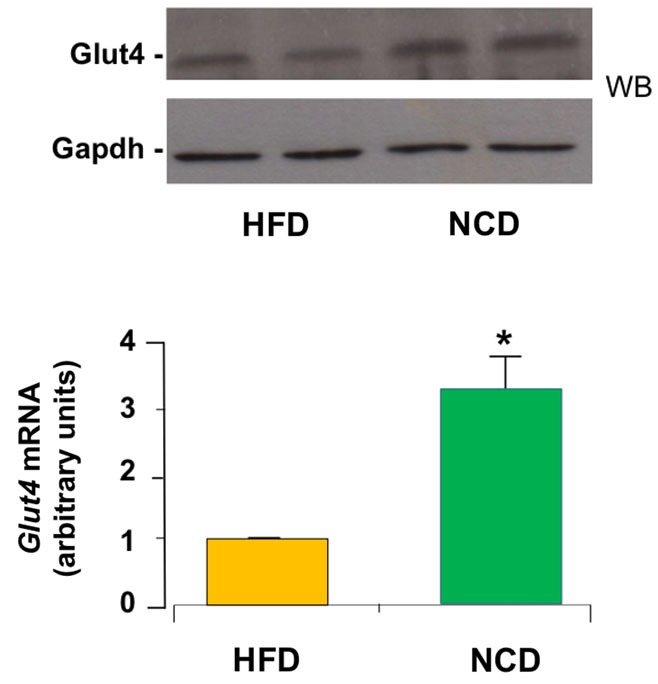
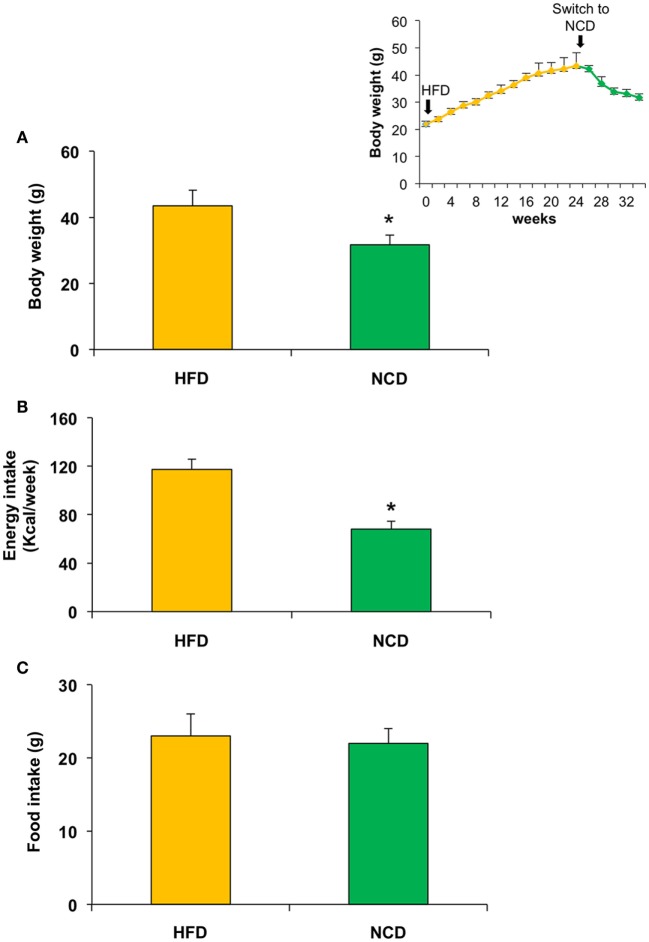
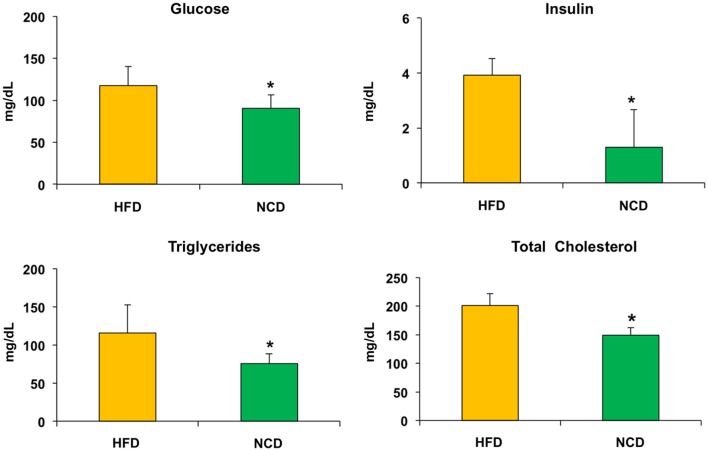
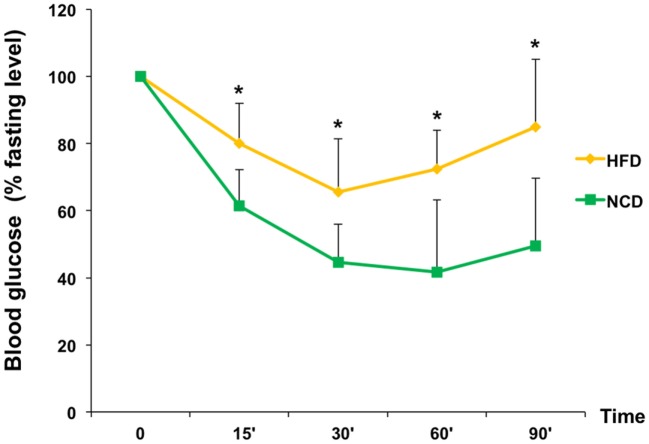
An increased incidence of obesity is registered worldwide, and its association with insulin resistance and type 2 diabetes is closely related with increased morbidity and mortality for cardiovascular diseases. A major clinical problem in the management of obesity is the non-adherence or low adherence of patients to a hypocaloric dietetic restriction. In this study, we evaluated in obese mice the effects of shifting from high-calorie foods to normal diet on insulin sensitivity. Male C57BL/6JOlaHsd mice (n = 20) were fed with high fat diet (HFD) for a 24-week period. Afterward, body weight, energy, and food intake were measured in all animals, together with parameters of insulin sensitivity by homeostatic model assessment of insulin resistance and plasma glucose levels in response to insulin administration. Moreover, in half of these mice, Glut4 mRNA levels were measured in muscle at the end of the high fat treatment, whereas the rest of the animals (n = 10) were shifted to normocaloric diet (NCD) for 10 weeks, after which the same analyses were carried out. A significant reduction of body weight was found after the transition from high to normal fat diet, and this decrease correlated well with an improvement in insulin sensitivity. In fact, we found a reduction in serum insulin levels and the recovery of insulin responsiveness in terms of glucose disposal measured by insulin tolerance test and Glut4 mRNA and protein expression. These results indicate that obesity-related insulin resistance may be rescued by shifting from HFD to NCD.
全球肥胖发病率呈上升趋势,其与胰岛素抵抗和2型糖尿病的关联与心血管疾病发病率和死亡率的增加密切相关。肥胖管理中的一个主要临床问题是患者对低热量饮食限制的不依从或低依从性。在本研究中,我们评估了肥胖小鼠从高热量食物转换为正常饮食对胰岛素敏感性的影响。雄性C57BL/6JOlaHsd小鼠(n = 20)接受24周的高脂饮食(HFD)喂养。之后,测量所有动物的体重、能量和食物摄入量,以及通过胰岛素抵抗稳态模型评估和胰岛素给药后血浆葡萄糖水平来评估胰岛素敏感性参数。此外,在这些小鼠中的一半,在高脂治疗结束时测量肌肉中的Glut4 mRNA水平,而其余动物(n = 10)转换为正常热量饮食(NCD)10周,之后进行相同的分析。从高脂肪饮食转换为正常脂肪饮食后,体重显著降低,且这种降低与胰岛素敏感性的改善密切相关。事实上,我们发现血清胰岛素水平降低,并且通过胰岛素耐量试验以及Glut4 mRNA和蛋白质表达测量的葡萄糖处置方面的胰岛素反应性恢复。这些结果表明,从HFD转换为NCD可能改善肥胖相关的胰岛素抵抗。