Salmela Elina, Renvall Hanna, Kujala Jan, Hakosalo Osmo, Illman Mia, Vihla Minna, Leinonen Eira, Salmelin Riitta, Kere Juha
Molecular Neurology Research Program, Research Programs Unit, University of Helsinki, PO Box 63, FI-00014, Helsinki, Finland.
Folkhälsan Institute of Genetics, Biomedicum Helsinki, Helsinki, Finland.
Eur J Neurosci. 2016 Aug;44(3):1963-71. doi: 10.1111/ejn.13300. Epub 2016 Jul 4.
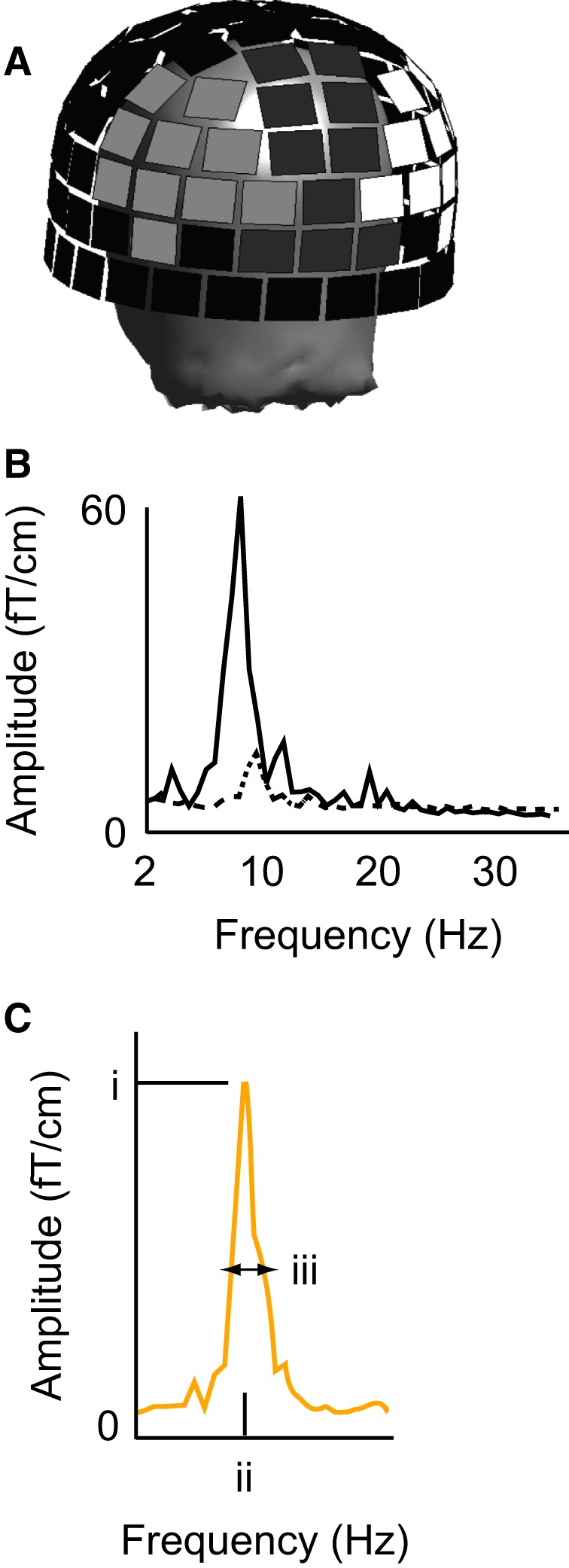
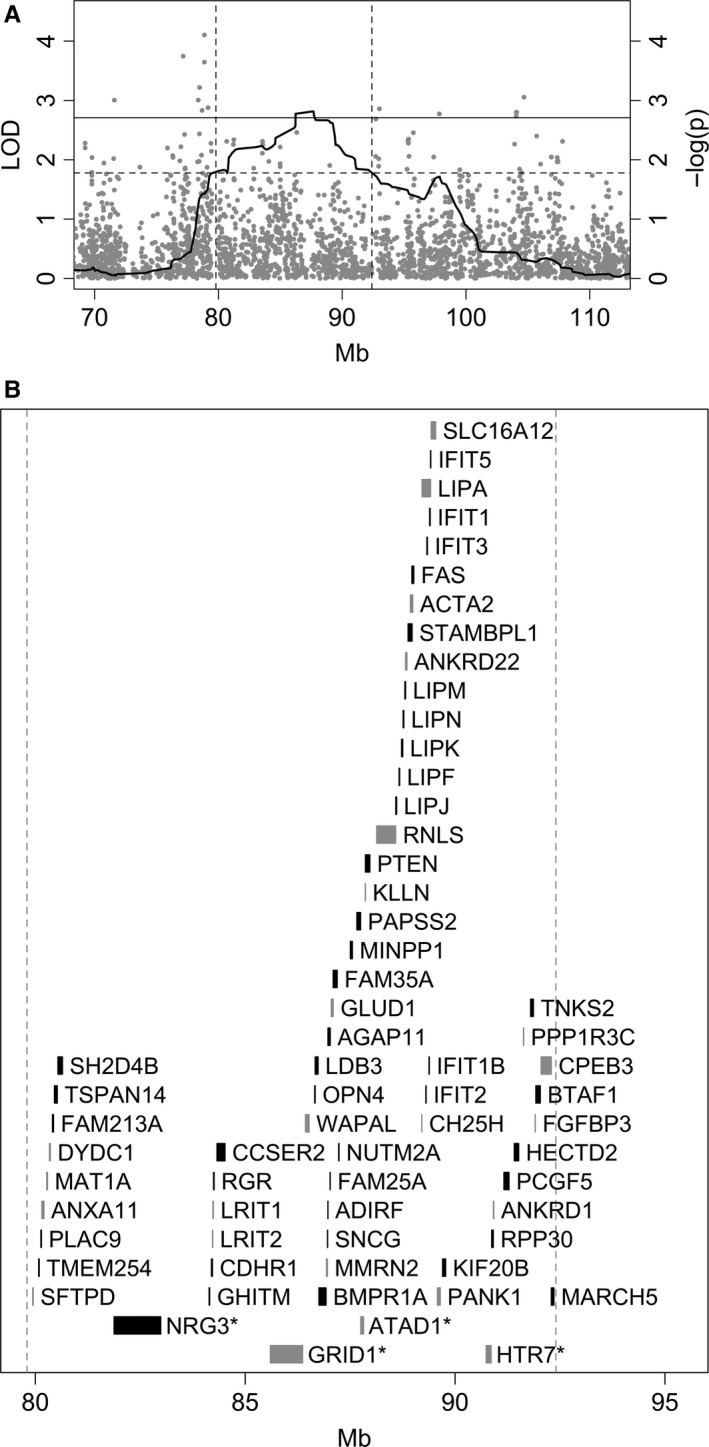
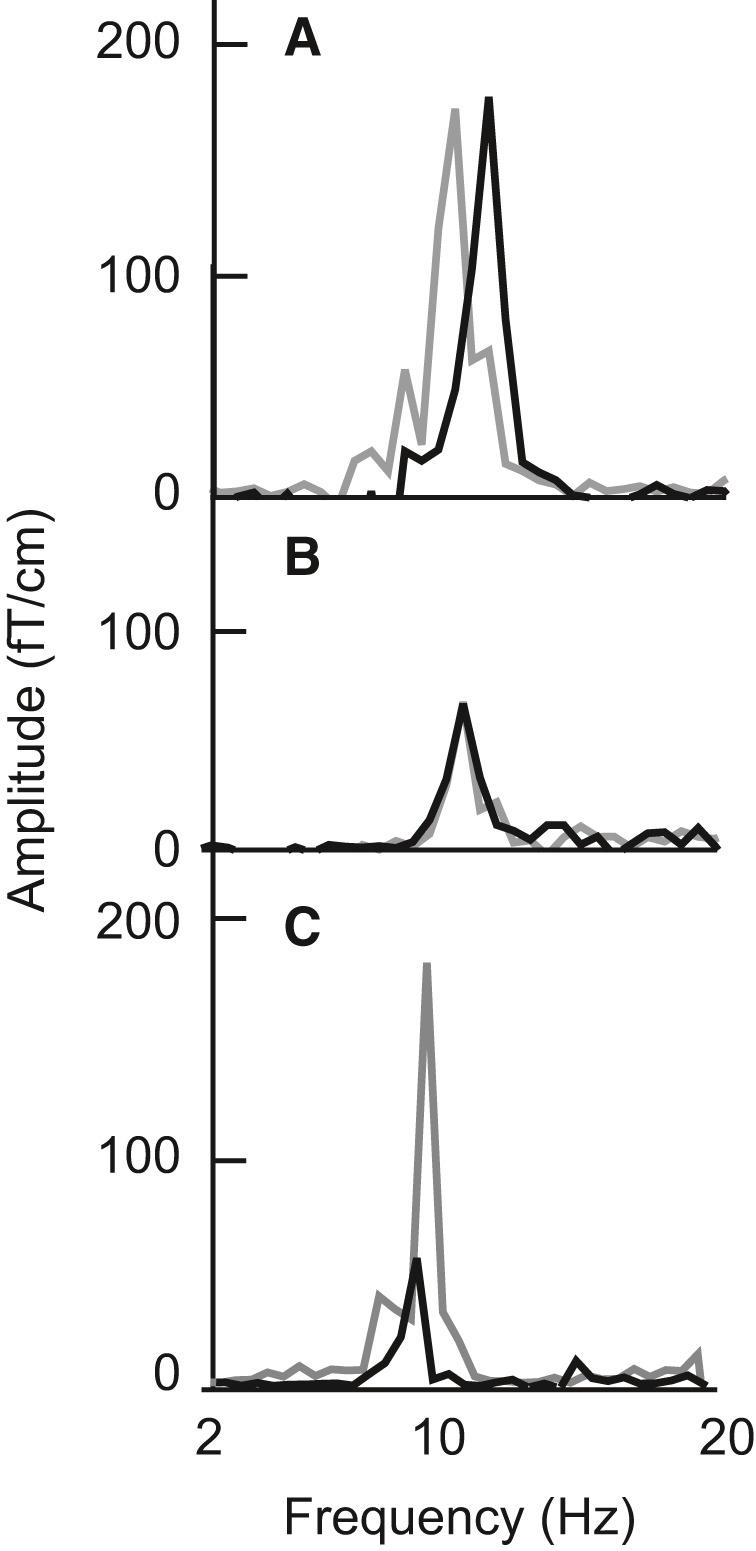
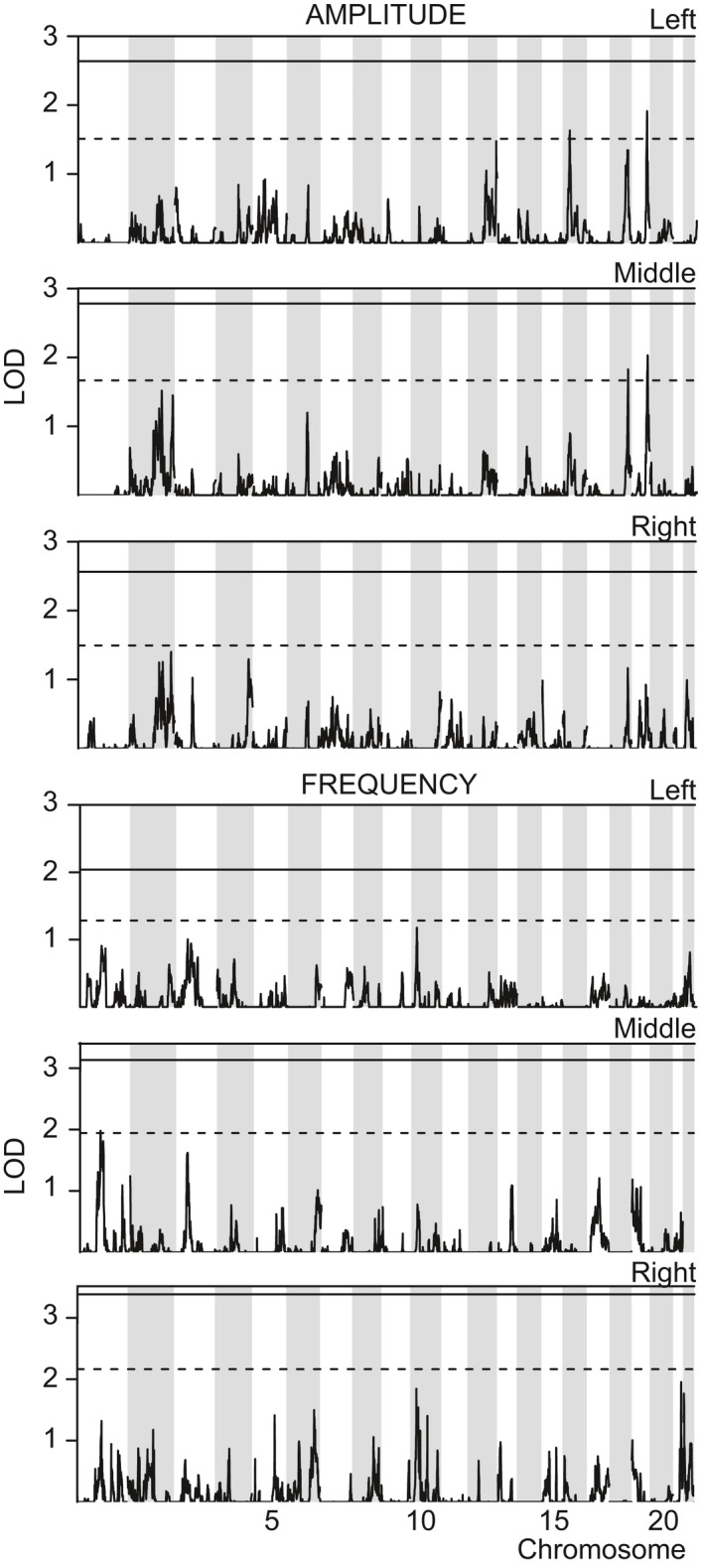
Several functional and morphological brain measures are partly under genetic control. The identification of direct links between neuroimaging signals and corresponding genetic factors can reveal cellular-level mechanisms behind the measured macroscopic signals and contribute to the use of imaging signals as probes of genetic function. To uncover possible genetic determinants of the most prominent brain signal oscillation, the parieto-occipital 10-Hz alpha rhythm, we measured spontaneous brain activity with magnetoencephalography in 210 healthy siblings while the subjects were resting, with eyes closed and open. The reactivity of the alpha rhythm was quantified from the difference spectra between the two conditions. We focused on three measures: peak frequency, peak amplitude and the width of the main spectral peak. In accordance with earlier electroencephalography studies, spectral peak amplitude was highly heritable (h(2) > 0.75). Variance component-based analysis of 28 000 single-nucleotide polymorphism markers revealed linkage for both the width and the amplitude of the spectral peak. The strongest linkage was detected for the width of the spectral peak over the left parieto-occipital cortex on chromosome 10 (LOD = 2.814, nominal P < 0.03). This genomic region contains several functionally plausible genes, including GRID1 and ATAD1 that regulate glutamate receptor channels mediating synaptic transmission, NRG3 with functions in brain development and HRT7 involved in the serotonergic system and circadian rhythm. Our data suggest that the alpha oscillation is in part genetically regulated, and that it may be possible to identify its regulators by genetic analyses on a realistically modest number of samples.
几种大脑功能和形态学指标部分受基因控制。确定神经影像信号与相应基因因素之间的直接联系,能够揭示所测宏观信号背后的细胞水平机制,并有助于将影像信号用作基因功能的探测手段。为了揭示最显著的大脑信号振荡即顶枕部10赫兹α节律可能的基因决定因素,我们在210名健康同胞闭眼和睁眼休息时,用脑磁图测量了他们的自发脑活动。α节律的反应性通过两种状态下的差异频谱进行量化。我们重点关注了三项指标:峰值频率、峰值幅度和主频谱峰的宽度。与早期脑电图研究一致,频谱峰幅度具有高度遗传性(h(2) > 0.75)。对28000个单核苷酸多态性标记进行基于方差成分的分析,发现频谱峰的宽度和幅度均存在连锁关系。在10号染色体上左顶枕叶皮质的频谱峰宽度检测到最强连锁(LOD = 2.814,名义P < 0.03)。该基因组区域包含几个功能上合理的基因,包括调节介导突触传递的谷氨酸受体通道的GRID1和ATAD1、在大脑发育中起作用的NRG3以及参与血清素能系统和昼夜节律的HRT7。我们的数据表明,α振荡部分受基因调控,并且有可能通过对数量实际适度的样本进行基因分析来识别其调控因子。