Cohen Laboratories, School of Earth and Environment, University of Leeds, Leeds LS2 9JT, UK.
GFZ German Research Centre for Geosciences, Telegrafenberg, Potsdam 14473, Germany.
Nat Commun. 2016 Jun 22;7:11968. doi: 10.1038/ncomms11968.
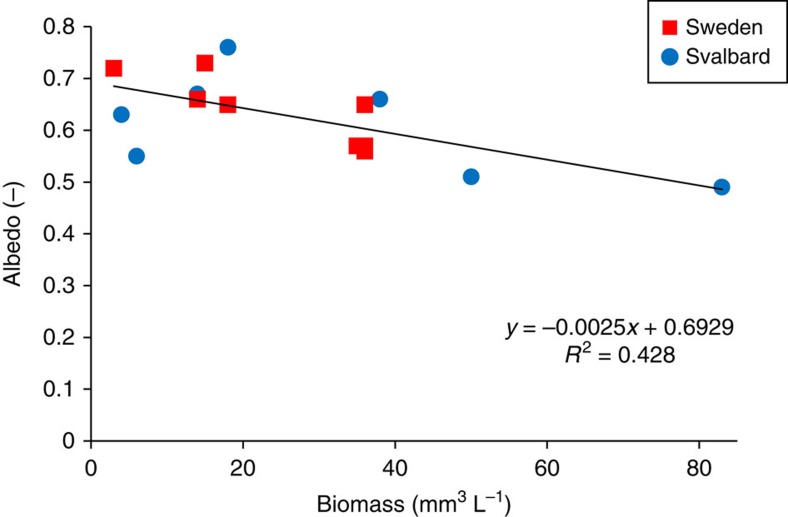
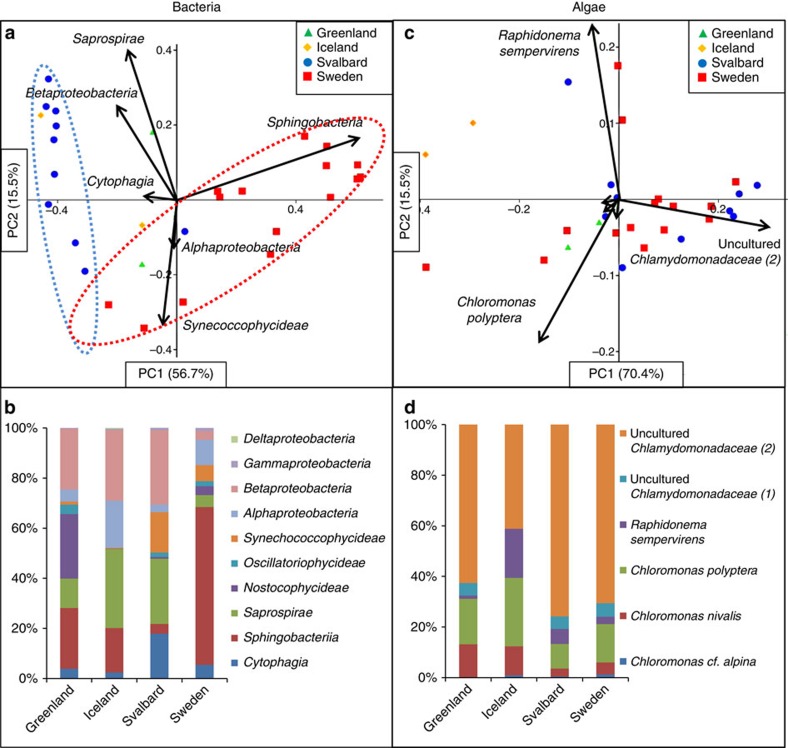
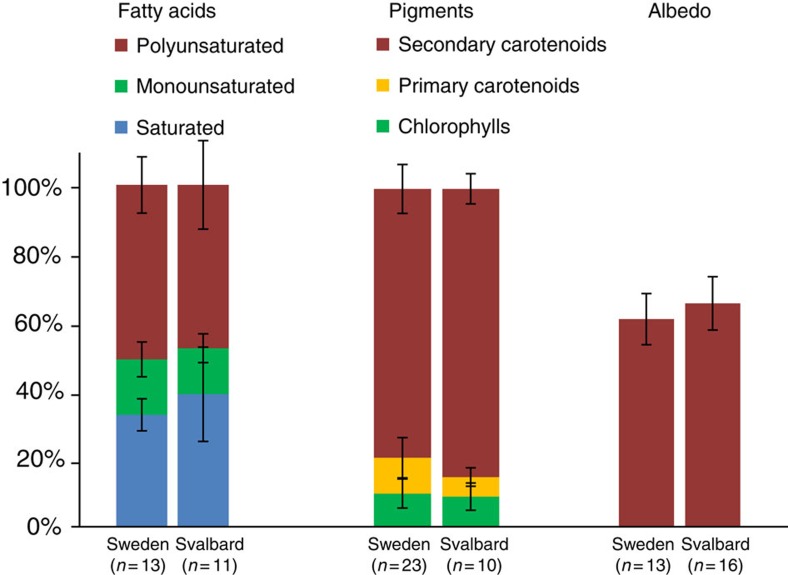
The Arctic is melting at an unprecedented rate and key drivers are changes in snow and ice albedo. Here we show that red snow, a common algal habitat blooming after the onset of melting, plays a crucial role in decreasing albedo. Our data reveal that red pigmented snow algae are cosmopolitan as well as independent of location-specific geochemical and mineralogical factors. The patterns for snow algal diversity, pigmentation and, consequently albedo, are ubiquitous across the Arctic and the reduction in albedo accelerates snow melt and increases the time and area of exposed bare ice. We estimated that the overall decrease in snow albedo by red pigmented snow algal blooms over the course of one melt season can be 13%. This will invariably result in higher melt rates. We argue that such a 'bio-albedo' effect has to be considered in climate models.
北极正以前所未有的速度融化,关键驱动因素是冰雪反照率的变化。在这里,我们表明,红色的雪,一种常见的藻类栖息地,在融化开始后盛开,在降低反照率方面起着至关重要的作用。我们的数据表明,红色色素雪藻是世界性的,不受特定于地点的地球化学和矿物学因素的影响。在整个北极地区,雪藻多样性、色素沉着以及由此产生的反照率模式是普遍存在的,反照率的降低加速了雪的融化,并增加了裸露冰面的时间和面积。我们估计,在一个融化季节中,红色色素雪藻的开花导致的雪反照率整体下降可能为 13%。这将不可避免地导致更高的融化率。我们认为,在气候模型中必须考虑到这种“生物反照率”效应。