Department of Ecology and Ecosystem Modelling, University of Potsdam Potsdam, Germany.
Front Microbiol. 2012 Oct 29;3:380. doi: 10.3389/fmicb.2012.00380. eCollection 2012.
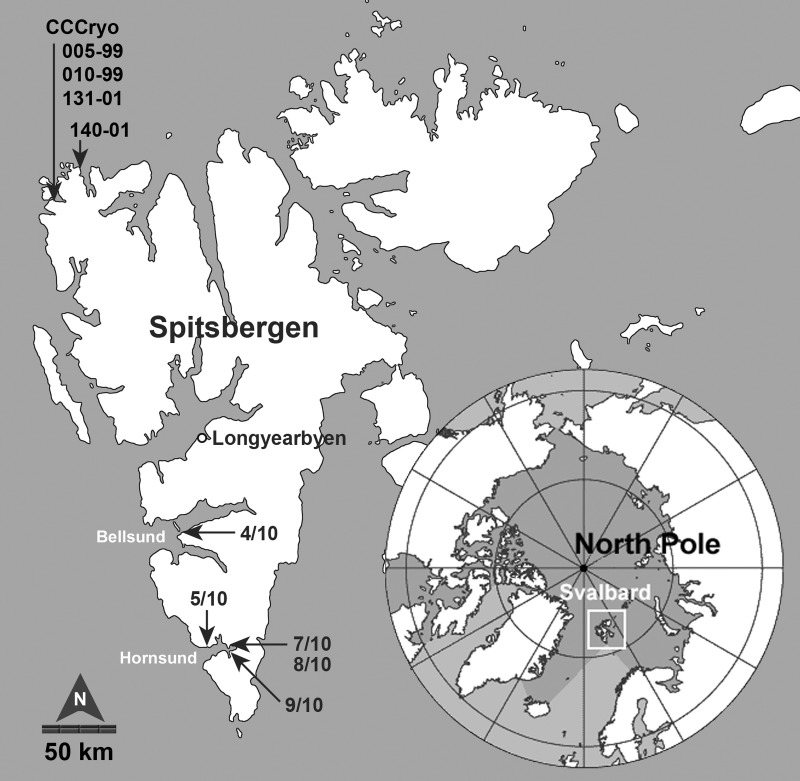
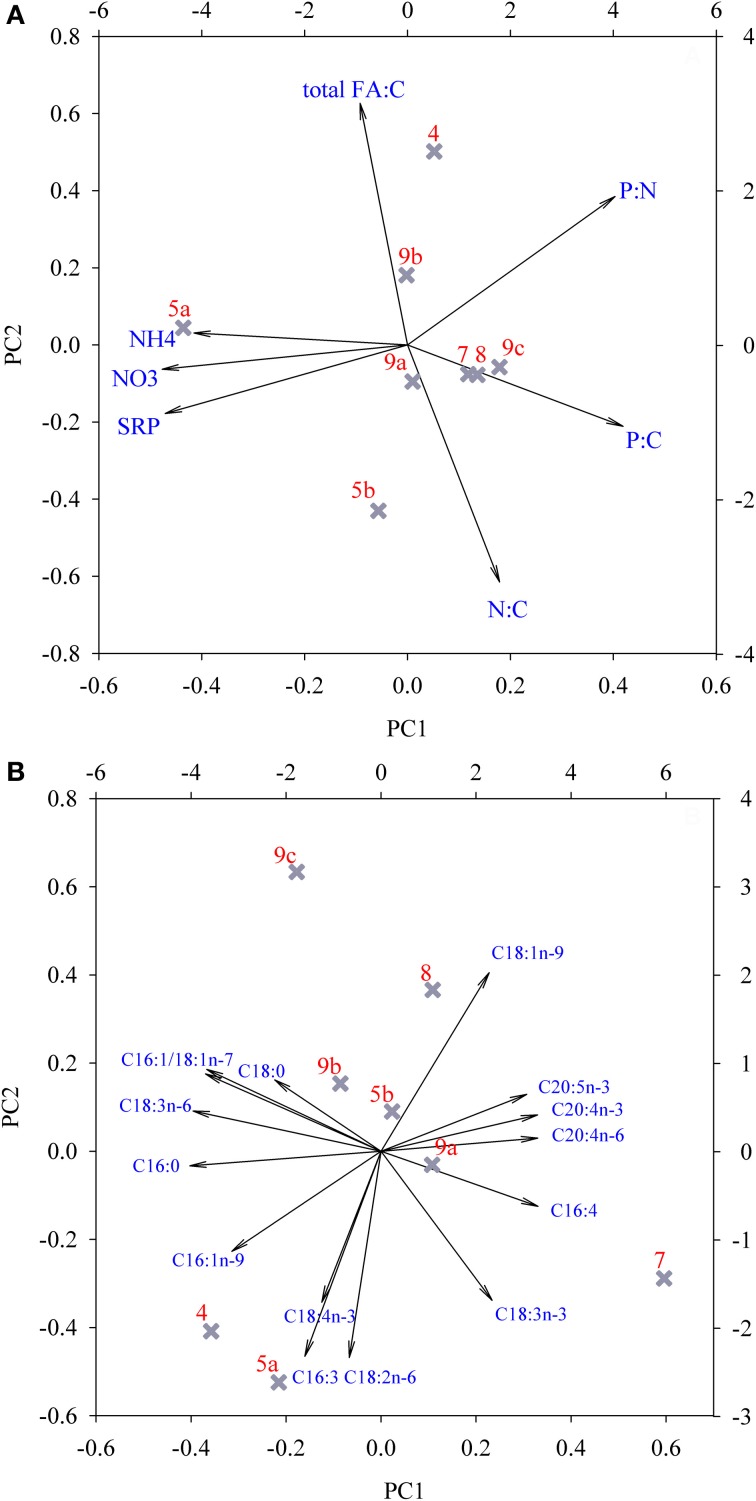
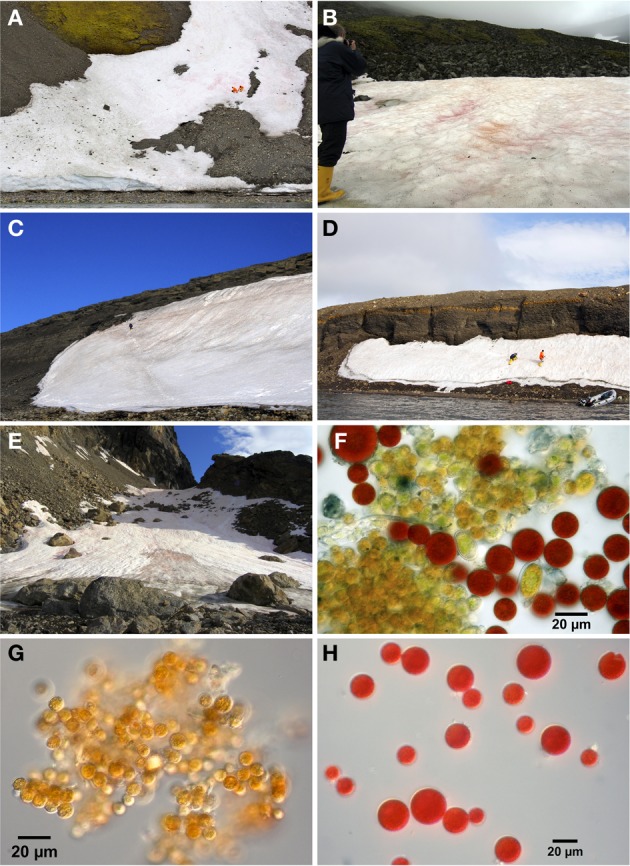
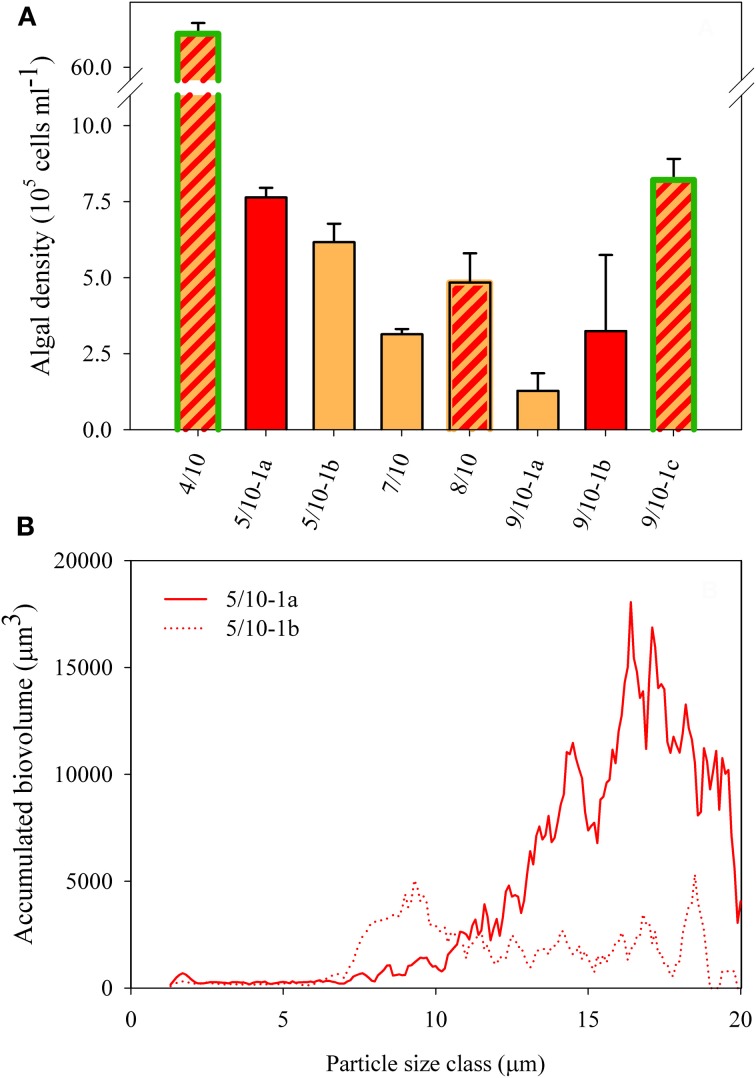
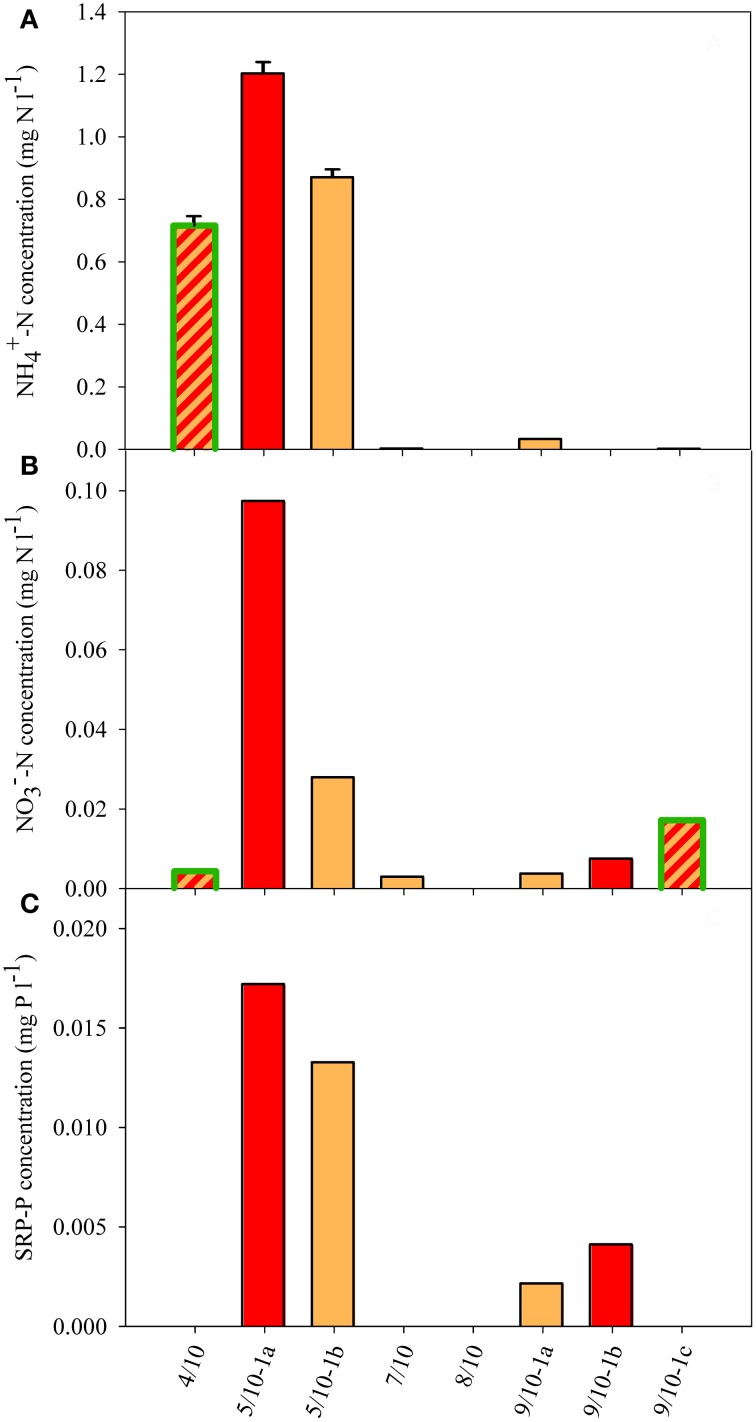
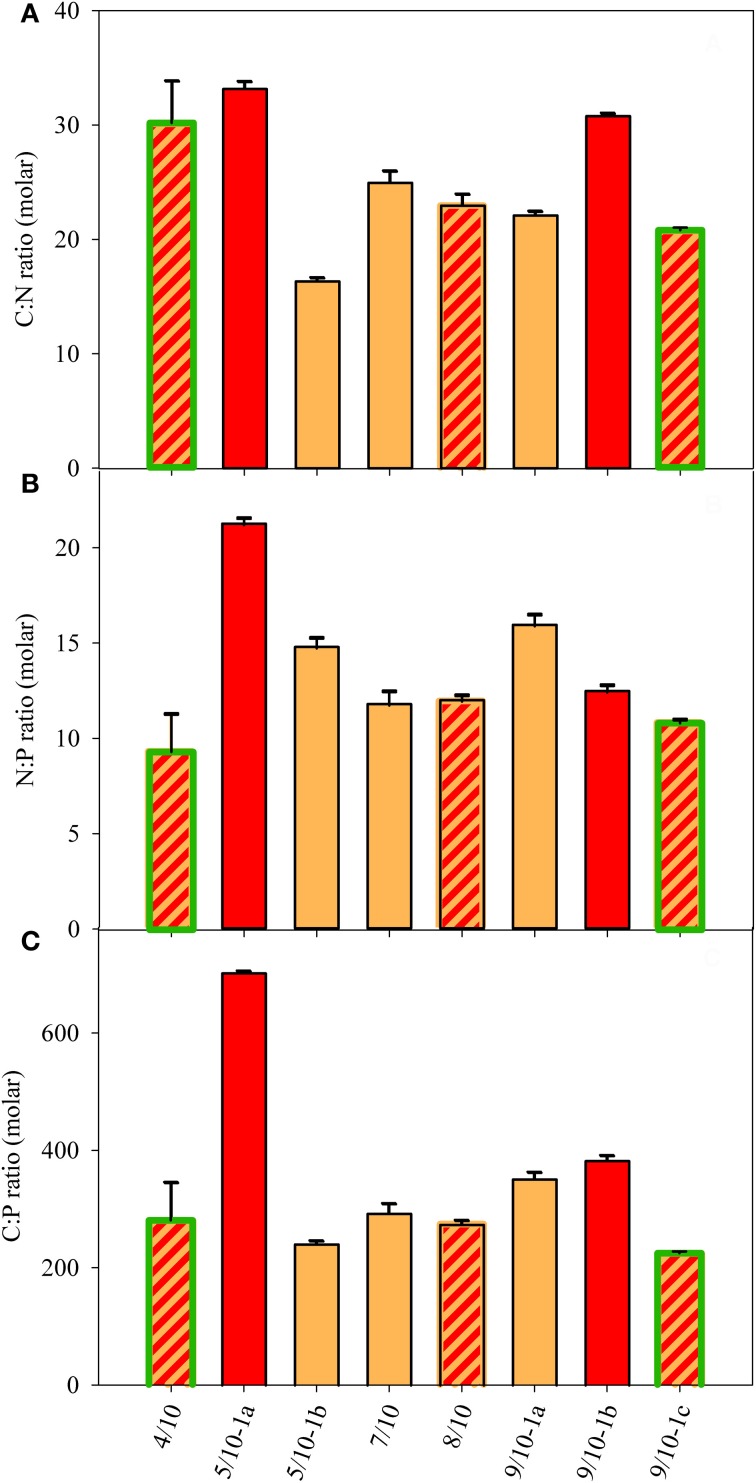
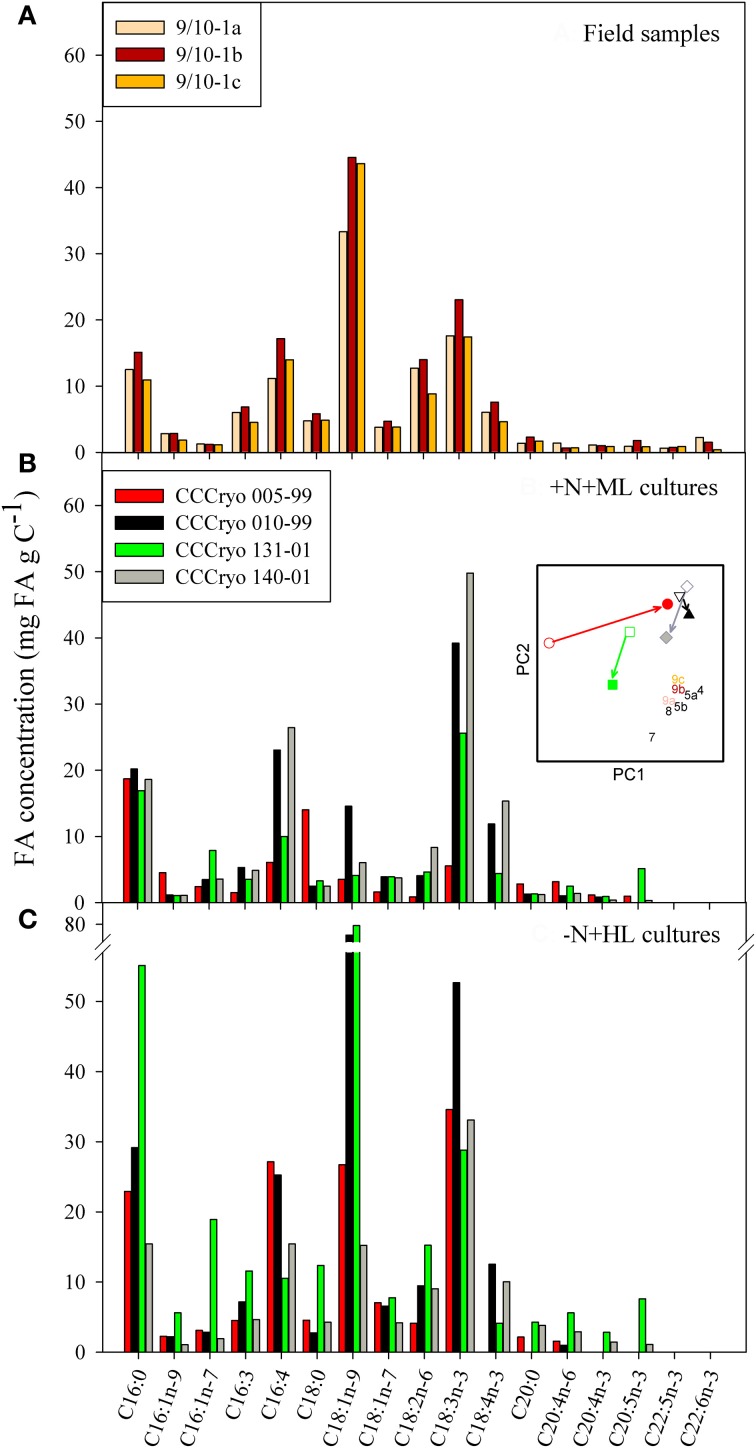
Red, orange or green snow is the macroscopic phenomenon comprising different eukaryotic algae. Little is known about the ecology and nutrient regimes in these algal communities. Therefore, eight snow algal communities from five intensively tinted snow fields in western Spitsbergen were analysed for nutrient concentrations and fatty acid (FA) composition. To evaluate the importance of a shift from green to red forms on the FA-variability of the field samples, four snow algal strains were grown under nitrogen replete and moderate light (+N+ML) or N-limited and high light (-N+HL) conditions. All eight field algal communities were dominated by red and orange cysts. Dissolved nutrient concentration of the snow revealed a broad range of NH(+) (4) (<0.005-1.2 mg N l(-1)) and only low PO(3-) (4) (<18 μg P l(-1)) levels. The external nutrient concentration did not reflect cellular nutrient ratios as C:N and C:P ratios of the communities were highest at locations containing relatively high concentrations of NH(+) (4) and PO(3-) (4). Molar N:P ratios ranged from 11 to 21 and did not suggest clear limitation of a single nutrient. On a per carbon basis, we found a 6-fold difference in total FA content between the eight snow algal communities, ranging from 50 to 300 mg FA g C(-1). In multivariate analyses total FA content opposed the cellular N:C quota and a large part of the FA variability among field locations originated from the abundant FAs C18:1n-9, C18:2n-6, and C18:3n-3. Both field samples and snow algal strains grown under -N+HL conditions had high concentrations of C18:1n-9. FAs possibly accumulated due to the cessation of growth. Differences in color and nutritional composition between patches of snow algal communities within one snow field were not directly related to nutrient conditions. We propose that the highly patchy distribution of snow algae within and between snow fields may also result from differences in topographical and geological parameters such as slope, melting water rivulets, and rock formation.
红色、橙色或绿色的雪是由不同真核藻类组成的宏观现象。对于这些藻类群落的生态学和营养动态,人们知之甚少。因此,对来自斯匹次卑尔根西部五个高度着色雪地的 8 个雪藻群落进行了分析,以测定其营养浓度和脂肪酸 (FA) 组成。为了评估从绿色到红色形态的转变对现场样本 FA 可变性的重要性,将四种雪藻菌株在氮充足和中等光照(+N+ML)或氮限制和高光(-N+HL)条件下进行培养。所有 8 个野外藻类群落均以红色和橙色孢囊为主。雪的溶解养分浓度显示出 NH(+) (4) 的广泛范围(<0.005-1.2mgNl(-1)),只有低 PO(3-) (4) 水平(<18μgPl(-1))。外部养分浓度并未反映细胞养分比例,因为群落的 C:N 和 C:P 比值在含有相对高浓度 NH(+) (4) 和 PO(3-) (4) 的位置最高。摩尔 N:P 比值范围为 11 至 21,并不表明单一养分存在明显限制。基于每碳的基础,我们发现 8 个雪藻群落之间的总 FA 含量相差 6 倍,范围从 50 到 300mgFAgC(-1)。在多元分析中,总 FA 含量与细胞 N:C 配额相反,野外位置之间的大部分 FA 可变性源自丰富的 FA C18:1n-9、C18:2n-6 和 C18:3n-3。野外样本和在 -N+HL 条件下生长的雪藻菌株均具有高浓度的 C18:1n-9。FA 可能由于生长停止而积累。同一雪地内和雪地之间的雪藻群落斑块之间的颜色和营养组成差异与营养条件没有直接关系。我们提出,雪藻在雪地内和雪地之间的高度斑块分布也可能是由于地形和地质参数(如坡度、融水小溪和岩石形成)的差异造成的。