Headland Michelle, Clifton Peter M, Carter Sharayah, Keogh Jennifer B
School of Pharmacy and Medical Sciences, University of South Australia, Adelaide 5000, Australia.
Nutrients. 2016 Jun 8;8(6):354. doi: 10.3390/nu8060354.
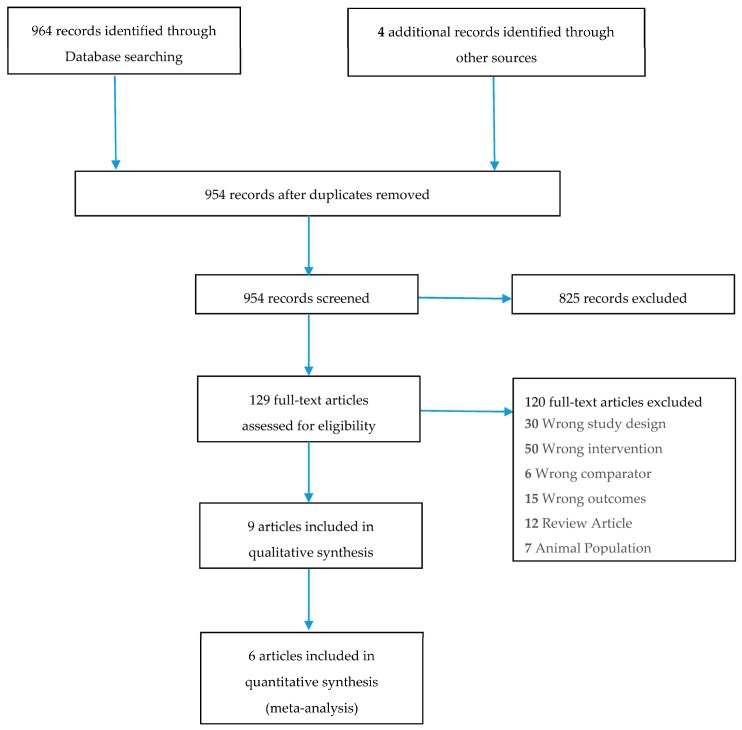
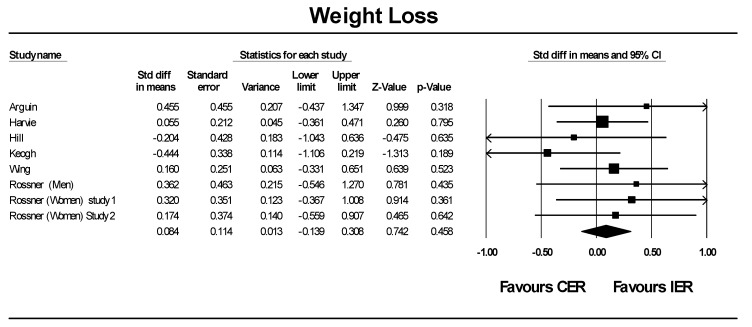
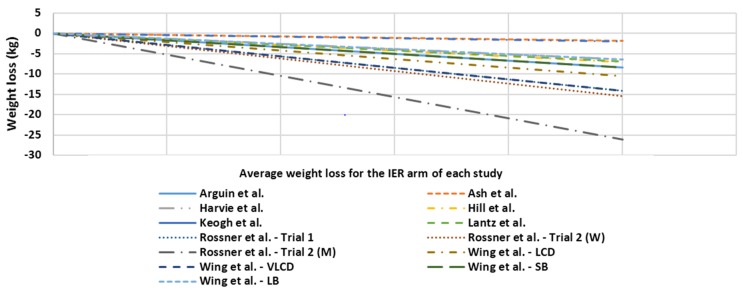
The aim of this systematic review and meta-analysis is to summarise the effects of intermittent energy restriction on weight and biological markers in long term intervention studies of >6 months duration. An electronic search was performed using the MEDLINE, EMBASE and the Cochrane Library databases for intervention trials lasting 6 months or longer investigating the effects of intermittent energy restriction. A total of nine studies were identified as meeting the pre-specified criteria. All studies included an intermittent energy restriction arm, with six being directly compared to continuous energy restriction. A total of 981 subjects were enrolled and randomised, with weight loss observed in all intermittent energy restriction arms regardless of study duration or follow up length. Eight interventions in six trials were used for the meta-analyses, with results indicating neither intermittent or continuous energy restriction being superior with respect to weight loss, 0.084 ± 0.114 (overall mean difference between groups ± standard error; p = 0.458). The effects of intermittent energy restriction in the long term remain unclear. The number of long term studies conducted is very limited, and participant numbers typically small (less than 50 completers), indicating the need for larger, long term trials of 12 months or more, to be conducted in order to understand the impact of intermittent energy restriction on weight loss and long term weight management. Blood lipid concentrations, glucose, and insulin were not altered by intermittent energy expenditure in values greater than those seen with continuous energy restriction.
本系统评价和荟萃分析的目的是总结在持续时间超过6个月的长期干预研究中,间歇性能量限制对体重和生物学标志物的影响。使用MEDLINE、EMBASE和Cochrane图书馆数据库进行电子检索,以查找持续6个月或更长时间、研究间歇性能量限制影响的干预试验。共确定9项研究符合预先设定的标准。所有研究均设有间歇性能量限制组,其中6项与持续能量限制组直接比较。共纳入981名受试者并进行随机分组,在所有间歇性能量限制组中均观察到体重减轻,无论研究持续时间或随访时长如何。六项试验中的八项干预措施用于荟萃分析,结果表明在体重减轻方面,间歇性或持续能量限制均无优势,0.084±0.114(组间总体平均差异±标准误;p = 0.458)。间歇性能量限制的长期效果仍不明确。进行的长期研究数量非常有限,且参与者数量通常较少(完成者少于50人),这表明需要开展12个月或更长时间的更大规模长期试验,以了解间歇性能量限制对体重减轻和长期体重管理的影响。间歇性能量消耗并未使血脂浓度、血糖和胰岛素水平发生高于持续能量限制时的变化。