Department of Molecular Biology and Genetics, Cornell University, Ithaca, NY, USA.
Department of Microbiology, Cornell University, Ithaca, NY, USA.
Microbiome. 2016 Jun 23;4(1):30. doi: 10.1186/s40168-016-0171-4.
Gastrointestinal disturbances are among symptoms commonly reported by individuals diagnosed with myalgic encephalomyelitis/chronic fatigue syndrome (ME/CFS). However, whether ME/CFS is associated with an altered microbiome has remained uncertain. Here, we profiled gut microbial diversity by sequencing 16S ribosomal ribonucleic acid (rRNA) genes from stool as well as inflammatory markers from serum for cases (n = 48) and controls (n = 39). We also examined a set of inflammatory markers in blood: C-reactive protein (CRP), intestinal fatty acid-binding protein (I-FABP), lipopolysaccharide (LPS), LPS-binding protein (LBP), and soluble CD14 (sCD14).
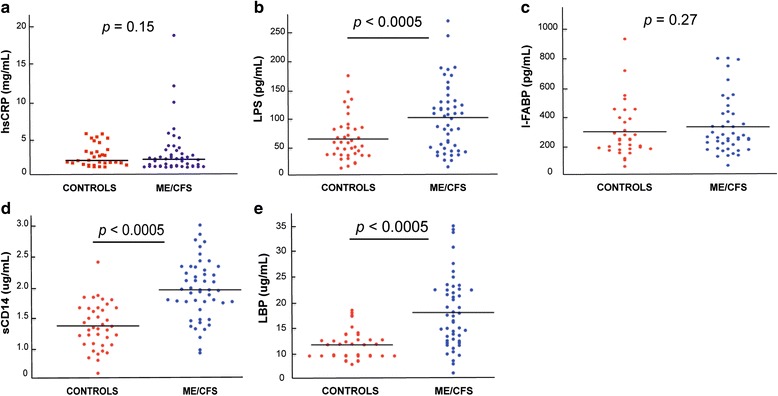
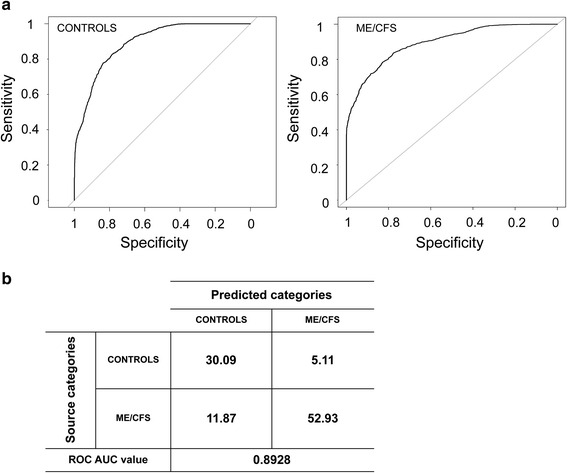
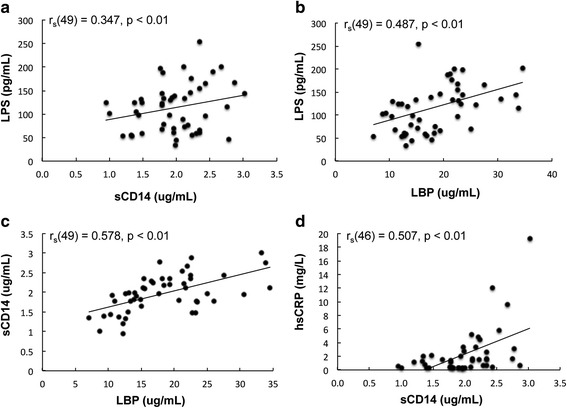
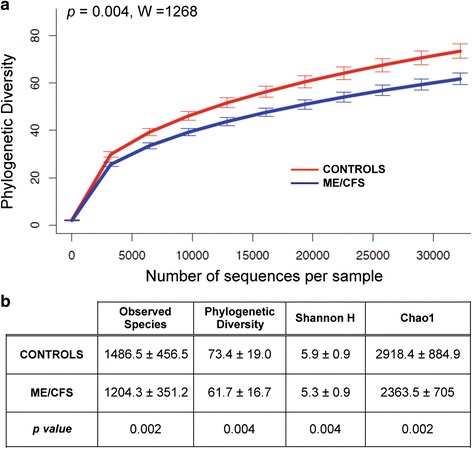
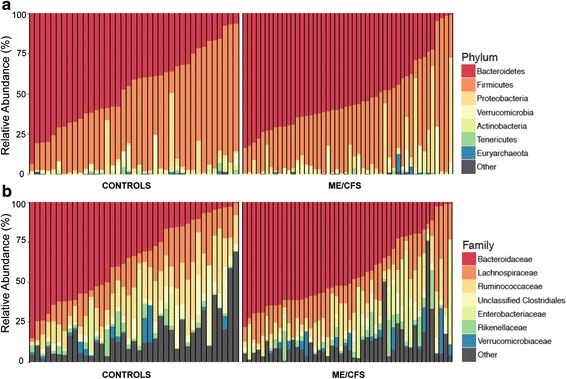
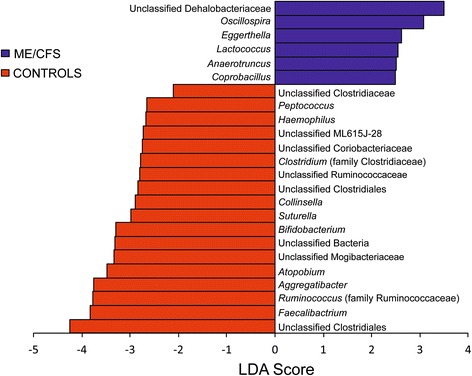
We observed elevated levels of some blood markers for microbial translocation in ME/CFS patients; levels of LPS, LBP, and sCD14 were elevated in ME/CFS subjects. Levels of LBP correlated with LPS and sCD14 and LPS levels correlated with sCD14. Through deep sequencing of bacterial rRNA markers, we identified differences between the gut microbiomes of healthy individuals and patients with ME/CFS. We observed that bacterial diversity was decreased in the ME/CFS specimens compared to controls, in particular, a reduction in the relative abundance and diversity of members belonging to the Firmicutes phylum. In the patient cohort, we find less diversity as well as increases in specific species often reported to be pro-inflammatory species and reduction in species frequently described as anti-inflammatory. Using a machine learning approach trained on the data obtained from 16S rRNA and inflammatory markers, individuals were classified correctly as ME/CFS with a cross-validation accuracy of 82.93 %.
Our results indicate dysbiosis of the gut microbiota in this disease and further suggest an increased incidence of microbial translocation, which may play a role in inflammatory symptoms in ME/CFS.
胃肠道紊乱是肌痛性脑脊髓炎/慢性疲劳综合征(ME/CFS)患者常报告的症状之一。然而,ME/CFS 是否与微生物组的改变有关仍然不确定。在这里,我们通过对粪便中 16S 核糖体核糖核酸(rRNA)基因进行测序以及对病例(n=48)和对照组(n=39)的血清中的炎症标志物进行分析,来描绘肠道微生物多样性。我们还检查了一组血液中的炎症标志物:C 反应蛋白(CRP)、肠脂肪酸结合蛋白(I-FABP)、脂多糖(LPS)、LPS 结合蛋白(LBP)和可溶性 CD14(sCD14)。
我们观察到 ME/CFS 患者血液中一些微生物易位的标志物水平升高;ME/CFS 患者的 LPS、LBP 和 sCD14 水平升高。LBP 水平与 LPS 和 sCD14 相关,而 LPS 水平与 sCD14 相关。通过对细菌 rRNA 标志物的深度测序,我们发现健康个体和 ME/CFS 患者的肠道微生物组存在差异。我们观察到与对照组相比,ME/CFS 标本中的细菌多样性降低,特别是属于厚壁菌门的成员的相对丰度和多样性降低。在患者队列中,我们发现多样性减少,而通常被报道为促炎的物种增加,以及经常被描述为抗炎的物种减少。使用基于 16S rRNA 和炎症标志物获得的数据训练的机器学习方法,个体被正确分类为 ME/CFS,交叉验证准确率为 82.93%。
我们的结果表明这种疾病存在肠道微生物群落失调,并进一步表明微生物易位的发生率增加,这可能在 ME/CFS 的炎症症状中起作用。