Chakraborty Koushik, Bose Jayakumar, Shabala Lana, Shabala Sergey
Department of Plant Physiology, ICAR-Directorate of Groundnut Research, Junagadh, Gujarat-362 001, India School of Land and Food and Tasmanian Institute for Agriculture, University of Tasmania, Hobart, Private Bag 94, Tas 7001, Australia.
School of Land and Food and Tasmanian Institute for Agriculture, University of Tasmania, Hobart, Private Bag 94, Tas 7001, Australia.
J Exp Bot. 2016 Aug;67(15):4611-25. doi: 10.1093/jxb/erw236. Epub 2016 Jun 23.
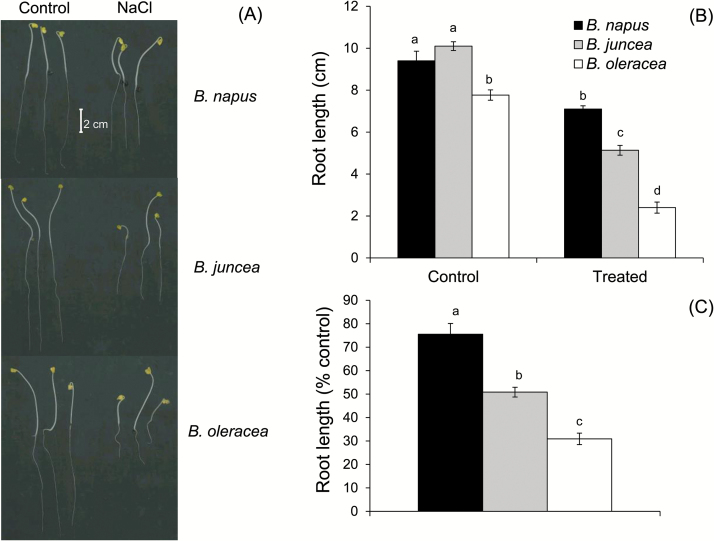
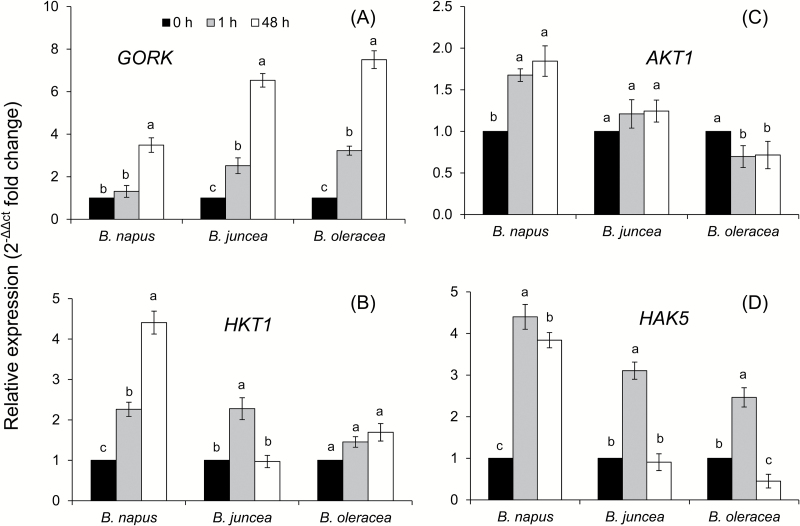
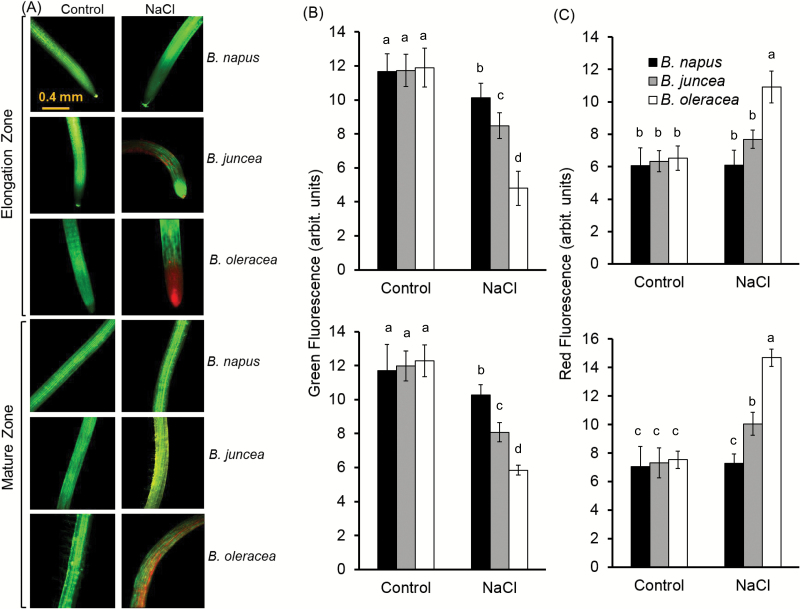
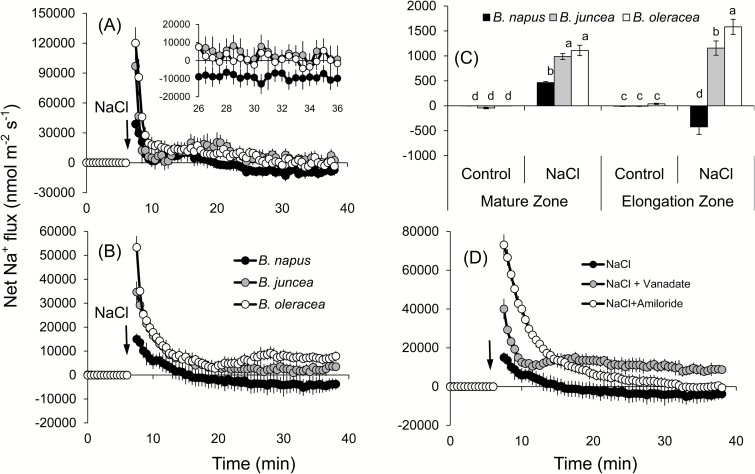
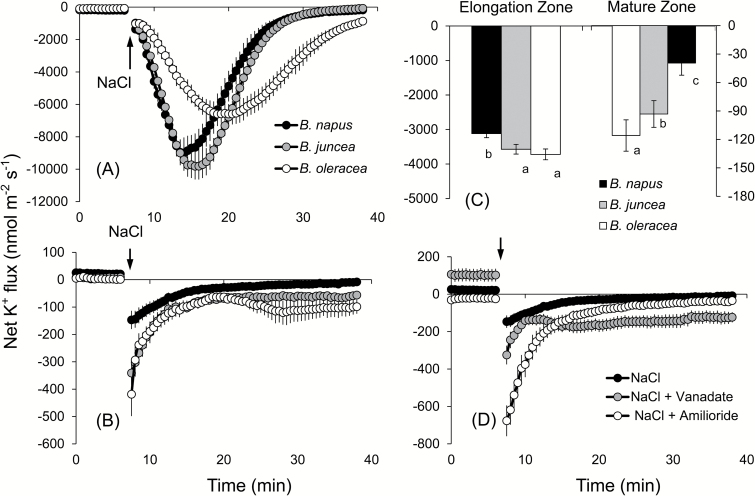
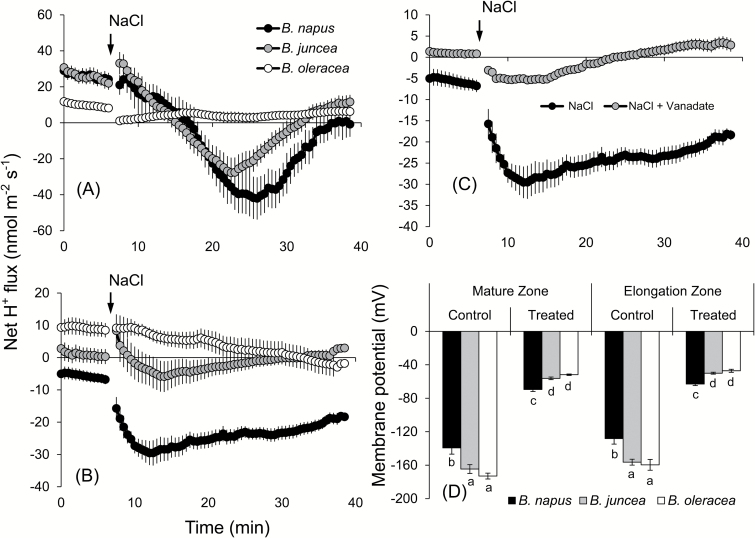
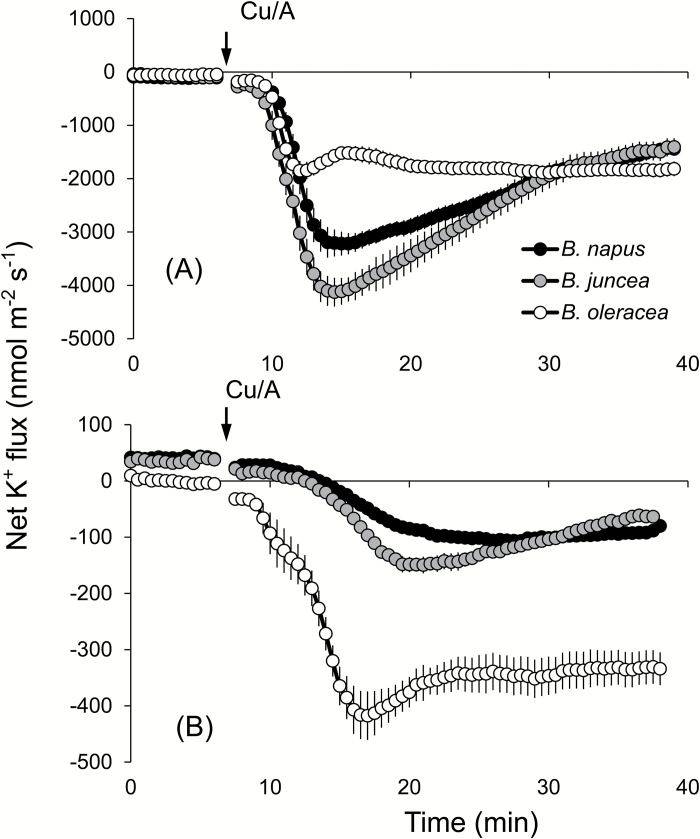
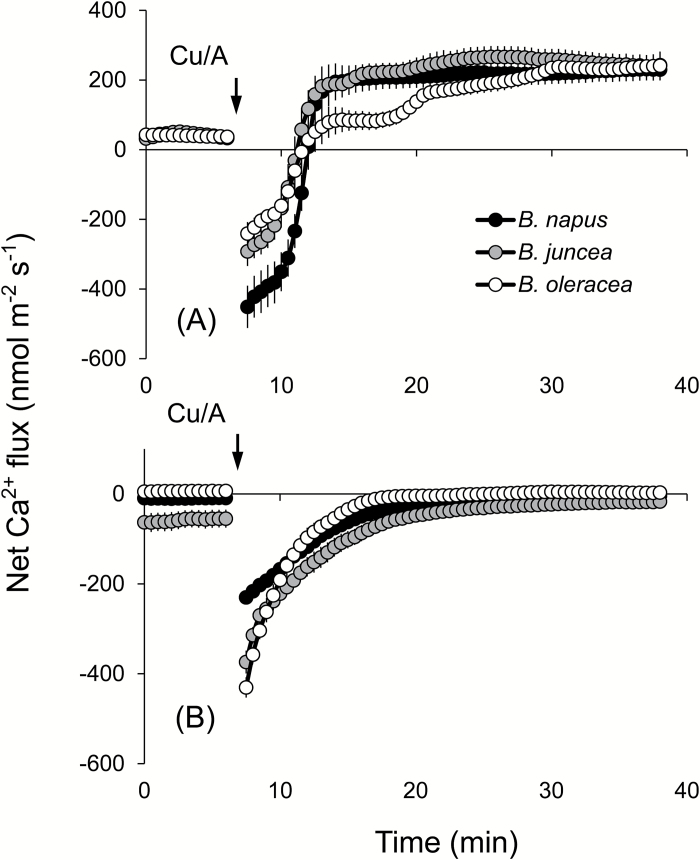
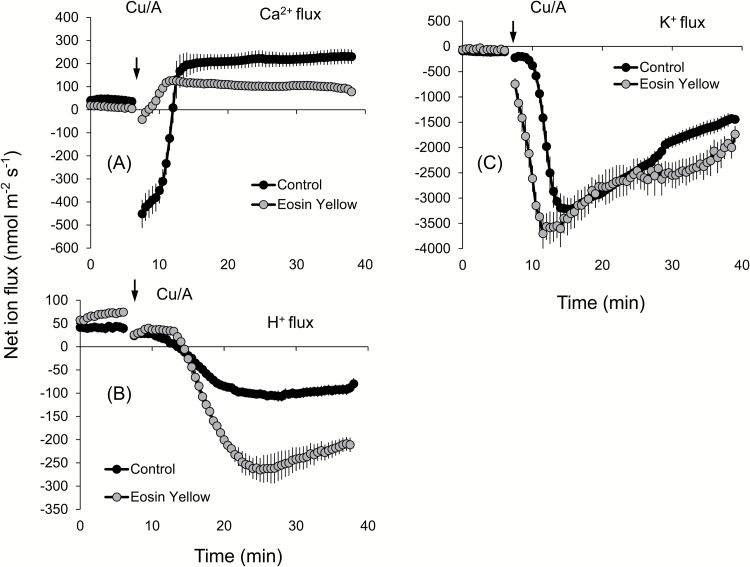
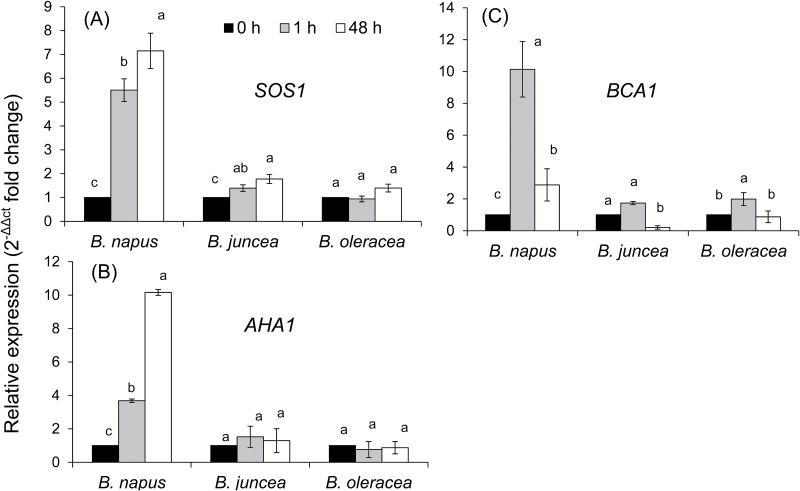
Brassica species are known to possess significant inter and intraspecies variability in salinity stress tolerance, but the cell-specific mechanisms conferring this difference remain elusive. In this work, the role and relative contribution of several key plasma membrane transporters to salinity stress tolerance were evaluated in three Brassica species (B. napus, B. juncea, and B. oleracea) using a range of electrophysiological assays. Initial root growth assay and viability staining revealed that B. napus was most tolerant amongst the three species, followed by B. juncea and B. oleracea At the mechanistic level, this difference was conferred by at least three complementary physiological mechanisms: (i) higher Na(+) extrusion ability from roots resulting from increased expression and activity of plasma membrane SOS1-like Na(+)/H(+) exchangers; (ii) better root K(+) retention ability resulting from stress-inducible activation of H(+)-ATPase and ability to maintain more negative membrane potential under saline conditions; and (iii) reduced sensitivity of B. napus root K(+)-permeable channels to reactive oxygen species (ROS). The last two mechanisms played the dominant role and conferred most of the differential salt sensitivity between species. Brassica napus plants were also more efficient in preventing the stress-induced increase in GORK transcript levels and up-regulation of expression of AKT1, HAK5, and HKT1 transporter genes. Taken together, our data provide the mechanistic explanation for differential salt stress sensitivity amongst these species and shed light on transcriptional and post-translational regulation of key ion transport systems involved in the maintenance of the root plasma membrane potential and cytosolic K/Na ratio as a key attribute for salt tolerance in Brassica species.
已知芸苔属物种在耐盐胁迫方面存在显著的种间和种内变异性,但赋予这种差异的细胞特异性机制仍不清楚。在这项研究中,使用一系列电生理分析方法,评估了三种芸苔属物种(甘蓝型油菜、芥菜型油菜和甘蓝)中几种关键质膜转运蛋白对耐盐胁迫的作用和相对贡献。初步的根生长分析和活力染色显示,甘蓝型油菜在这三个物种中最耐盐,其次是芥菜型油菜和甘蓝。在机制层面,这种差异至少由三种互补的生理机制造成:(i)质膜SOS1样Na(+)/H(+)交换体表达和活性增加,导致根部Na(+)外排能力增强;(ii)H(+)-ATPase的应激诱导激活以及在盐胁迫条件下维持更负膜电位的能力,使根部具有更好的K(+)保留能力;(iii)甘蓝型油菜根K(+)通透通道对活性氧(ROS)的敏感性降低。后两种机制起主导作用,造成了物种间大部分的盐敏感性差异。甘蓝型油菜植株在防止应激诱导的GORK转录水平增加以及AKT1、HAK5和HKT1转运蛋白基因表达上调方面也更有效。综上所述,我们的数据为这些物种间盐胁迫敏感性差异提供了机制解释,并揭示了参与维持根质膜电位和胞质K/Na比率的关键离子转运系统的转录和翻译后调控,这是芸苔属物种耐盐性的关键属性。