Ang Lei Yin Emily, Too Horng Khit Issac, Tan Eng Lee, Chow Tak-Kwong Vincent, Shek Lynette Pei-Chi, Tham Elizabeth Huiwen, Alonso Sylvie
Department of Microbiology and Immunology, Yong Loo Lin School of Medicine, National University of Singapore, Centre for Life Sciences, 28 Medical Drive, #03-05, Singapore, 117456, Singapore.
Immunology programme, Life Sciences Institute, National University of Singapore, Singapore, Singapore.
Virol J. 2016 Jun 24;13:111. doi: 10.1186/s12985-016-0567-6.
Recurrence of hand, foot and mouth disease (HFMD) pandemics continues to threaten public health. Despite increasing awareness and efforts, effective vaccine and drug treatment have yet to be available. Probiotics have gained recognition in the field of healthcare worldwide, and have been extensively prescribed to babies and young children to relieve gastrointestinal (GI) disturbances and diseases, associated or not with microbial infections. Since the faecal-oral axis represents the major route of HFMD transmission, transient persistence of probiotic bacteria in the GI tract may confer some protection against HFMD and limit transmission among children.
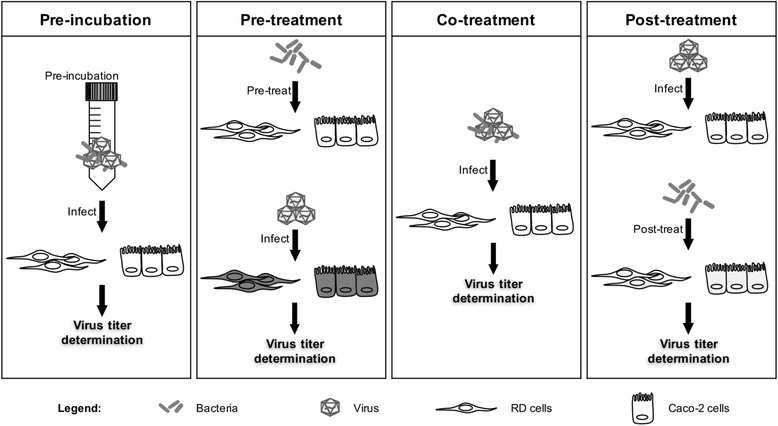
In this work, the antiviral activity of two commercially available probiotics, namely Lactobacillus reuteri Protectis (L. reuteri Protectis) and Lactobacillus casei Shirota (L. casei Shirota), was assayed against Coxsackieviruses and Enterovirus 71 (EV71), the main agents responsible for HFMD. In vitro infection set-ups using human skeletal muscle and colon cell lines were designed to assess the antiviral effect of the probiotic bacteria during entry and post-entry steps of the infection cycle.
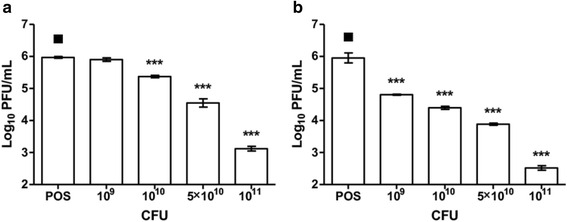
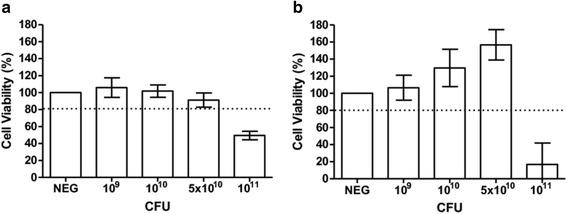
Our findings indicate that L. reuteri Protectis displays a significant dose-dependent antiviral activity against Coxsackievirus type A (CA) strain 6 (CA6), CA16 and EV71, but not against Coxsackievirus type B strain 2. Our data support that the antiviral effect is likely achieved through direct physical interaction between bacteria and virus particles, which impairs virus entry into its mammalian host cell. In contrast, no significant antiviral effect was observed with L. casei Shirota.
Should the antiviral activity of L. reuteri Protectis observed in vitro be translated in vivo, such probiotics-based therapeutic approach may have the potential to address the urgent need for a safe and effective means to protect against HFMD and limit its transmission among children.
手足口病(HFMD)大流行的复发持续威胁着公众健康。尽管人们的认识有所提高且付出了努力,但仍未找到有效的疫苗和药物治疗方法。益生菌在全球医疗保健领域已获得认可,并已广泛用于婴幼儿,以缓解胃肠道(GI)紊乱和疾病,无论是否与微生物感染有关。由于粪口途径是手足口病传播的主要途径,益生菌在胃肠道中的短暂存留可能会提供一些针对手足口病的保护作用,并限制儿童之间的传播。
在这项研究中,对两种市售益生菌,即罗伊氏乳杆菌(L. reuteri Protectis)和干酪乳杆菌代田株(L. casei Shirota)针对柯萨奇病毒和肠道病毒71型(EV71)(手足口病的主要病原体)的抗病毒活性进行了测定。设计了使用人类骨骼肌和结肠细胞系的体外感染实验,以评估益生菌在感染周期的进入和进入后阶段的抗病毒作用。
我们的研究结果表明,罗伊氏乳杆菌对A组柯萨奇病毒(CA)6型(CA6)、CA16和EV71具有显著的剂量依赖性抗病毒活性,但对B组柯萨奇病毒2型没有活性。我们的数据支持这种抗病毒作用可能是通过细菌与病毒颗粒之间的直接物理相互作用实现的,这会损害病毒进入其哺乳动物宿主细胞。相比之下,未观察到干酪乳杆菌代田株有显著的抗病毒作用。
如果在体外观察到的罗伊氏乳杆菌的抗病毒活性能够在体内得到验证,那么这种基于益生菌的治疗方法可能有潜力满足人们对一种安全有效的预防手足口病及限制其在儿童中传播手段的迫切需求。