Ichimaru Shohei, Nakagawa Shuji, Arai Yuji, Kishida Tsunao, Shin-Ya Masaharu, Honjo Kuniaki, Tsuchida Shinji, Inoue Hiroaki, Fujiwara Hiroyoshi, Shimomura Seiji, Mazda Osam, Kubo Toshikazu
Department of Orthopaedics, Graduate School of Medical Science, Kyoto Prefectural University of Medicine, Kawaramachi-Hirokoji, Kamigyo-ku, Kyoto 602-8566, Japan.
Department of Sports and Para-Sports Medicine, Graduate School of Medical Science, Kyoto Prefectural University of Medicine, Kawaramachi-Hirokoji, Kamigyo-ku, Kyoto 602-8566, Japan.
Int J Mol Sci. 2016 Jun 25;17(7):1013. doi: 10.3390/ijms17071013.
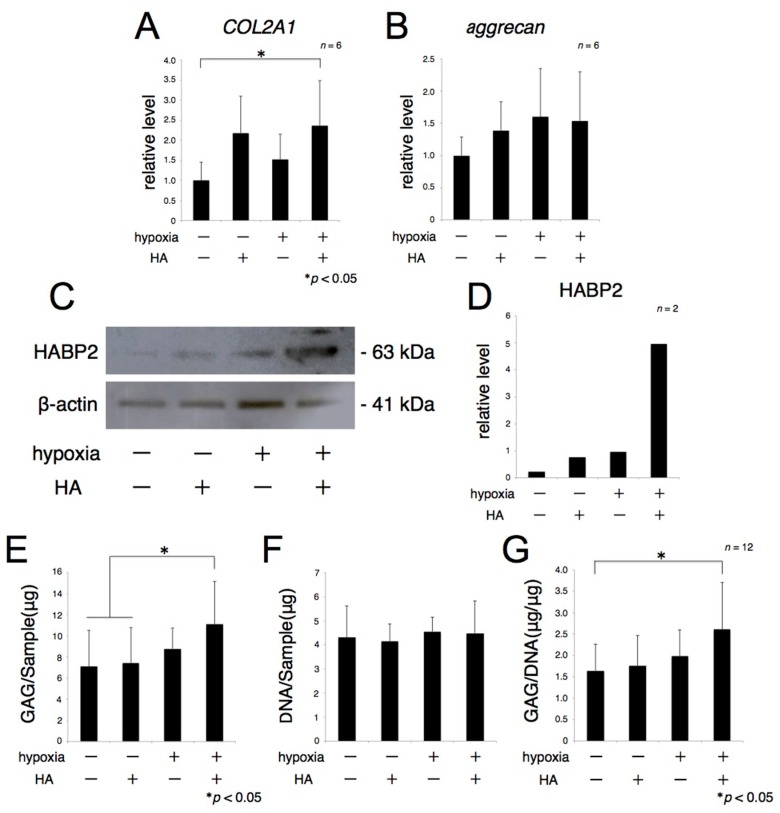
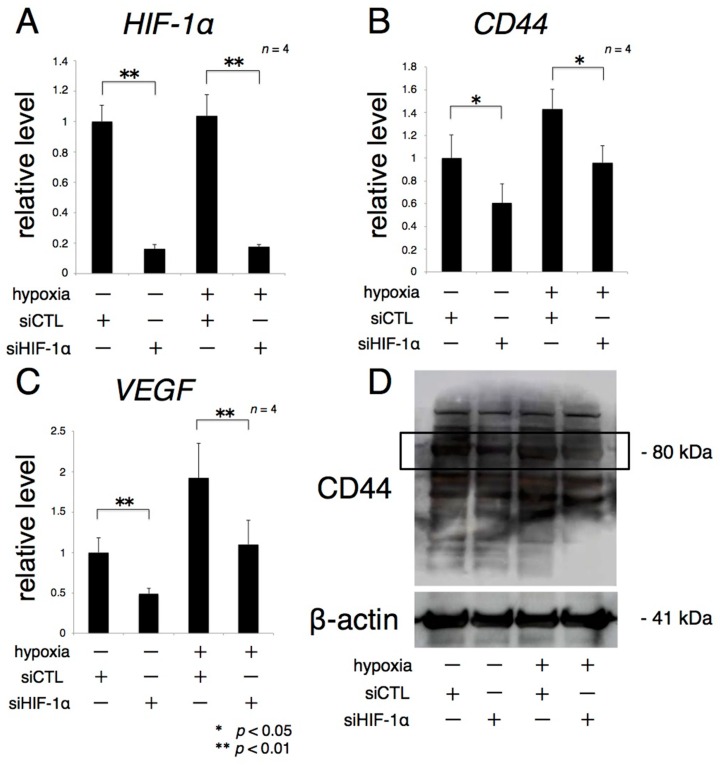
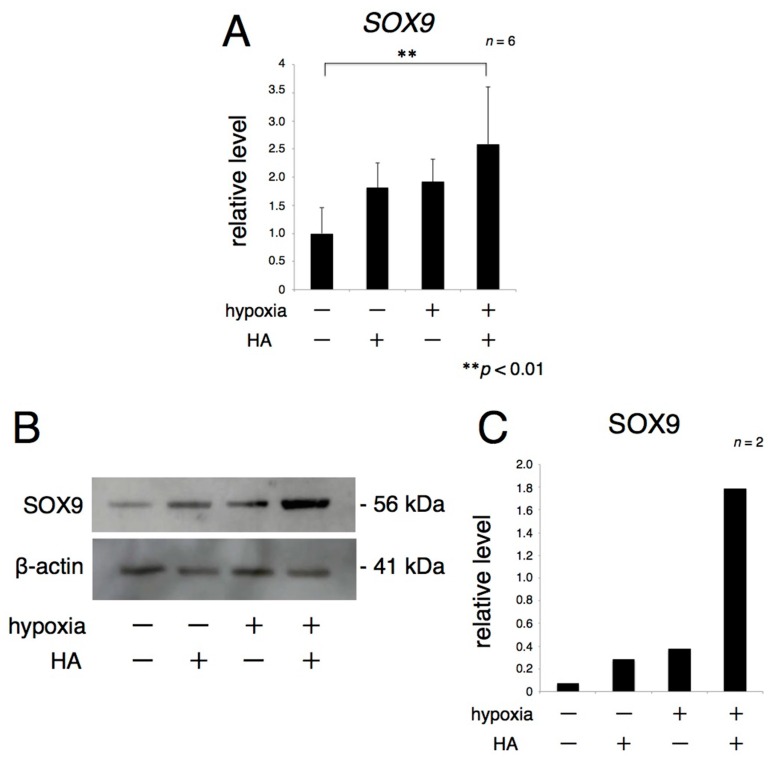
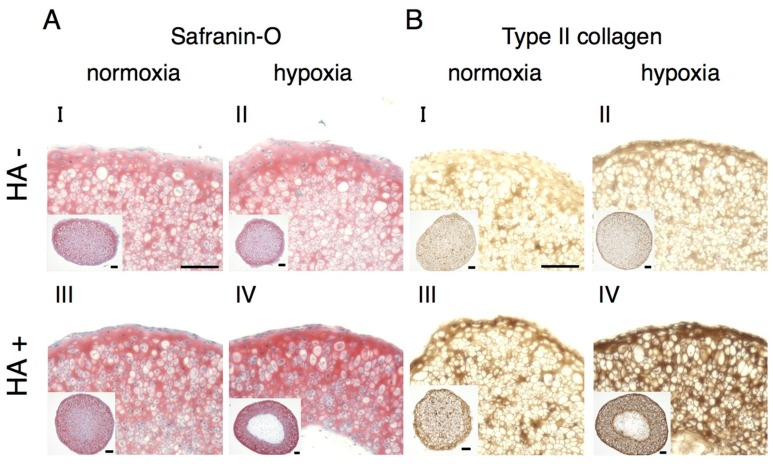
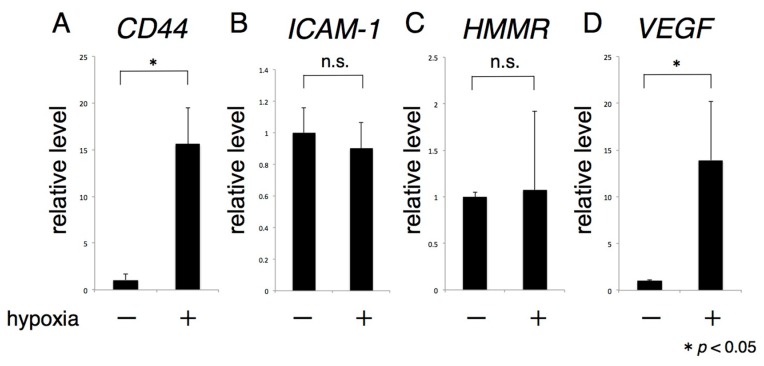
Hyaluronic acid (HA) is used clinically to treat osteoarthritis (OA), but its pharmacological effects under hypoxic conditions remain unclear. Articular chondrocytes in patients with OA are exposed to a hypoxic environment. This study investigated whether hypoxia could potentiate the anabolic effects of exogenous HA in rat articular cartilage and whether these mechanisms involved HA receptors. HA under hypoxic conditions significantly enhanced the expression of extracellular matrix genes and proteins in explant culture, as shown by real-time reverse transcription-polymerase chain reaction (RT-PCR), Western blotting, and dimethylmethylene blue (DMMB) assays. Staining with Safranin-O and immunohistochemical staining with antibody to type II collagen were also enhanced in pellet culture. The expression of CD44 was increased by hypoxia and significantly suppressed by transfection with siRNAs targeting hypoxia-inducible factor 1 alpha (siHIF-1α). These findings indicate that hypoxia potentiates the anabolic effects of exogenous HA by a mechanism in which HIF-1α positively regulates the expression of CD44, enhancing the binding affinity for exogenous HA. The anabolic effects of exogenous HA may increase as OA progresses.
透明质酸(HA)在临床上用于治疗骨关节炎(OA),但其在缺氧条件下的药理作用仍不清楚。OA患者的关节软骨细胞处于缺氧环境中。本研究调查了缺氧是否能增强外源性HA对大鼠关节软骨的合成代谢作用,以及这些机制是否涉及HA受体。如实时逆转录-聚合酶链反应(RT-PCR)、蛋白质印迹法和二甲基亚甲基蓝(DMMB)分析所示,缺氧条件下的HA显著增强了外植体培养物中细胞外基质基因和蛋白质的表达。在微团培养中,番红O染色和抗II型胶原抗体的免疫组织化学染色也增强。缺氧增加了CD44的表达,而用靶向缺氧诱导因子1α的小干扰RNA(siHIF-1α)转染可显著抑制其表达。这些发现表明,缺氧通过HIF-1α正向调节CD44表达、增强对外源性HA的结合亲和力的机制,增强了外源性HA的合成代谢作用。随着OA的进展,外源性HA的合成代谢作用可能会增加。