Maruta Hitomi, Yoshimura Yukihiro, Araki Aya, Kimoto Masumi, Takahashi Yoshitaka, Yamashita Hiromi
Graduate School of Health and Welfare Science, Okayama Prefectural University, Soja-shi, Okayama, Japan.
Department of Nutritional Science, Faculty of Health and Welfare Science, Okayama Prefectural University, Soja-shi, Okayama, Japan.
PLoS One. 2016 Jun 27;11(6):e0158055. doi: 10.1371/journal.pone.0158055. eCollection 2016.
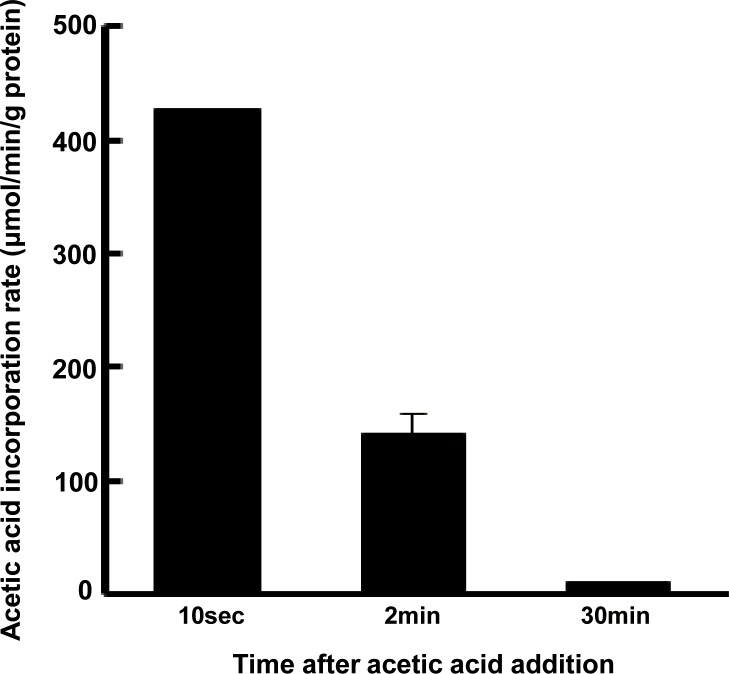
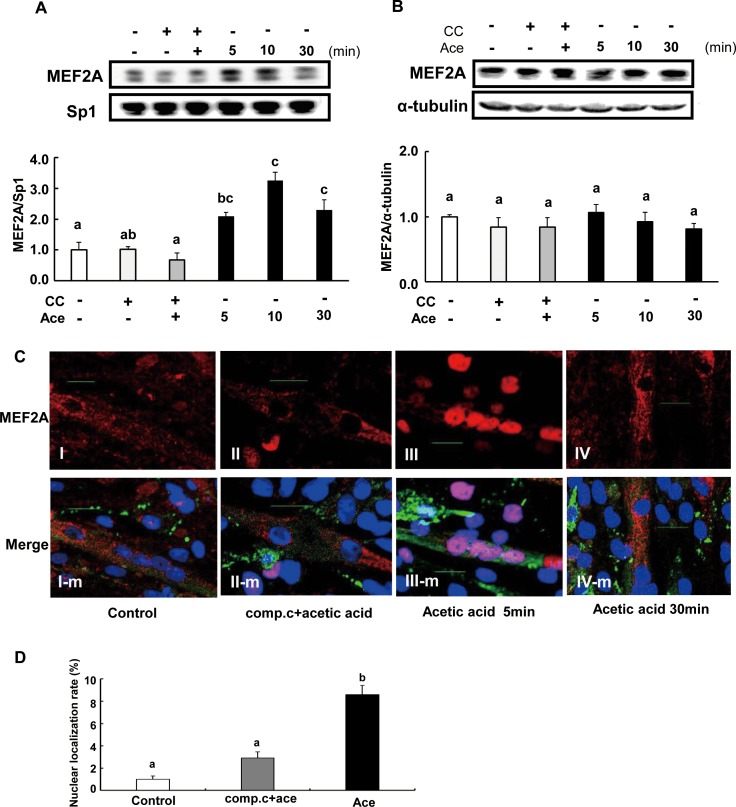
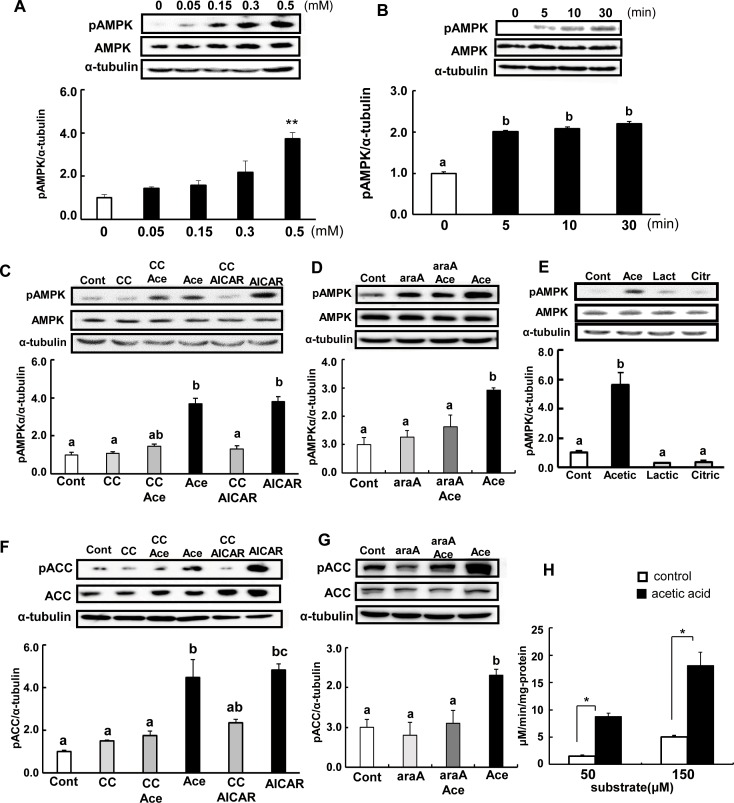
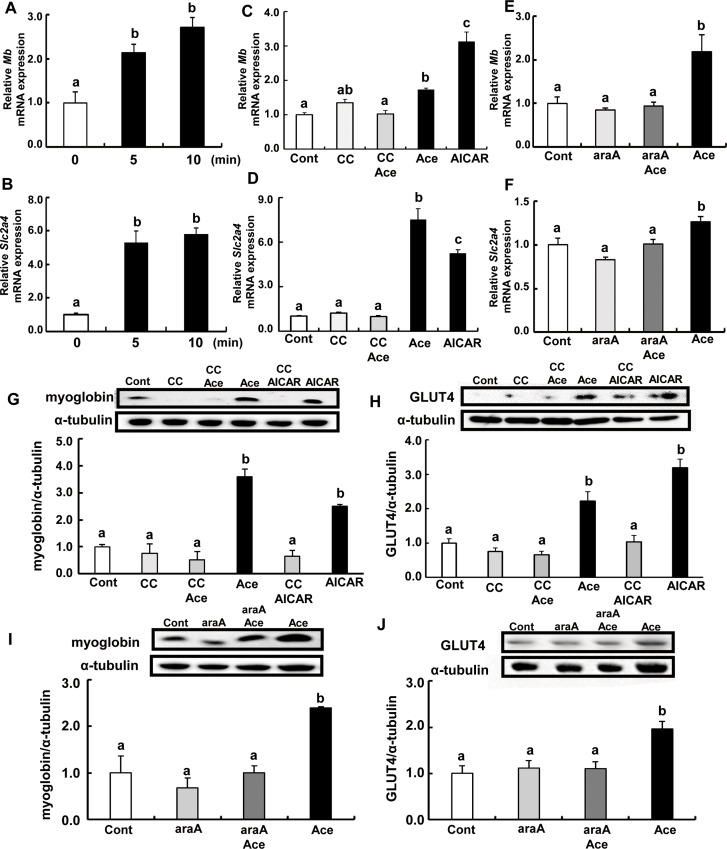
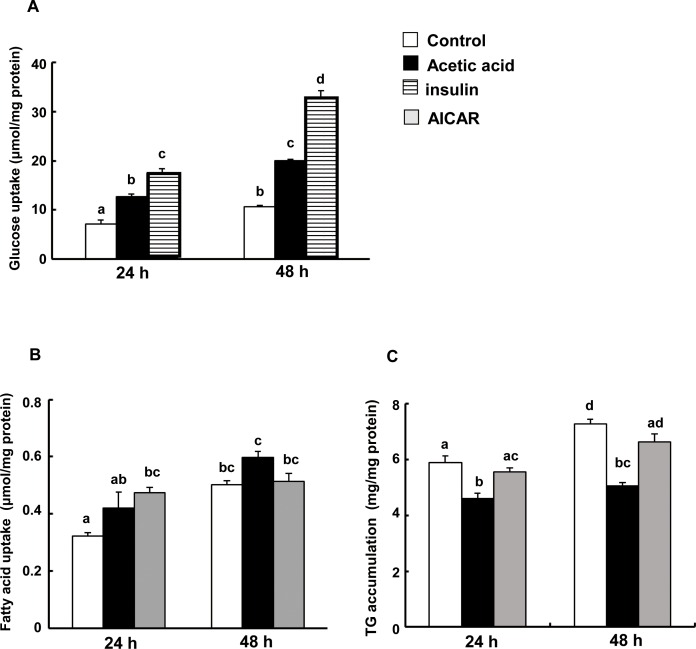
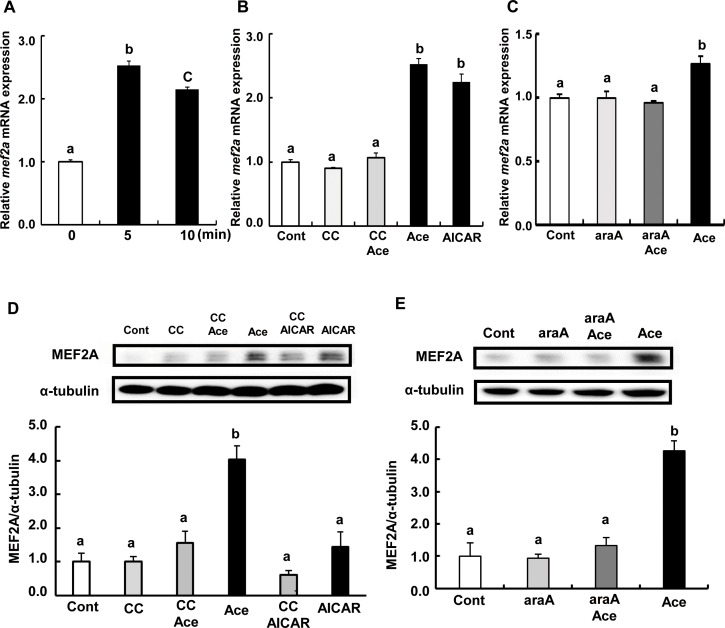
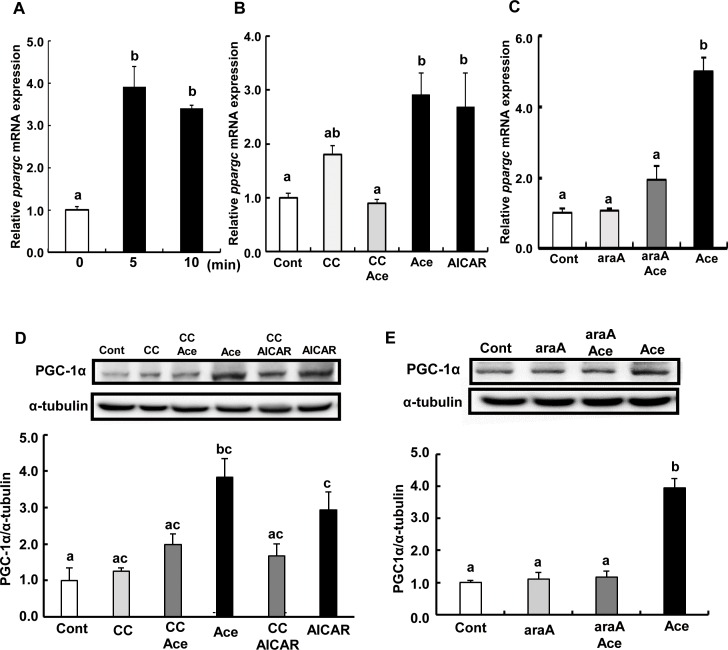
Previously, we found that orally administered acetic acid decreased lipogenesis in the liver and suppressed lipid accumulation in adipose tissue of Otsuka Long-Evans Tokushima Fatty rats, which exhibit hyperglycemic obesity with hyperinsulinemia and insulin resistance. Administered acetic acid led to increased phosphorylation of AMP-activated protein kinase (AMPK) in both liver and skeletal muscle cells, and increased transcripts of myoglobin and glucose transporter 4 (GLUT4) genes in skeletal muscle of the rats. It was suggested that acetic acid improved the lipid metabolism in skeletal muscles. In this study, we examined the activation of AMPK and the stimulation of GLUT4 and myoglobin expression by acetic acid in skeletal muscle cells to clarify the physiological function of acetic acid in skeletal muscle cells. Acetic acid added to culture medium was taken up rapidly by L6 cells, and AMPK was phosphorylated upon treatment with acetic acid. We observed increased gene and protein expression of GLUT4 and myoglobin. Uptake of glucose and fatty acids by L6 cells were increased, while triglyceride accumulation was lower in treated cells compared to untreated cells. Furthermore, treated cells also showed increased gene and protein expression of myocyte enhancer factor 2A (MEF2A), which is a well-known transcription factor involved in the expression of myoglobin and GLUT4 genes. These results indicate that acetic acid enhances glucose uptake and fatty acid metabolism through the activation of AMPK, and increases expression of GLUT4 and myoglobin.
此前,我们发现,给大冢长- Evans 德岛肥胖大鼠口服醋酸可降低肝脏中的脂肪生成,并抑制脂肪组织中的脂质积累,该大鼠表现为伴有高胰岛素血症和胰岛素抵抗的高血糖肥胖。给予醋酸可导致肝脏和骨骼肌细胞中 AMP 活化蛋白激酶(AMPK)的磷酸化增加,并且大鼠骨骼肌中肌红蛋白和葡萄糖转运蛋白 4(GLUT4)基因的转录本增加。提示醋酸改善了骨骼肌中的脂质代谢。在本研究中,我们检测了醋酸在骨骼肌细胞中对 AMPK 的激活以及对 GLUT4 和肌红蛋白表达的刺激作用,以阐明醋酸在骨骼肌细胞中的生理功能。添加到培养基中的醋酸被 L6 细胞迅速摄取,用醋酸处理后 AMPK 发生磷酸化。我们观察到 GLUT4 和肌红蛋白的基因和蛋白表达增加。与未处理细胞相比,L6 细胞对葡萄糖和脂肪酸的摄取增加,而处理细胞中的甘油三酯积累较低。此外,处理细胞还显示出肌细胞增强因子 2A(MEF2A)的基因和蛋白表达增加,MEF2A 是一种参与肌红蛋白和 GLUT4 基因表达的著名转录因子。这些结果表明,醋酸通过激活 AMPK 增强葡萄糖摄取和脂肪酸代谢,并增加 GLUT4 和肌红蛋白的表达。