Cai Jinhai, Okamoto Mamoru, Atieno Judith, Sutton Tim, Li Yongle, Miklavcic Stanley J
Phenomics and Bioinformatics Research Centre, University of South Australia, Mawson Lakes, SA 5095, Australia.
Australian Centre for Plant Functional Genomics, University of Adelaide, Hartley Grove, Urrbrae SA 5064, Australia.
PLoS One. 2016 Jun 27;11(6):e0157102. doi: 10.1371/journal.pone.0157102. eCollection 2016.
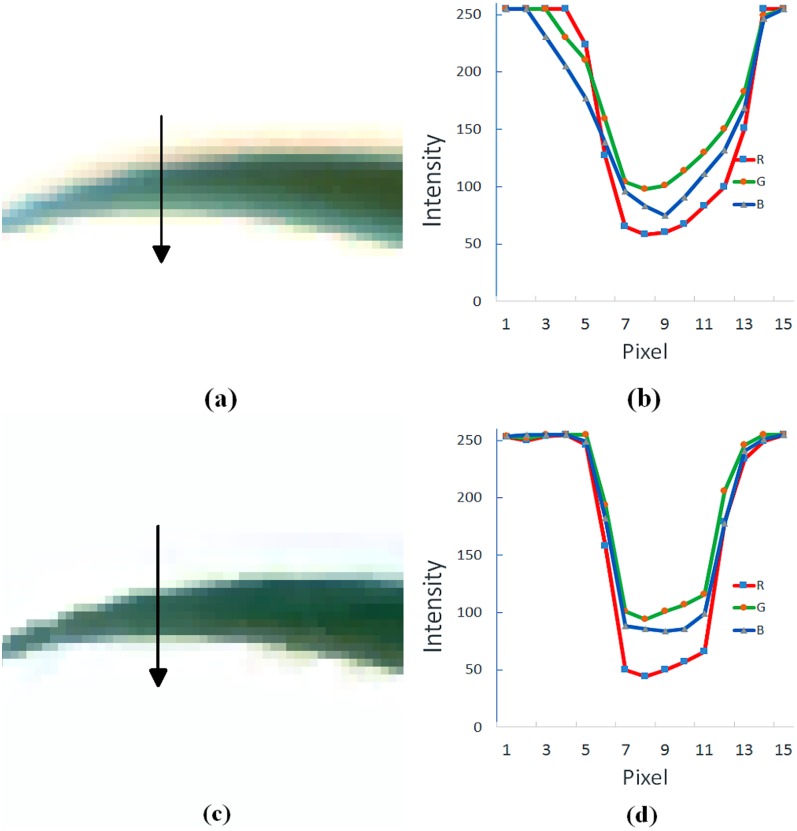
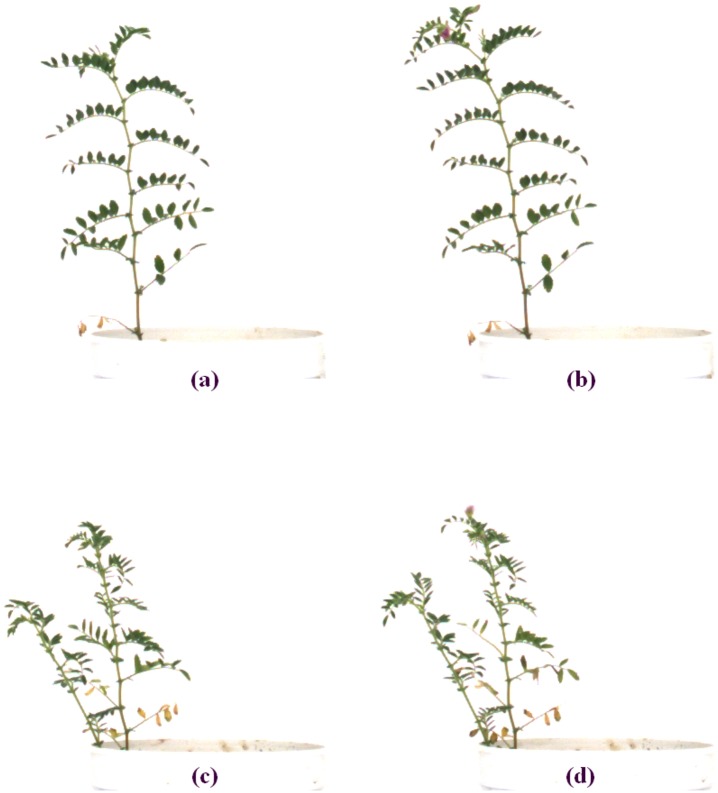
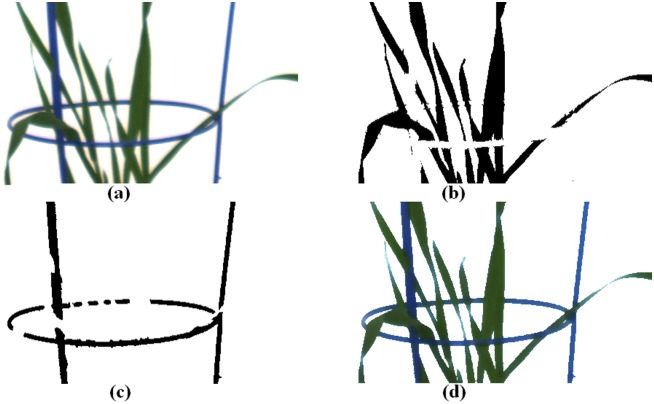
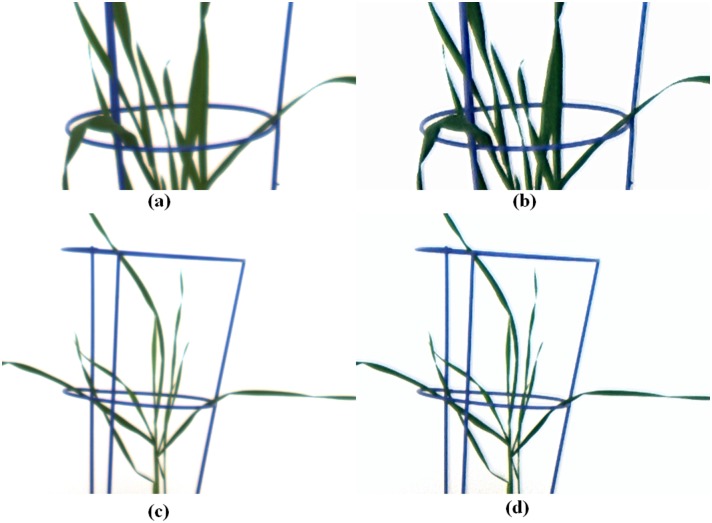
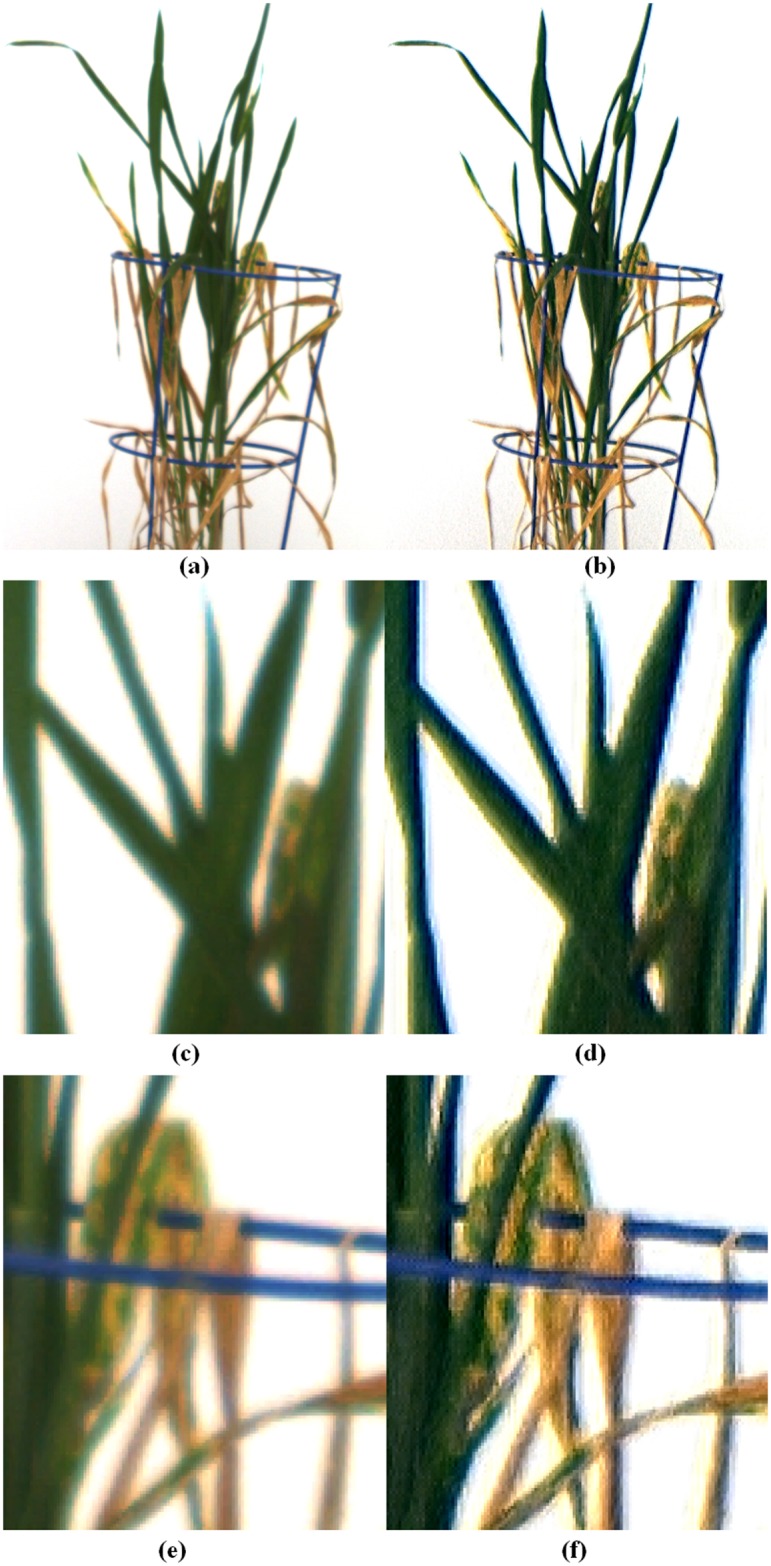
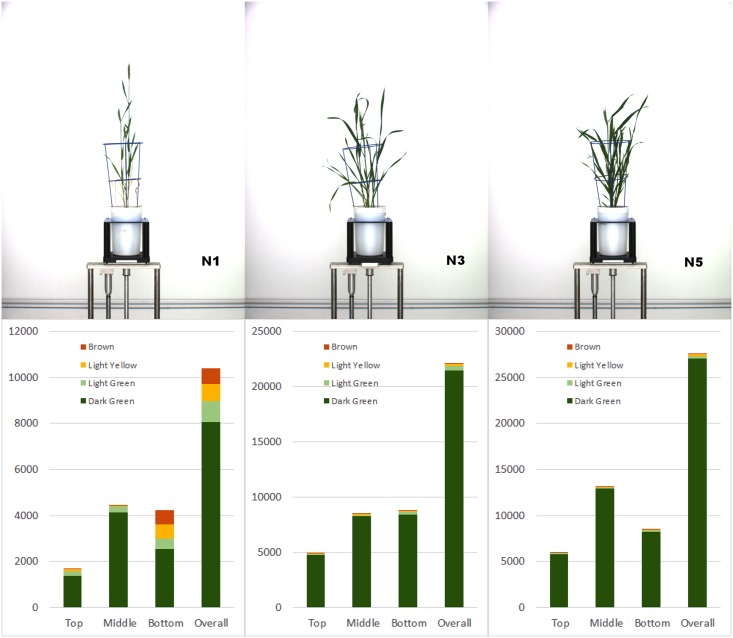
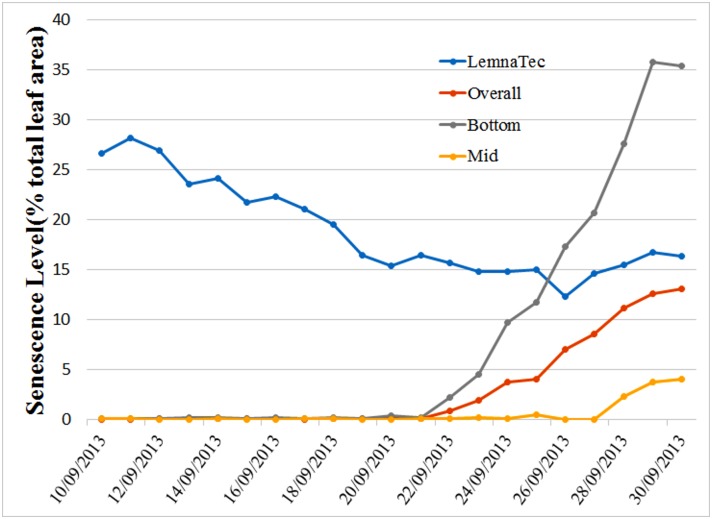
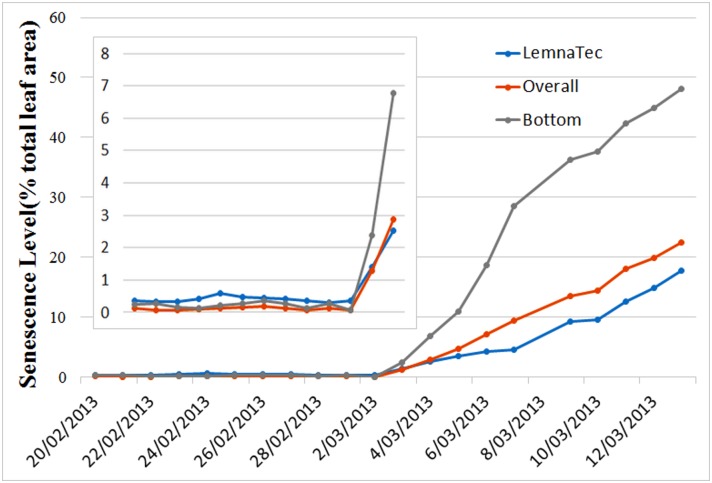
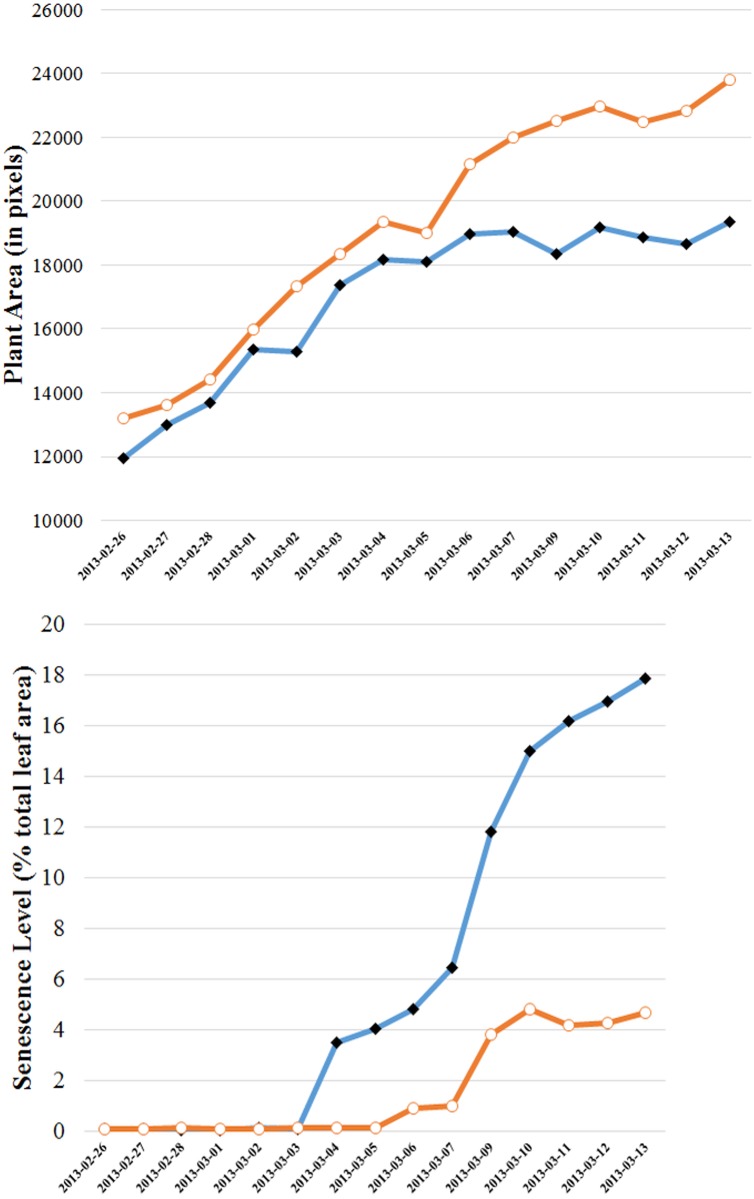
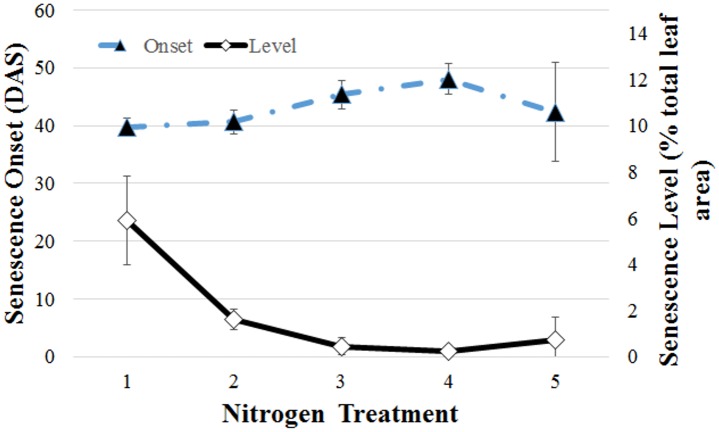
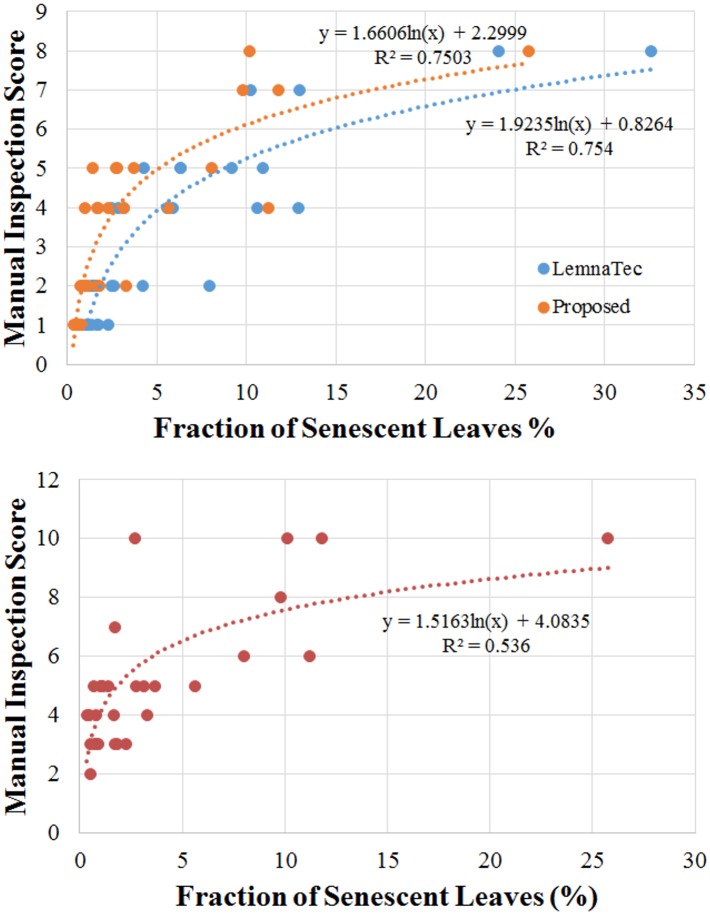
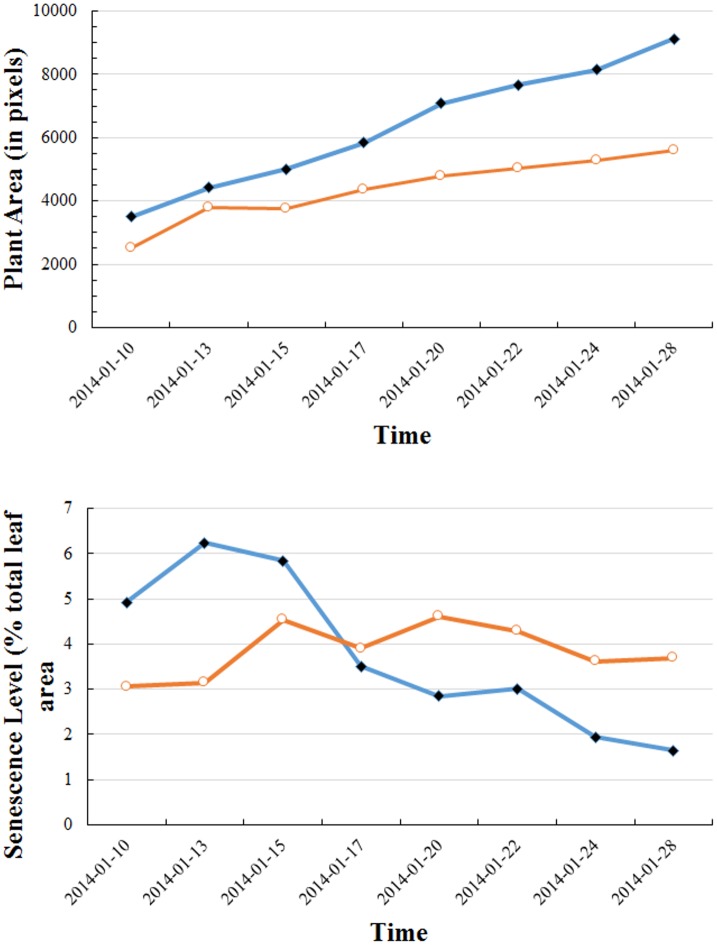
Leaf senescence, an indicator of plant age and ill health, is an important phenotypic trait for the assessment of a plant's response to stress. Manual inspection of senescence, however, is time consuming, inaccurate and subjective. In this paper we propose an objective evaluation of plant senescence by color image analysis for use in a high throughput plant phenotyping pipeline. As high throughput phenotyping platforms are designed to capture whole-of-plant features, camera lenses and camera settings are inappropriate for the capture of fine detail. Specifically, plant colors in images may not represent true plant colors, leading to errors in senescence estimation. Our algorithm features a color distortion correction and image restoration step prior to a senescence analysis. We apply our algorithm to two time series of images of wheat and chickpea plants to quantify the onset and progression of senescence. We compare our results with senescence scores resulting from manual inspection. We demonstrate that our procedure is able to process images in an automated way for an accurate estimation of plant senescence even from color distorted and blurred images obtained under high throughput conditions.
叶片衰老作为植物年龄和健康状况不佳的一个指标,是评估植物对胁迫反应的重要表型特征。然而,人工检查衰老情况既耗时,又不准确且主观。在本文中,我们提出通过彩色图像分析对植物衰老进行客观评估,以用于高通量植物表型分析流程。由于高通量表型分析平台旨在捕捉植物的整体特征,相机镜头和相机设置并不适合捕捉精细细节。具体而言,图像中的植物颜色可能并不代表植物的真实颜色,从而导致衰老估计出现误差。我们的算法在衰老分析之前设有颜色失真校正和图像恢复步骤。我们将算法应用于小麦和鹰嘴豆植株的两个图像时间序列,以量化衰老的起始和进程。我们将结果与人工检查得出的衰老评分进行比较。我们证明,即使是从高通量条件下获得的颜色失真和模糊图像中,我们的程序也能够以自动化方式处理图像,从而准确估计植物衰老情况。