Emmons Michael F, Faião-Flores Fernanda, Smalley Keiran S M
The Department of Tumor Biology, The Moffitt Cancer Center & Research Institute, 12902 Magnolia Drive, Tampa, FL, USA.
The Department of Tumor Biology, The Moffitt Cancer Center & Research Institute, 12902 Magnolia Drive, Tampa, FL, USA; The Department of Clinical and Toxicological Analysis, School of Pharmaceutical Sciences, University of São Paulo, São Paulo, Brazil.
Biochem Pharmacol. 2016 Dec 15;122:1-9. doi: 10.1016/j.bcp.2016.06.014. Epub 2016 Jun 25.
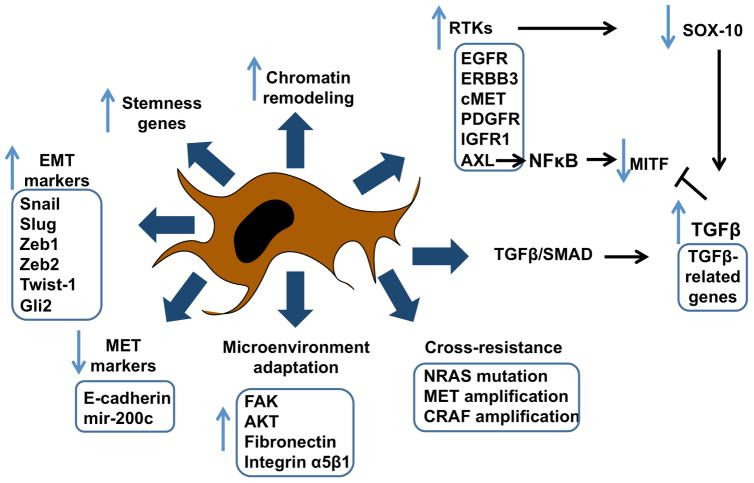
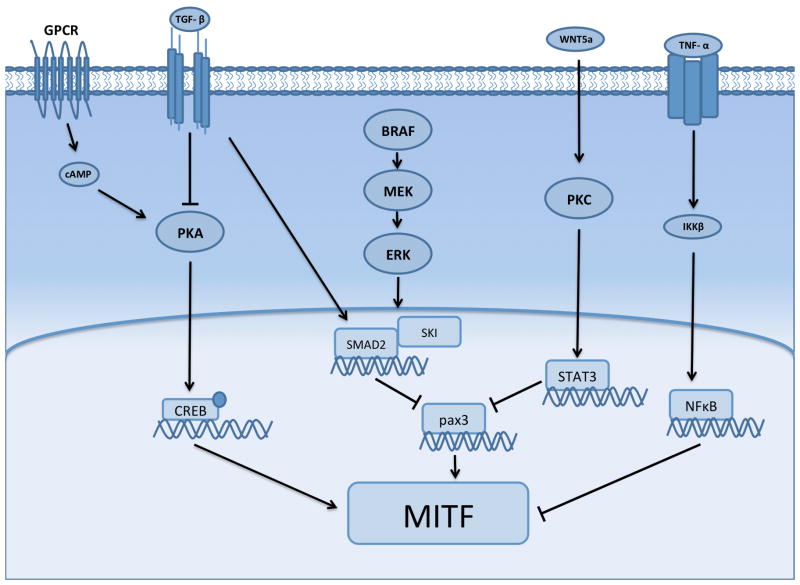
Targeted therapy has proven to be beneficial at producing significant responses in patients with a wide variety of cancers. Despite initially impressive responses, most individuals ultimately fail these therapies and show signs of drug resistance. Very few patients are ever cured. Emerging evidence suggests that treatment of cancer cells with kinase inhibitors leads a minor population of cells to undergo a phenotypic switch to a more embryonic-like state. The adoption of this state, which is analogous to an epithelial-to-mesenchymal transition, is associated with drug resistance and increased tumor aggressiveness. In this commentary we will provide a comprehensive analysis of the mechanisms that underlie the embryonic reversion that occurs on targeted cancer therapy and will review potential novel therapeutic strategies designed to eradicate the escaping cells.
靶向治疗已被证明对多种癌症患者产生显著疗效有益。尽管最初反应令人印象深刻,但大多数患者最终对这些治疗产生耐药并出现耐药迹象。很少有患者能被治愈。新出现的证据表明,用激酶抑制剂治疗癌细胞会导致一小部分细胞发生表型转变,转变为更类似胚胎的状态。这种类似于上皮-间质转化的状态与耐药性和肿瘤侵袭性增加有关。在本评论中,我们将全面分析靶向癌症治疗中发生的胚胎逆转背后的机制,并回顾旨在根除逃逸细胞的潜在新治疗策略。