Rondón-Lagos Milena, Rangel Nelson, Di Cantogno Ludovica Verdun, Annaratone Laura, Castellano Isabella, Russo Rosalia, Manetta Tilde, Marchiò Caterina, Sapino Anna
Department of Medical SciencesUniversity of Turin, Turin, Italy.
Department of Medical SciencesUniversity of Turin, Turin, Italy Natural and Mathematical Sciences FacultyUniversidad del Rosario, Bogotá, Colombia.
Endocr Relat Cancer. 2016 Aug;23(8):635-50. doi: 10.1530/ERC-16-0078. Epub 2016 Jun 29.
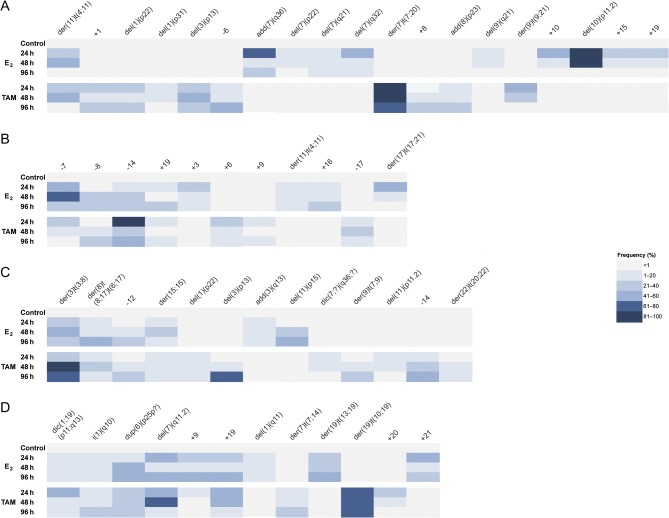
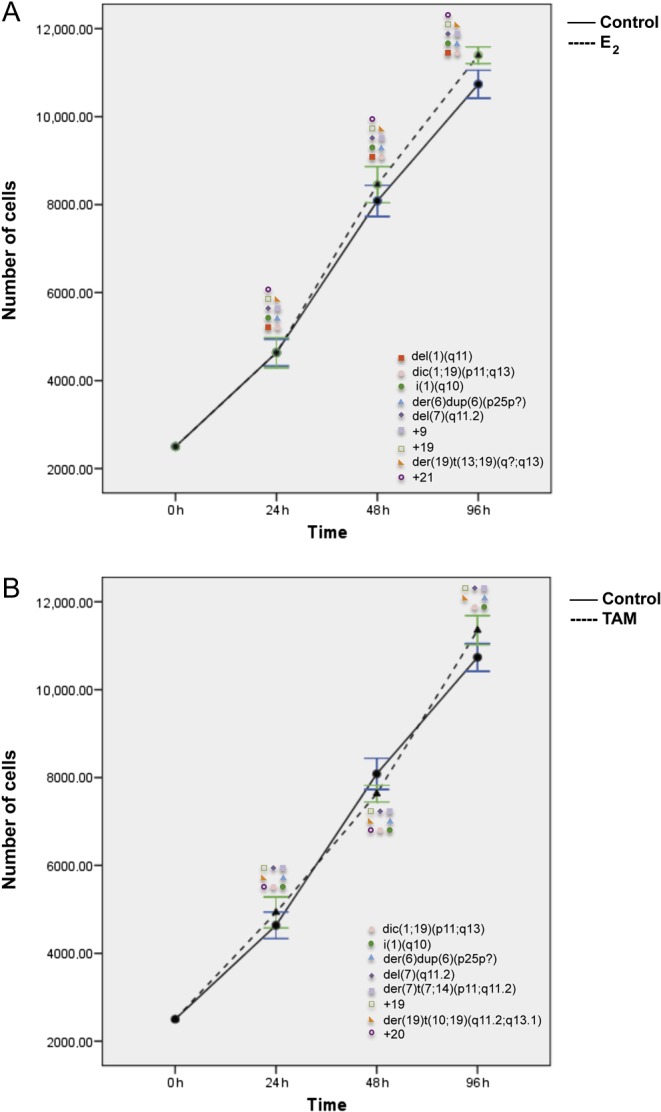
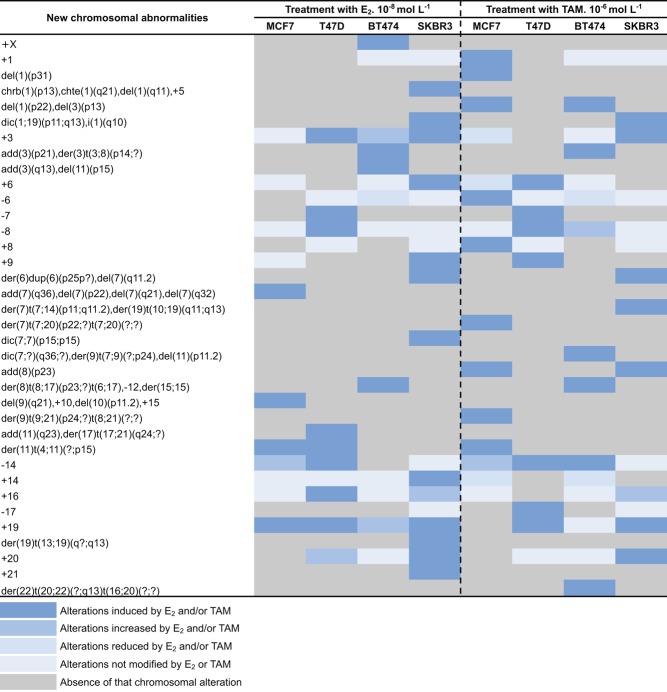
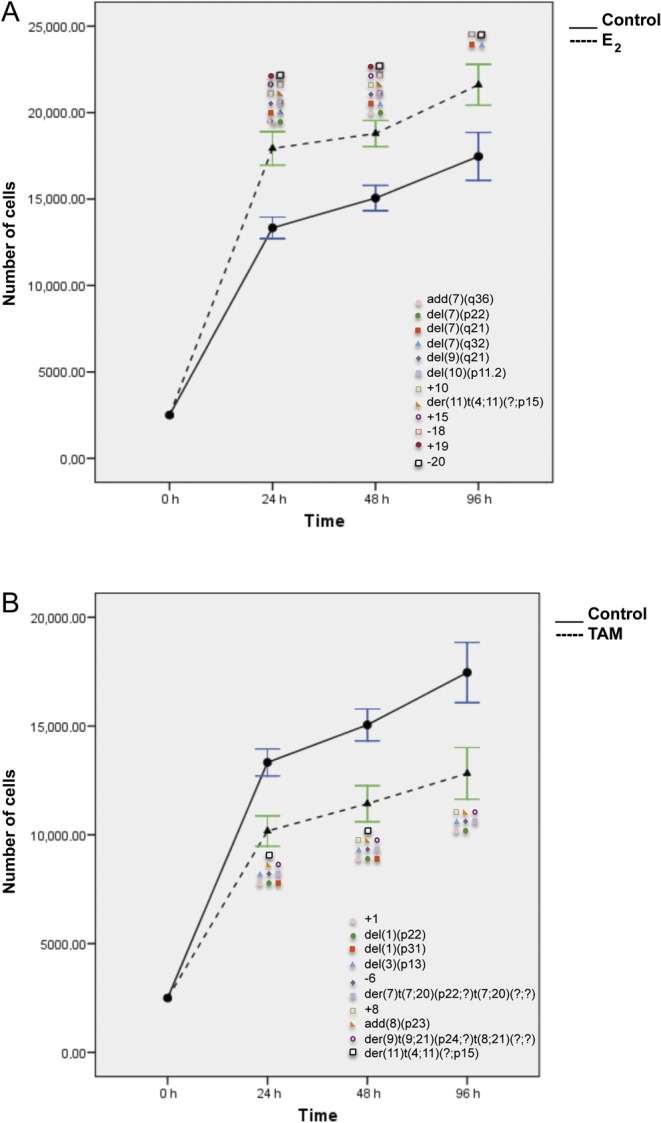
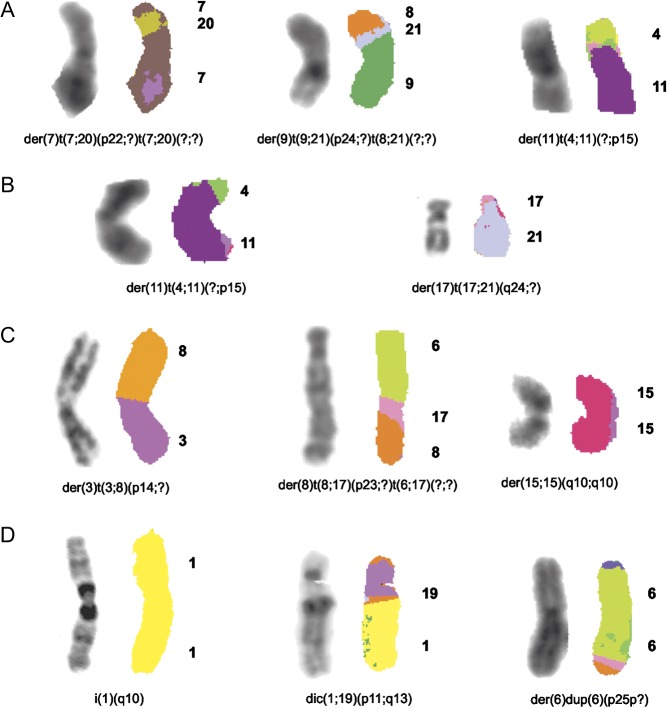
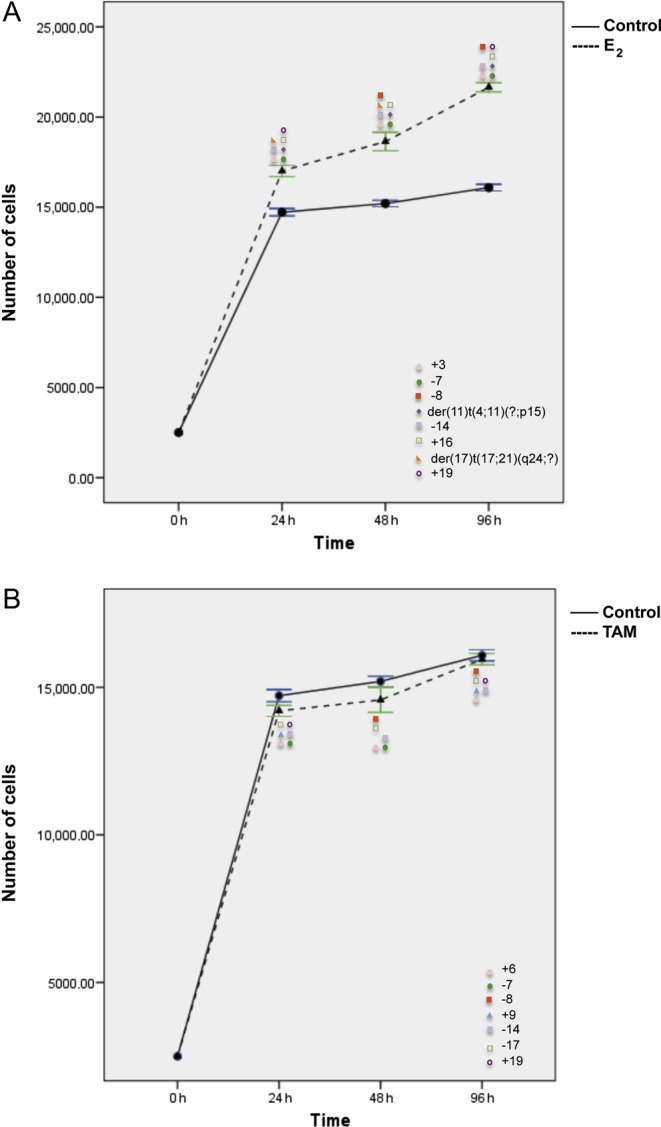
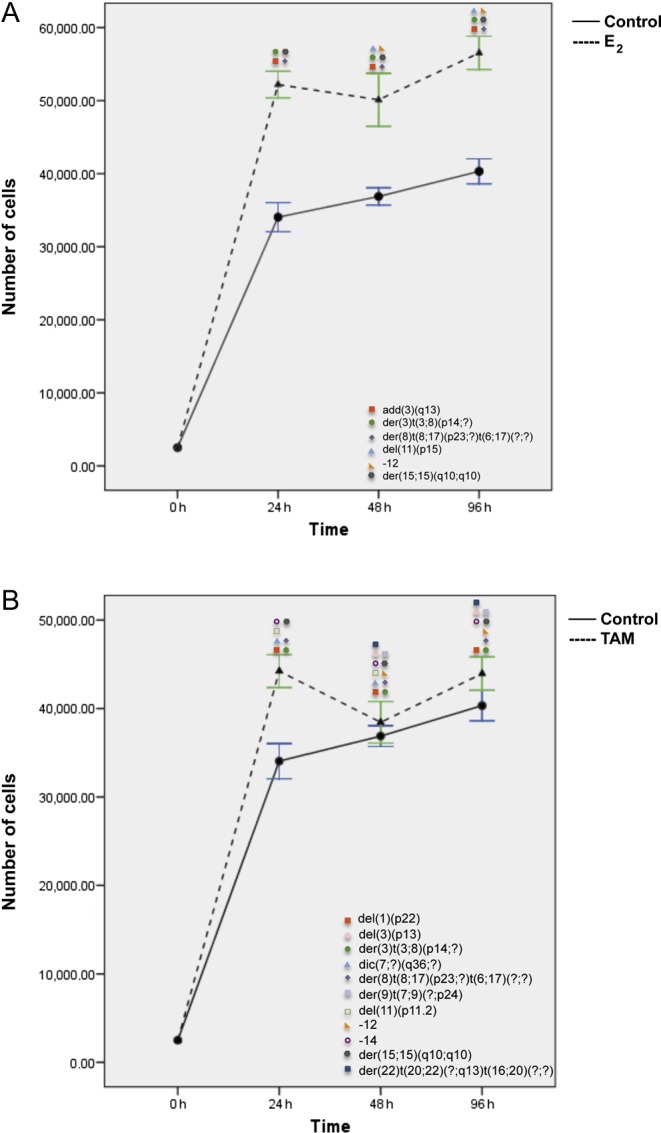
Evidence supports a role of 17&-estradiol (E2) in carcinogenesis and the large majority of breast carcinomas are dependent on estrogen. The anti-estrogen tamoxifen (TAM) is widely used for both treatment and prevention of breast cancer; however, it is also carcinogenic in human uterus and rat liver, highlighting the profound complexity of its actions. The nature of E2- or TAM-induced chromosomal damage has been explored using relatively high concentrations of these agents, and only some numerical aberrations and chromosomal breaks have been analyzed. This study aimed to determine the effects of low doses of E2 and TAM (10(&8 )mol L(&1) and 10(&6 )mol L(&1) respectively) on karyotypes of MCF7, T47D, BT474, and SKBR3 breast cancer cells by comparing the results of conventional karyotyping and multi-FISH painting with cell proliferation. Estrogen receptor (ER)-positive (+) cells showed an increase in cell proliferation after E2 treatment (MCF7, T47D, and BT474) and a decrease after TAM treatment (MCF7 and T47D), whereas in ER& cells (SKBR3), no alterations in cell proliferation were observed, except for a small increase at 96 h. Karyotypes of both ER+ and ER& breast cancer cells increased in complexity after treatments with E2 and TAM leading to specific chromosomal abnormalities, some of which were consistent throughout the treatment duration. This genotoxic effect was higher in HER2+ cells. The ER&/HER2+ SKBR3 cells were found to be sensitive to TAM, exhibiting an increase in chromosomal aberrations. These in vitro results provide insights into the potential role of low doses of E2 and TAM in inducing chromosomal rearrangements in breast cancer cells.
有证据支持17β-雌二醇(E2)在致癌过程中发挥作用,并且绝大多数乳腺癌依赖雌激素。抗雌激素他莫昔芬(TAM)广泛用于乳腺癌的治疗和预防;然而,它在人类子宫和大鼠肝脏中也具有致癌性,凸显了其作用的深刻复杂性。人们已使用相对高浓度的这些药物来探究E2或TAM诱导的染色体损伤的性质,并且仅分析了一些数目畸变和染色体断裂。本研究旨在通过比较传统核型分析和多荧光原位杂交(multi-FISH)涂染结果与细胞增殖情况,来确定低剂量E2和TAM(分别为10⁻⁸mol/L和10⁻⁶mol/L)对MCF7、T47D、BT474和SKBR3乳腺癌细胞染色体核型的影响。雌激素受体(ER)阳性(+)细胞在E2处理后(MCF7、T47D和BT474)细胞增殖增加,而在TAM处理后(MCF7和T47D)细胞增殖减少,然而在ER⁻细胞(SKBR3)中,除了在96小时时有小幅增加外,未观察到细胞增殖的改变。E2和TAM处理后,ER⁺和ER⁻乳腺癌细胞的染色体核型复杂性均增加,导致特定的染色体异常,其中一些在整个处理期间都是一致的。这种遗传毒性作用在HER2⁺细胞中更高。发现ER⁻/HER2⁺ SKBR3细胞对TAM敏感,表现出染色体畸变增加。这些体外研究结果为低剂量E2和TAM在诱导乳腺癌细胞染色体重排中的潜在作用提供了见解。