Nosratnejad Shirin, Rashidian Arash, Dror David Mark
Iranian Center of Excellence in Health Services Management, School of Management and Medical Informatics, Tabriz University of Medical Sciences, Tabriz, Iran.
Tabriz Health Services Management Research Center, Department of Health Services Management, School of Management and Medical Informatics, Tabriz University of Medical Sciences, Tabriz, Iran.
PLoS One. 2016 Jun 30;11(6):e0157470. doi: 10.1371/journal.pone.0157470. eCollection 2016.
Access to healthcare is mostly contingent on out-of-pocket spending (OOPS) by health seekers, particularly in low- and middle-income countries (LMICs). This would require many LMICs to raise enough funds to achieve universal health insurance coverage. But, are individuals or households willing to pay for health insurance, and how much? What factors positively affect WTP for health insurance? We wanted to examine the evidence for this, through a review of the literature.
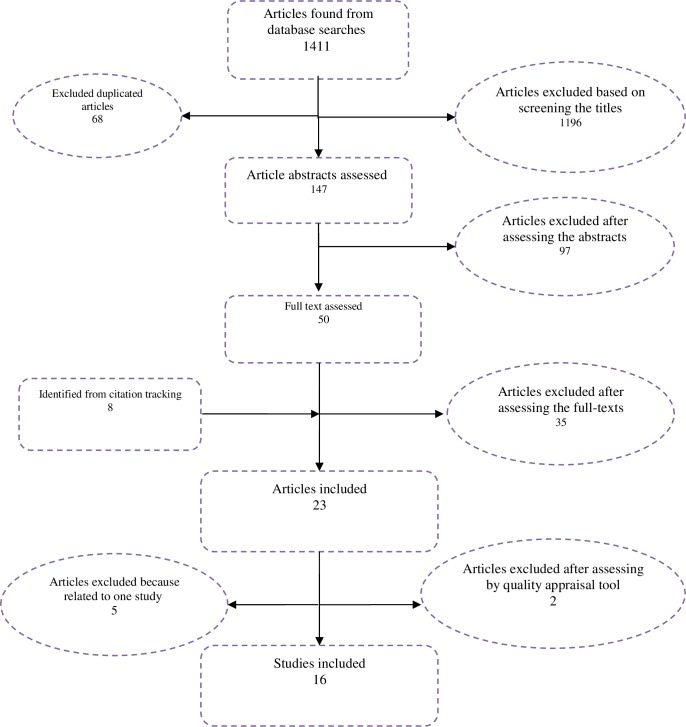
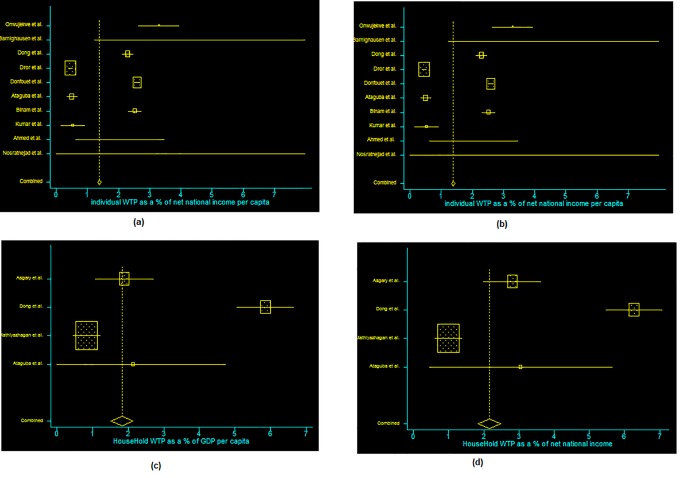
We systematically searched databases up to February 2016 and included studies of individual or household WTP for health insurance. Two authors appraised the identified studies. We estimated the WTP as a percentage of GDP per capita, and adjusted net national income per capita of each country. We used meta-analysis to calculate WTP means and confidence intervals, and vote-counting to identify the variables that more often affected WTP.
16 studies (21 articles) from ten countries met the inclusion criteria. The mean WTP of individuals was 1.18% of GDP per capita and 1.39% of adjusted net national income per capita. The corresponding figures for households were 1.82% and 2.16%, respectively. Increases in family size, education level and income were consistently correlated with higher WTP for insurance, and increases in age were correlated with reduced WTP.
The WTP for healthcare insurance among rural households in LMICs was just below 2% of the GPD per capita. The findings demonstrate that in moving towards universal health coverage in LMICs, governments should not rely on households' premiums as a major financing source and should increase their fiscal capacity for an equitable health care system using other sources.
获得医疗保健服务主要取决于寻求医疗者的自付费用(OOPS),在低收入和中等收入国家(LMICs)尤其如此。这将要求许多低收入和中等收入国家筹集足够的资金以实现全民医疗保险覆盖。但是,个人或家庭是否愿意为医疗保险付费,以及愿意支付多少?哪些因素对医疗保险的支付意愿产生积极影响?我们希望通过文献综述来研究这方面的证据。
我们系统检索了截至2016年2月的数据库,并纳入了关于个人或家庭对医疗保险支付意愿的研究。两位作者对纳入的研究进行了评估。我们将支付意愿估计为人均国内生产总值(GDP)的百分比,并根据每个国家的人均国民净收入进行了调整。我们使用荟萃分析来计算支付意愿的均值和置信区间,并通过计数法来确定更常影响支付意愿的变量。
来自十个国家的16项研究(21篇文章)符合纳入标准。个人的平均支付意愿为人均GDP的1.18%,人均国民净收入调整后的1.39%。家庭的相应数字分别为1.82%和2.16%。家庭规模、教育水平和收入的增加与更高的保险支付意愿始终相关,而年龄的增加与支付意愿的降低相关。
低收入和中等收入国家农村家庭对医疗保险的支付意愿略低于人均国内生产总值的2%。研究结果表明,在低收入和中等收入国家迈向全民健康覆盖的过程中,政府不应将家庭保费作为主要融资来源,而应利用其他来源增加其财政能力,以建立公平的医疗保健系统。