De Silva Pushpamali, Bano Shazia, Pogue Brian W, Wang Kenneth K, Maytin Edward V, Hasan Tayyaba
Wellman Center for Photomedicine, Massachusetts General Hospital, Harvard Medical School, Boston, MA, 02114, USA.
Thayer School of Engineering, Dartmouth College, Hanover, NH, 03755, USA.
Nanophotonics. 2021 Sep;10(12):3199-3214. doi: 10.1515/nanoph-2021-0304. Epub 2021 Aug 18.
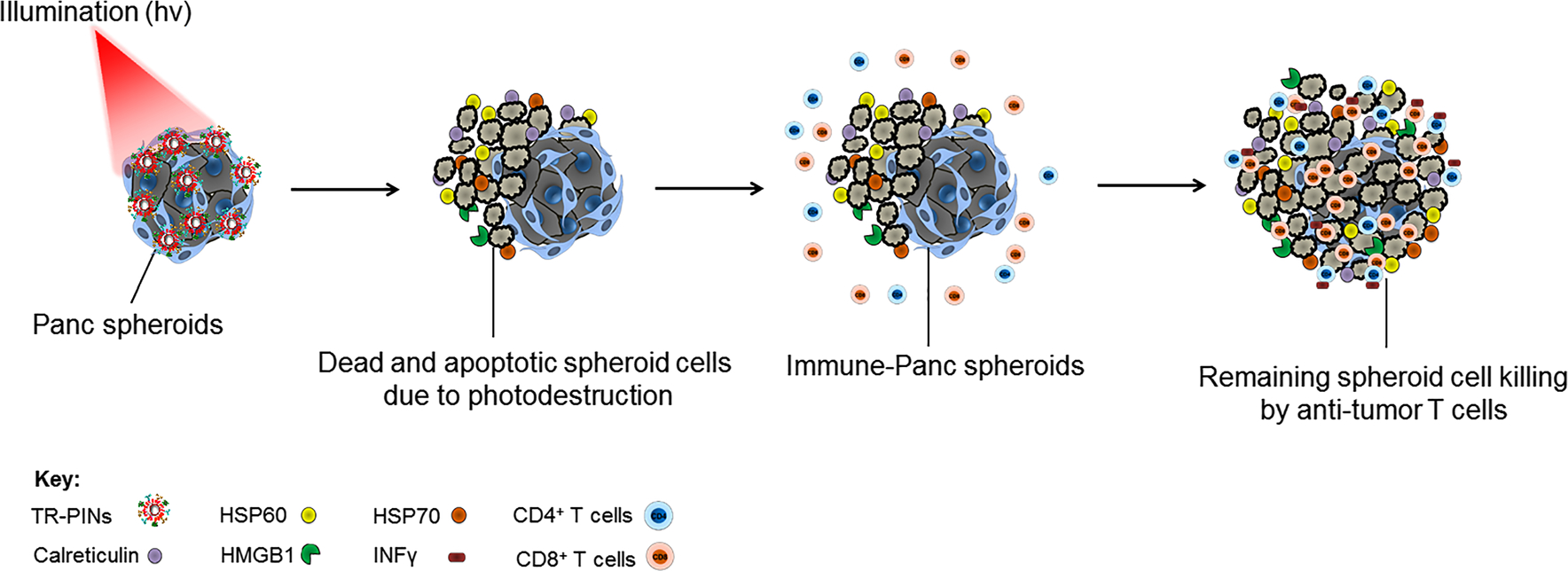
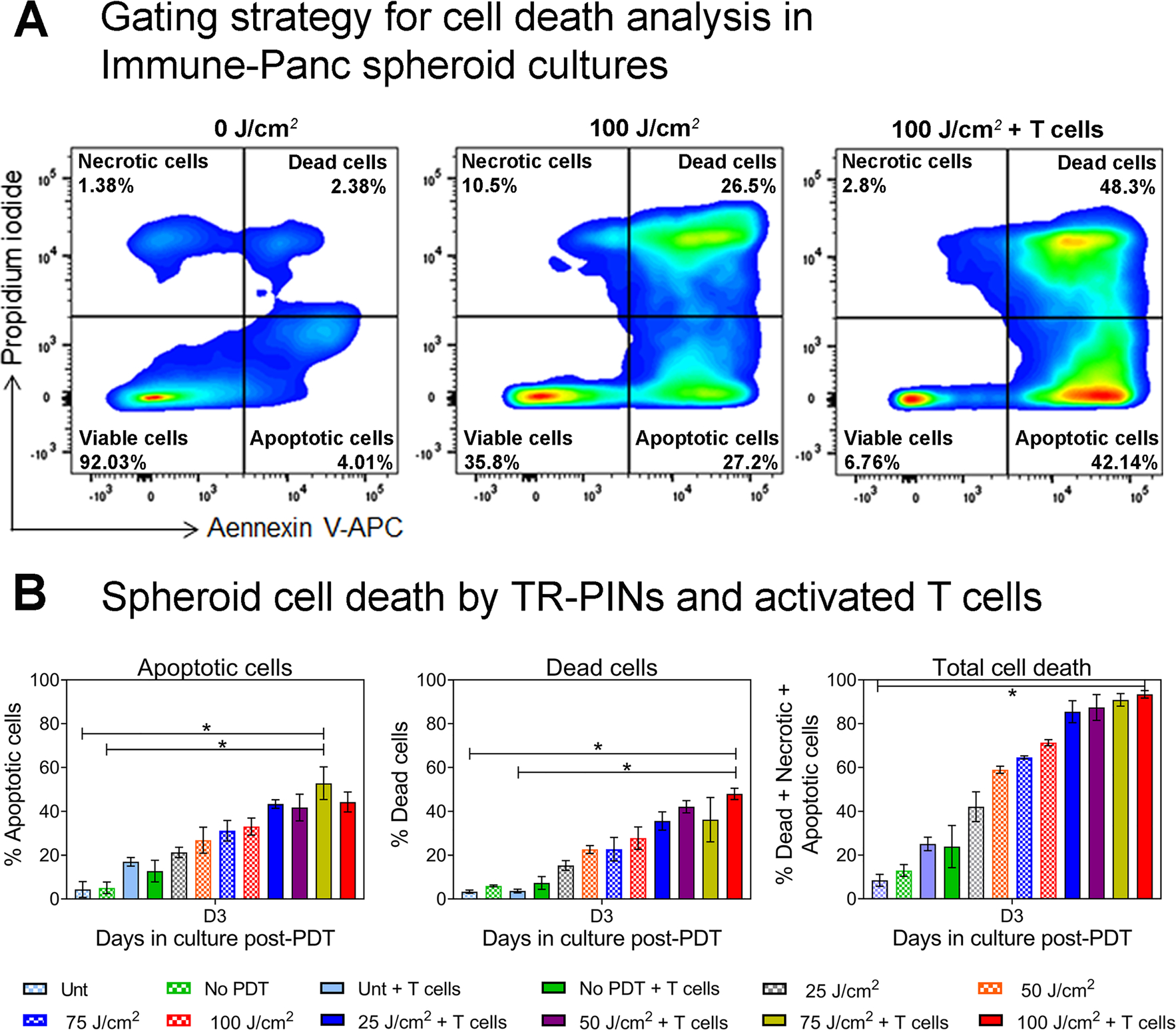
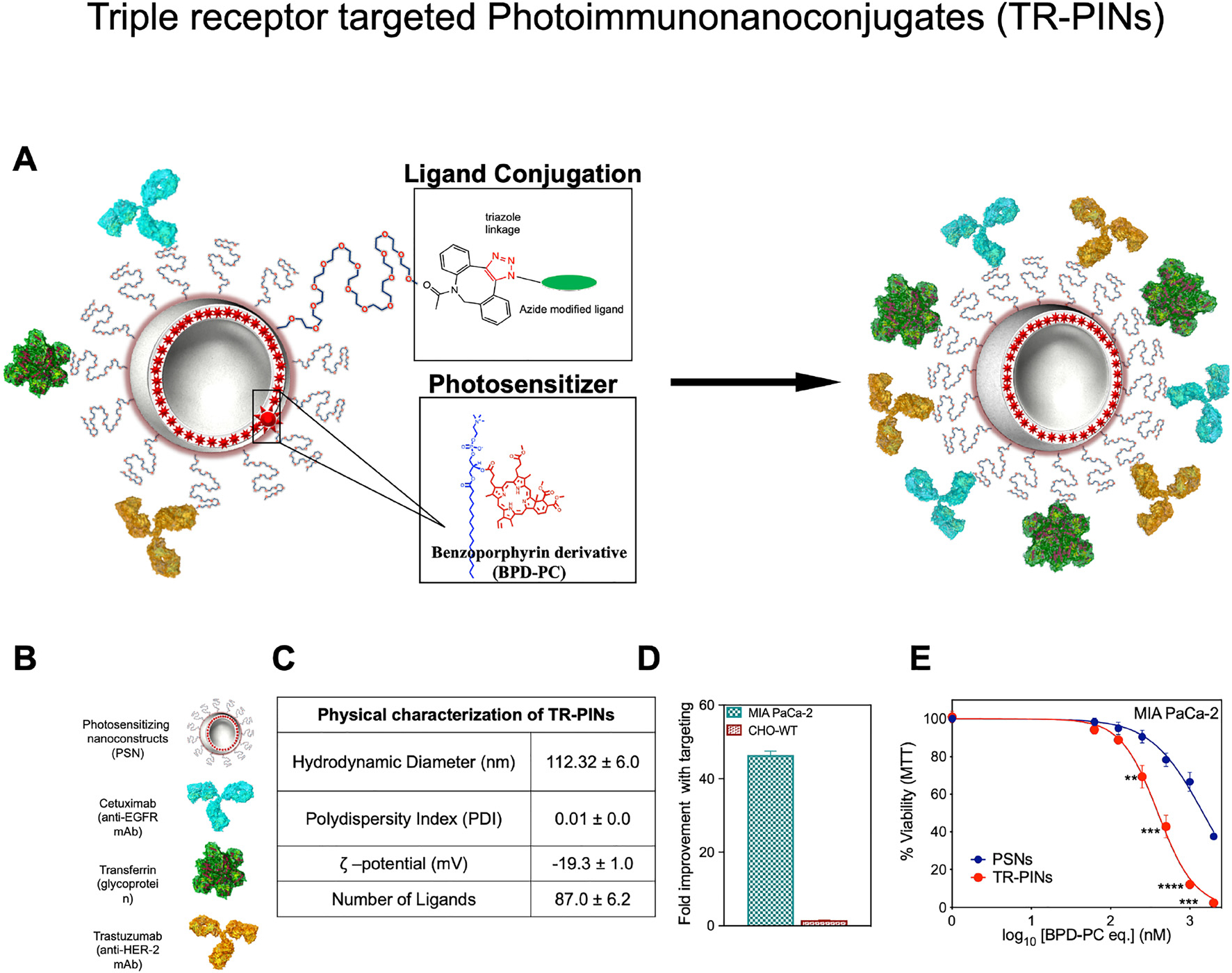
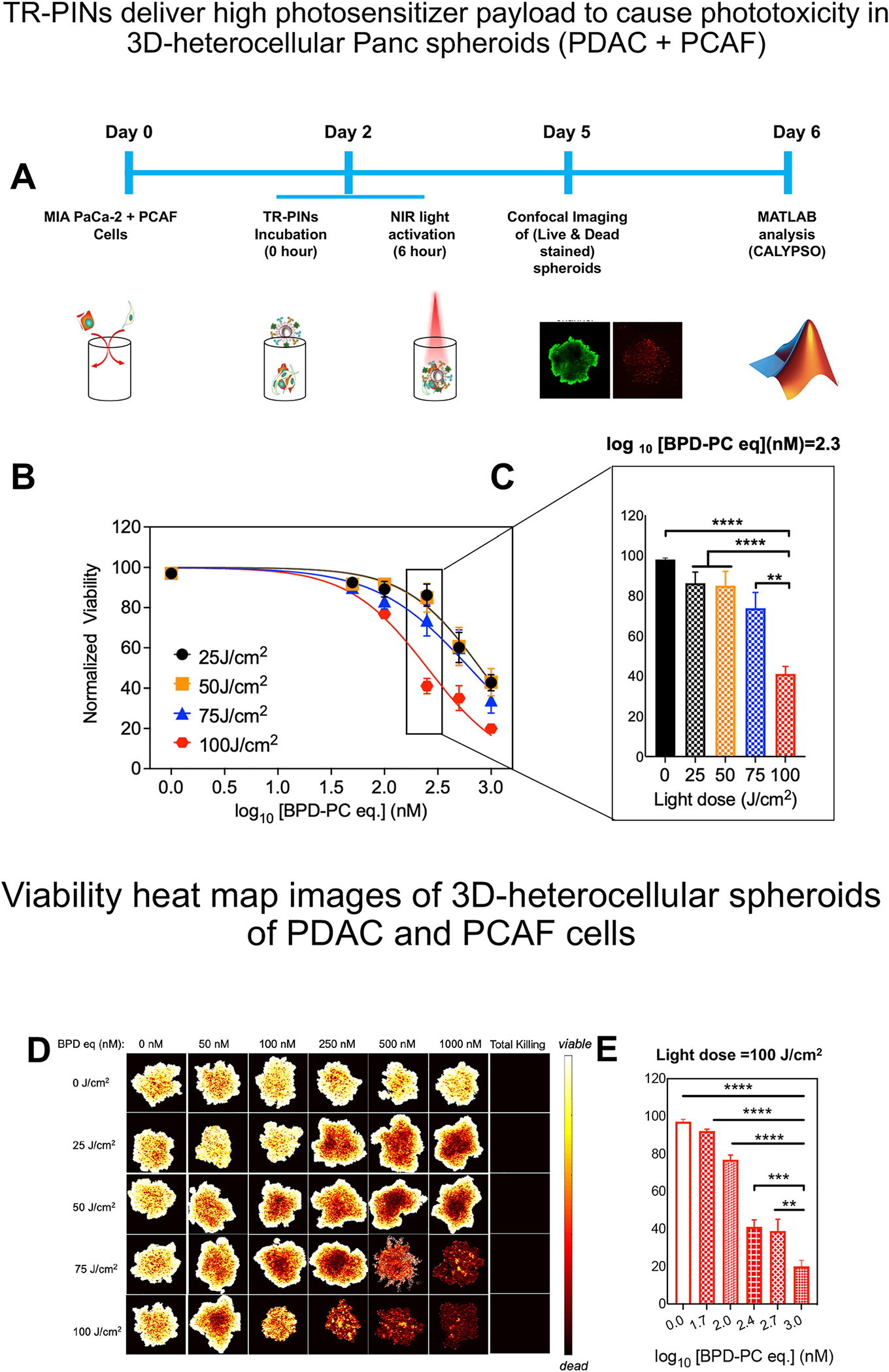
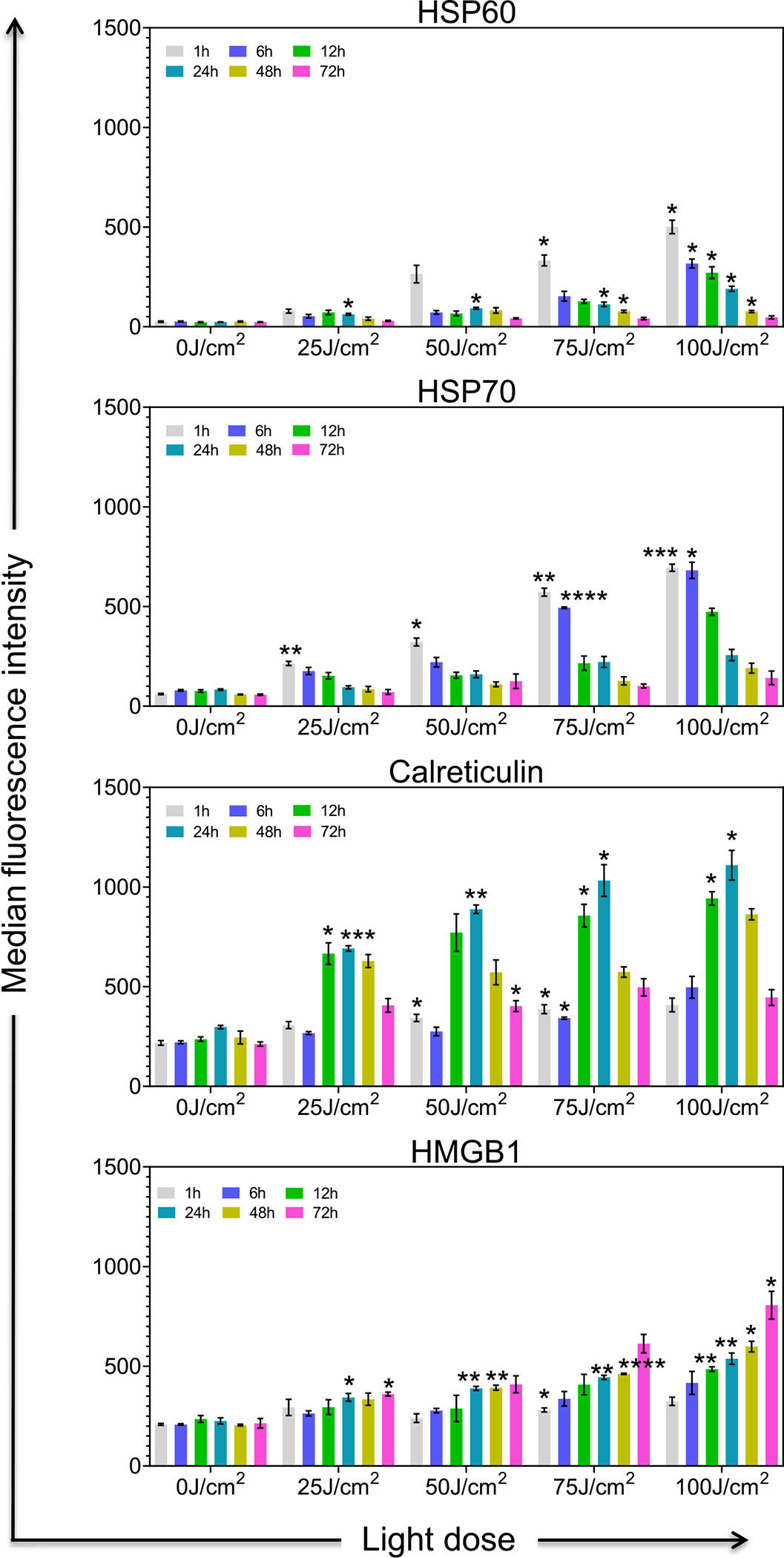
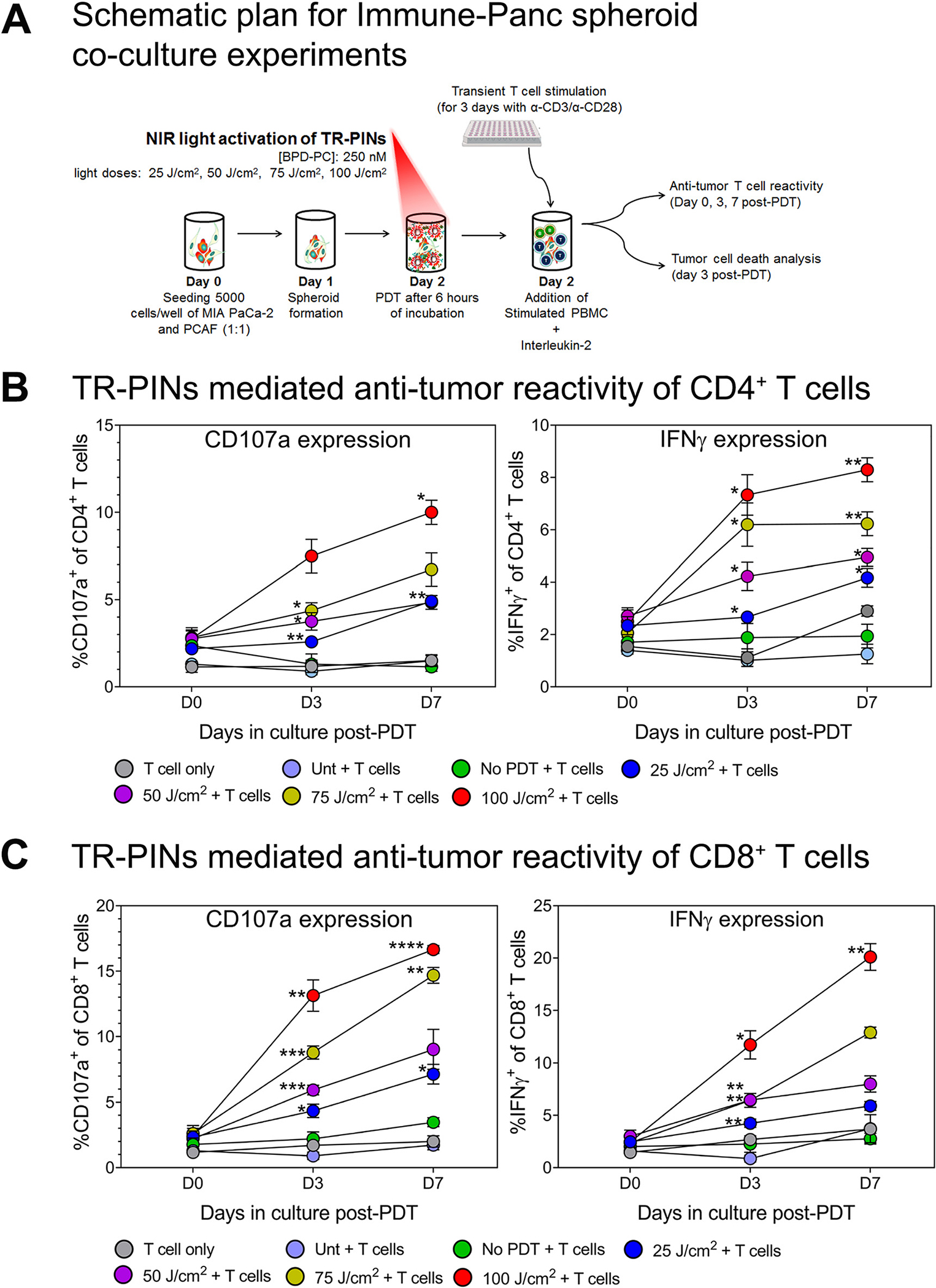
Photodynamic priming (), a collateral effect of photodynamic therapy, can transiently alter the tumor microenvironment (TME) beyond the cytotoxic zone. Studies have demonstrated that increases tumor permeability and modulates immune-stimulatory effects by inducing immunogenic cell death, via the release of damage-associated molecular patterns and tumor-associated antigens. Pancreatic ductal adenocarcinoma (PDAC) is one of the deadliest of cancers with a stubborn immunosuppressive TME and a dense stroma, representing a challenge for current molecular targeted therapies often involving macromolecules. We, therefore, tested the hypothesis that PDP's TME modulation will enable targeted therapy and result in immune stimulation. Using triple-receptor-targeted photoimmuno-nanoconjugate (TR-PINs)-mediated , targeting epidermal growth factor receptor, transferrin receptor, and human epidermal growth factor receptor 2 we show light dose-dependent TR-PINs mediated cytotoxicity inhuman PDA Ccells (MIAPaCa-2),co-cultured with human pancreatic cancer-associated fibroblasts (PCAFs) in spheroids. Furthermore, TR-PINs induced the expression of heat shock proteins (Hsp60, Hsp70), Calreticulin, and high mobility group box 1 in a light dose and time-dependent manner.TR-PINs-mediated T cell activation was observed in co-cultures of immune cells with the MIA PaCa-2-PCAF spheroids. Both CD4 T and CD8 T cells showed light dose and time-dependant antitumor reactivity by upregulating degranulation marker CD107a and interferon-gamma post-PDP. Substantial tumor cell death in immune cell-spheroid co-cultures by day 3 shows the augmentation by antitumor T cell activation and their ability to recognize tumors for a light dose-dependent kill. These data confirm enhanced destruction of heterogeneous pancreatic spheroids mediated by -induced phototoxicity, TME modulation and increased immunogenicity with targeted nanoconstructs.
光动力预激发()是光动力疗法的一种附带效应,可短暂改变细胞毒性区域之外的肿瘤微环境(TME)。研究表明,通过释放损伤相关分子模式和肿瘤相关抗原诱导免疫原性细胞死亡,从而增加肿瘤通透性并调节免疫刺激作用。胰腺导管腺癌(PDAC)是最致命的癌症之一,具有顽固的免疫抑制性TME和致密的基质,这对当前通常涉及大分子的分子靶向治疗构成了挑战。因此,我们检验了以下假设:PDP对TME的调节将使靶向治疗成为可能并导致免疫刺激。使用靶向表皮生长因子受体、转铁蛋白受体和人表皮生长因子受体2的三受体靶向光免疫纳米共轭物(TR-PINs)介导的,我们发现在与人胰腺癌细胞相关成纤维细胞(PCAFs)共培养的球体中的人PDA C细胞(MIAPaCa-2)中,TR-PINs介导的细胞毒性呈光剂量依赖性。此外,TR-PINs以光剂量和时间依赖性方式诱导热休克蛋白(Hsp60、Hsp70)、钙网蛋白和高迁移率族蛋白盒1的表达。在免疫细胞与MIA PaCa-2-PCAF球体的共培养中观察到TR-PINs介导的T细胞活化。CD4 T细胞和CD8 T细胞在PDP后均通过上调脱颗粒标志物CD107a和干扰素-γ表现出光剂量和时间依赖性抗肿瘤反应性。到第3天,免疫细胞-球体共培养物中大量肿瘤细胞死亡,表明抗肿瘤T细胞活化增强及其识别肿瘤以进行光剂量依赖性杀伤的能力。这些数据证实了由诱导的光毒性、TME调节以及靶向纳米构建体增加的免疫原性介导的异质性胰腺球体的破坏增强。