Phaechamud Thawatchai, Tuntarawongsa Sarun
Department of Pharmaceutical Technology, Faculty of Pharmacy, Silpakorn University, Nakhon Pathom, Thailand.
Pharmaceutical Intelligence Unit Prachote Plengwittaya, Faculty of Pharmacy, Silpakorn University, Nakhon Pathom, Thailand.
Int J Nanomedicine. 2016 Jun 14;11:2855-65. doi: 10.2147/IJN.S108355. eCollection 2016.
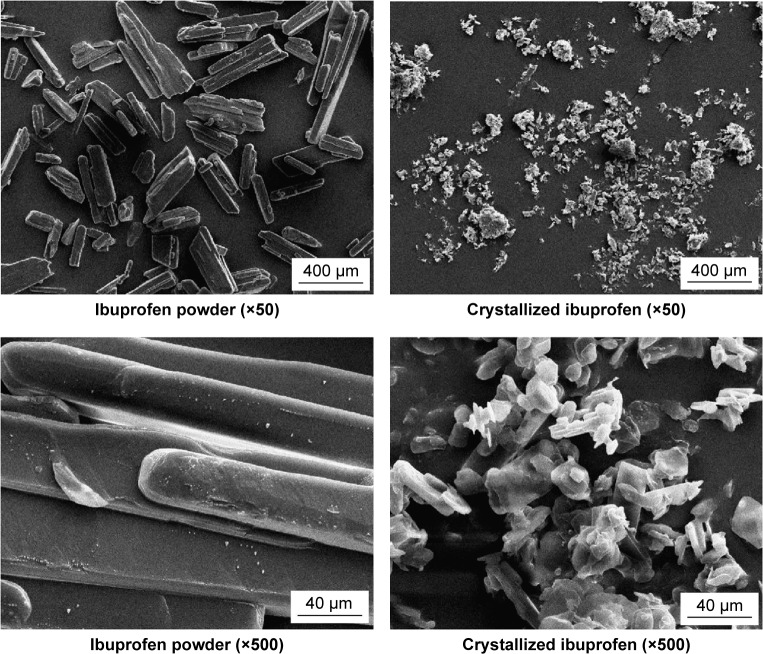
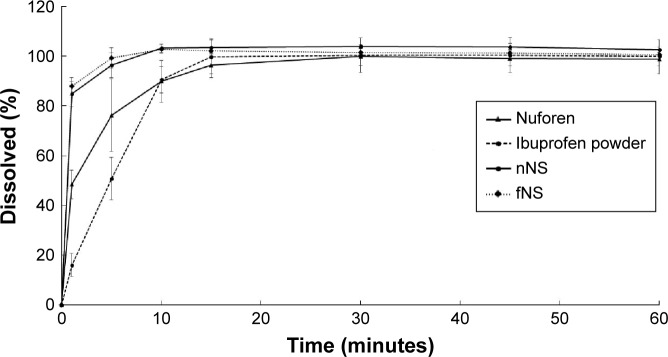
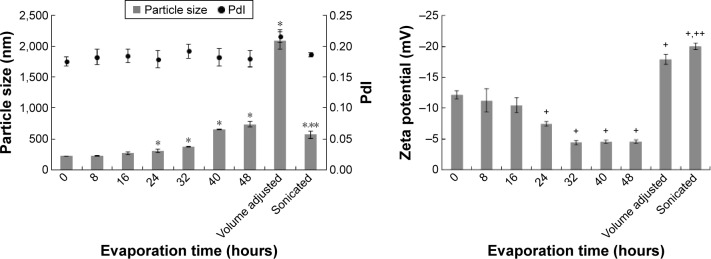
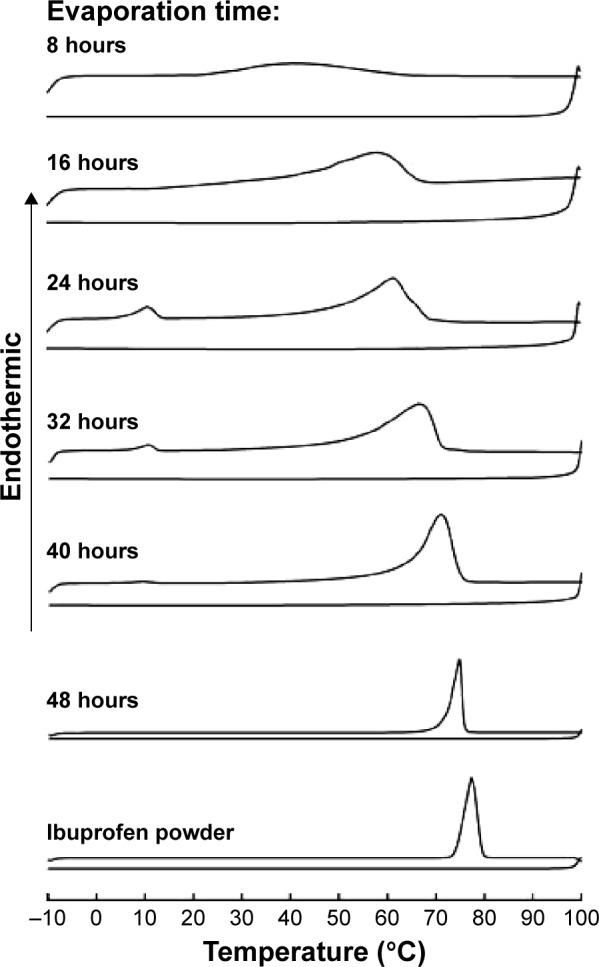
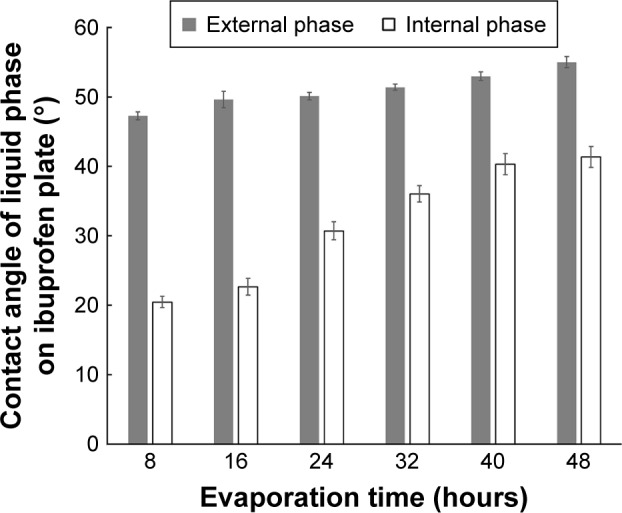
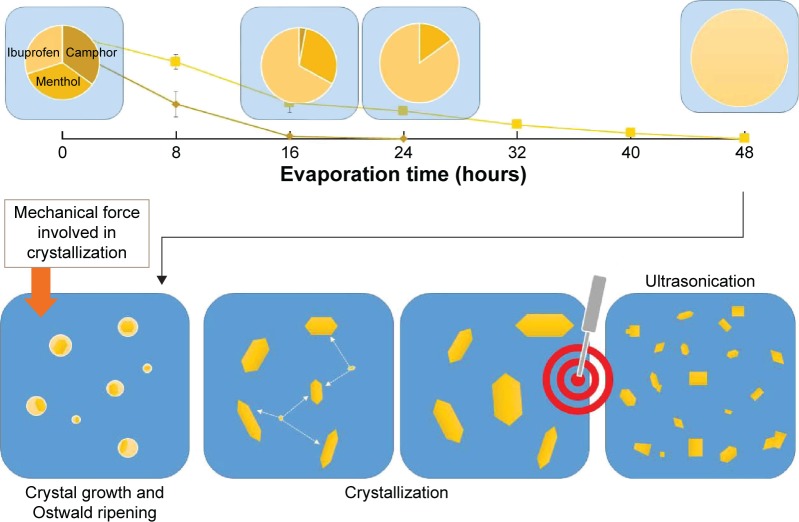
Eutectic solvent can solubilize high amount of some therapeutic compounds. Volatile eutectic solvent is interesting to be used as solvent in the preparation of nanosuspension with emulsion solvent evaporation technique. The mechanism of transformation from the eutectic emulsion to nanosuspension was investigated in this study. The 30% w/w ibuprofen eutectic solution was used as the internal phase, and the external phase is composed of Tween 80 as emulsifier. Ibuprofen nanosuspension was prepared by eutectic emulsion solvent evaporating method followed with ultrasonication. During evaporation process, the ibuprofen concentration in emulsion droplets was increased leading to a drug supersaturation but did not immediately recrystallize because of low glass transition temperature (T g) of ibuprofen. The contact angle of the internal phase on ibuprofen was apparently lower than that of the external phase at all times of evaporation, indicating that the ibuprofen crystals were preferentially wetted by the internal phase than the external phase. From calculated dewetting value ibuprofen crystallization occurred in the droplet. Crystallization of the drug was initiated with external mechanical force, and the particle size of the drug was larger due to Ostwald ripening. Cavitation force from ultrasonication minimized the ibuprofen crystals to the nanoscale. Particle size and zeta potential of formulated ibuprofen nanosuspension were 330.87±51.49 nm and -31.1±1.6 mV, respectively, and exhibited a fast dissolution. Therefore, the combination of eutectic emulsion solvent evaporation method with ultrasonication was favorable for fabricating an ibuprofen nanosuspension, and the transformation mechanism was attained successfully.
低共熔溶剂能够溶解大量的某些治疗性化合物。挥发性低共熔溶剂作为溶剂用于采用乳液溶剂蒸发技术制备纳米混悬液很有吸引力。本研究对低共熔乳液向纳米混悬液的转变机制进行了研究。使用30% w/w的布洛芬低共熔溶液作为内相,外相由吐温80作为乳化剂组成。通过低共熔乳液溶剂蒸发法并随后进行超声处理制备布洛芬纳米混悬液。在蒸发过程中,乳液滴中布洛芬的浓度增加导致药物过饱和,但由于布洛芬的玻璃化转变温度(Tg)较低,并未立即重结晶。在蒸发的所有时刻,内相在布洛芬上的接触角明显低于外相,这表明布洛芬晶体优先被内相比外相润湿。根据计算的去湿值,布洛芬在液滴中结晶。药物的结晶由外部机械力引发,并且由于奥斯特瓦尔德熟化,药物的粒径较大。超声处理产生的空化力将布洛芬晶体最小化至纳米级。所制备的布洛芬纳米混悬液的粒径和zeta电位分别为330.87±51.49 nm和-31.1±1.6 mV,并且表现出快速溶解。因此,低共熔乳液溶剂蒸发法与超声处理相结合有利于制备布洛芬纳米混悬液,并且成功获得了转变机制。