Meng Jie, Li Lijun, Liu Haitao, Li Yong, Li Caihong, Wu Guanglei, Yu Xiaofan, Guo Liyue, Cheng Da, Muminov Mahmud A, Liang Xiaotian, Jiang Gaoming
State Key Laboratory of Vegetation and Environment Change, Institute of Botany, Chinese Academy of Sciences, Beijing, China; University of Chinese Academy of Sciences, Beijing, China.
Key Laboratory of Ecosystem Network Observation and Modeling, Institute of Geographic Sciences and Natural Resources Research, Chinese Academy of Sciences , Beijing , China.
PeerJ. 2016 Jun 23;4:e2137. doi: 10.7717/peerj.2137. eCollection 2016.
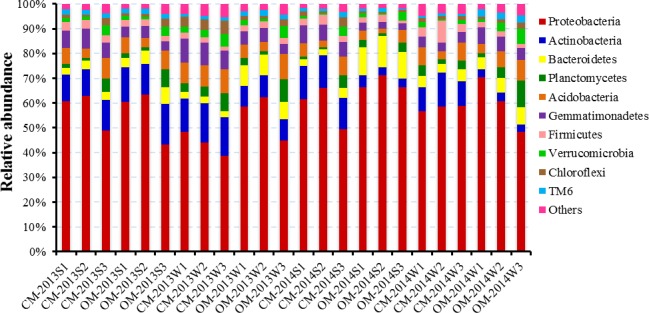
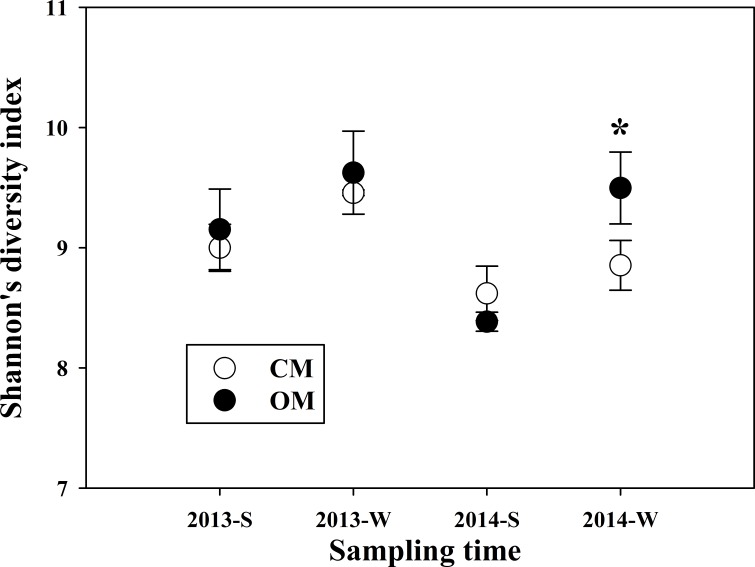
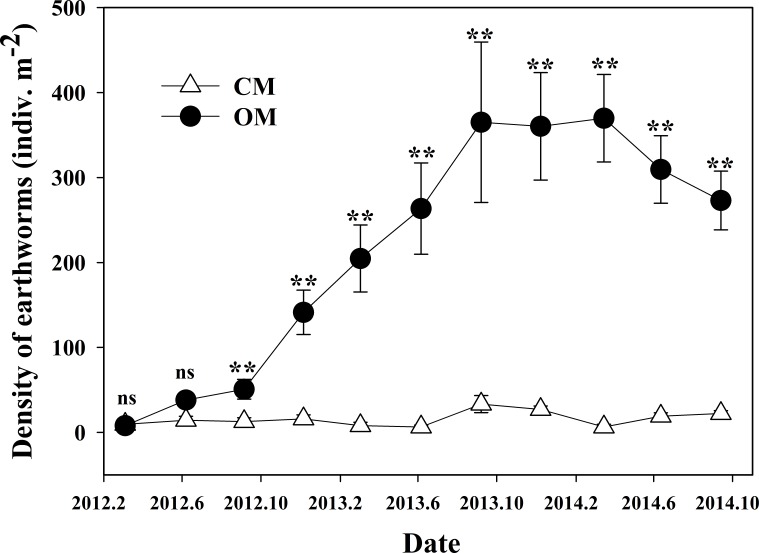
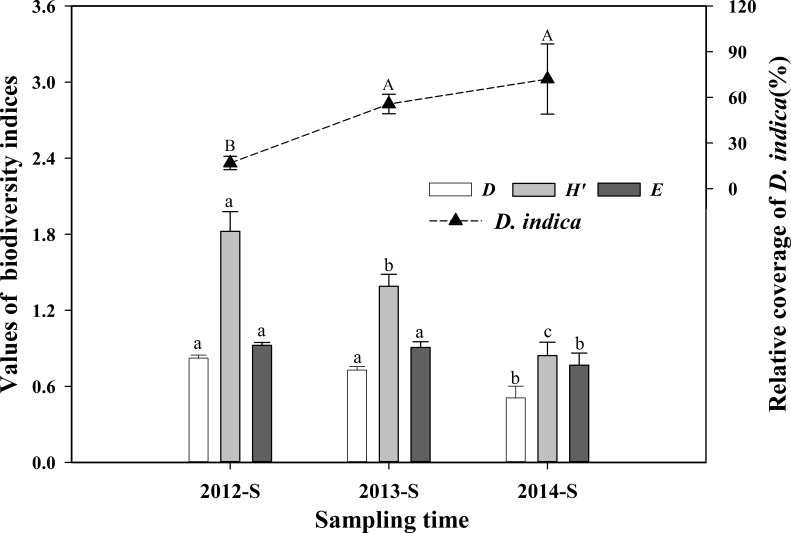
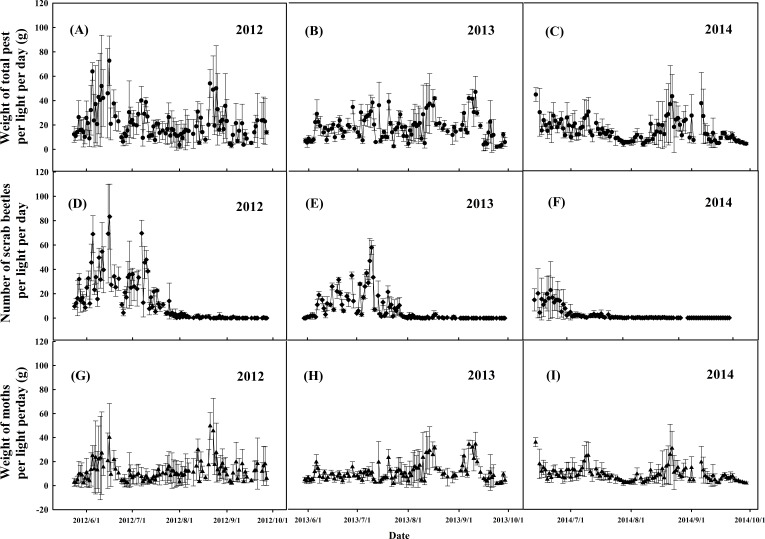
Organic farming has been regarded as an alternative solution for both agricultural sustainability and human health maintenance. Few researches have concentrated on the differences of biodiversity and eco-economic benefits between organic and conventional orchards. Organic management (OM) of orchards mainly includes taking advantage of natural enemies and beneficial weeds as well as soil organisms and controlling harmful pests. Here we conducted a three-year experiment on the effects of managing biodiversity in an organic apple orchard, using cattle manure to enrich soil biota, propagating native plant to suppress weeds and applying ecological pest management to control pests. The effect was assessed against the conventional management (CM) model. We found that OM enhanced soil organic carbon, total nitrogen, microbial biomass carbon and nitrogen. The 16S rDNA high-throughput sequencing results indicated that the dominant bacterial phyla of the top soil were Proteobacteria and Actinobacteria, and OM had richer bacteria diversity with a 7% higher Shannon's index than the CM. In particular, the relative abundance of rhizobium in the OM was higher than that of the CM. For OM, Duchesnea indica was an ideal ground-cover plant to control weeds through winning the niche competition and thus decreased weeds' Simpson, Shannon-Wiener and Pielou index by 38.2%, 53.8% and 16.9% separately. The phototactic pests' weight and scarab beetle's population were effectively decreased by 35% and 86% respectively through long time control and prevention. OM had an average of 20 times more earthworms than CM, and the maximum density had reached 369 m(-2) (0-20 cm soil). The dominant earthworm species of the OM were detritivores which preferring soil with high organic matter content. Due to no synthetic chemicals being used, the OM produced much safer apple fruits which were sold at high prices. Economically, up to a 103% increase of output-input ratio had been achieved in the OM. Our study clearly demonstrated that biodiversity management without chemical pollution increased the biodiversity of beneficial organisms, reduced antagonists of the fruit tree, and enhanced economic benefits of the apple orchard.
有机农业被视为实现农业可持续发展和维护人类健康的一种替代解决方案。很少有研究关注有机果园和传统果园在生物多样性和生态经济效益方面的差异。果园的有机管理(OM)主要包括利用天敌、有益杂草以及土壤生物,并控制有害害虫。在此,我们进行了一项为期三年的实验,研究在有机苹果园中管理生物多样性的效果,通过使用牛粪来丰富土壤生物群落、种植本土植物以抑制杂草以及应用生态害虫管理来控制害虫。以传统管理(CM)模式作为对照来评估效果。我们发现有机管理提高了土壤有机碳、全氮、微生物生物量碳和氮。16S rDNA高通量测序结果表明,表层土壤的优势细菌门为变形菌门和放线菌门,有机管理的细菌多样性更丰富,香农指数比传统管理高7%。特别是,有机管理中根瘤菌的相对丰度高于传统管理。对于有机管理而言,蛇莓是一种理想的地被植物,通过赢得生态位竞争来控制杂草,从而使杂草的辛普森指数、香农 - 维纳指数和皮洛指数分别降低了38.2%、53.8%和16.9%。通过长期的防治,趋光性害虫的数量和金龟子甲虫的种群数量分别有效减少了35%和86%。有机管理的蚯蚓数量平均比传统管理多20倍,最大密度达到369条/平方米(0 - 20厘米土层)。有机管理中优势蚯蚓种类为腐食性蚯蚓,偏好有机质含量高的土壤。由于未使用合成化学物质,有机管理生产出的苹果果实安全性更高,售价也更高。在经济方面,有机管理的投入产出比提高了103%。我们的研究清楚地表明,无化学污染的生物多样性管理增加了有益生物的多样性,减少了果树的拮抗物,并提高了苹果园的经济效益。