El Hayek Tarek, Alnaser-Almusa Osama Abdulwahab, Alsalameh Sulaiman Mamoun, Alhalabi Maya Taofik, Sabbah Ahmad Nedal, Alshehri Eman Abdullah, Mir Tanveer Ahmad, Mani Naresh Kumar, Al-Kattan Khaled, Chinnappan Raja, Yaqinuddin Ahmed
College of Medicine, Alfaisal University, Riyadh, Saudi Arabia.
Tissue/Organ Bioengineering and BioMEMS Laboratory, Organ Transplant Centre of Excellence (TR&I-Dpt), King Faisal Specialist Hospital and Research Centre, Riyadh, Saudi Arabia.
Front Mol Biosci. 2024 Jun 27;11:1381789. doi: 10.3389/fmolb.2024.1381789. eCollection 2024.
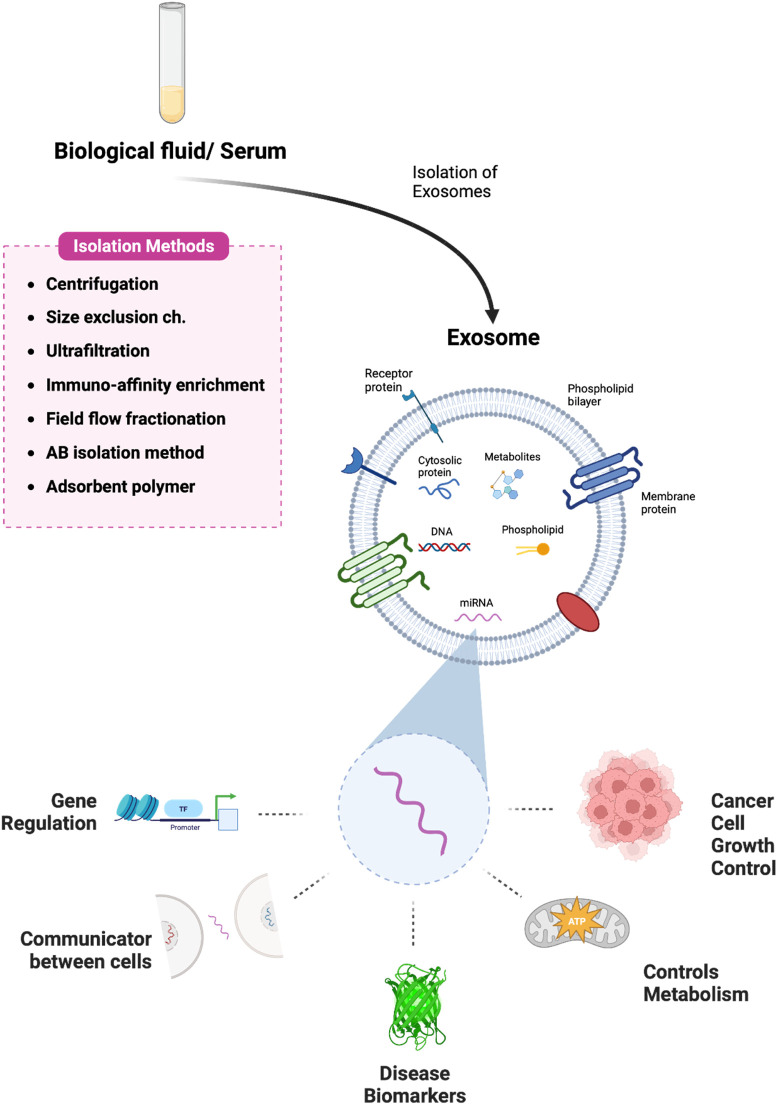
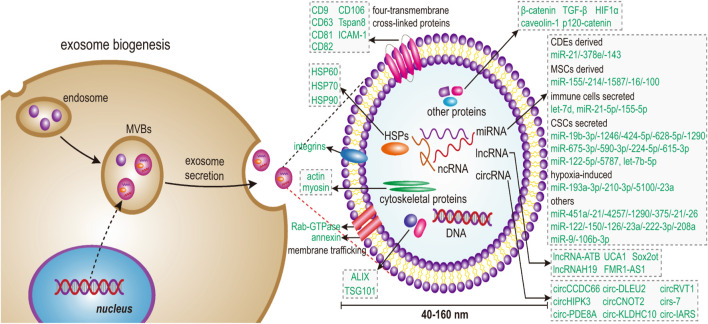
Exosomal microRNAs (miRNAs) have great potential in the fight against hepatocellular carcinoma (HCC), the fourth most common cause of cancer-related death worldwide. In this study, we explored the various applications of these small molecules while analyzing their complex roles in tumor development, metastasis, and changes in the tumor microenvironment. We also discussed the complex interactions that exist between exosomal miRNAs and other non-coding RNAs such as circular RNAs, and show how these interactions coordinate important biochemical pathways that propel the development of HCC. The possibility of targeting exosomal miRNAs for therapeutic intervention is paramount, even beyond their mechanistic significance. We also highlighted their growing potential as cutting-edge biomarkers that could lead to tailored treatment plans by enabling early identification, precise prognosis, and real-time treatment response monitoring. This thorough analysis revealed an intricate network of exosomal miRNAs lead to HCC progression. Finally, strategies for purification and isolation of exosomes and advanced biosensing techniques for detection of exosomal miRNAs are also discussed. Overall, this comprehensive review sheds light on the complex web of exosomal miRNAs in HCC, offering valuable insights for future advancements in diagnosis, prognosis, and ultimately, improved outcomes for patients battling this deadly disease.
外泌体微小RNA(miRNA)在对抗肝细胞癌(HCC)方面具有巨大潜力,HCC是全球癌症相关死亡的第四大常见原因。在本研究中,我们探讨了这些小分子的各种应用,同时分析了它们在肿瘤发展、转移以及肿瘤微环境变化中的复杂作用。我们还讨论了外泌体miRNA与其他非编码RNA(如环状RNA)之间存在的复杂相互作用,并展示了这些相互作用如何协调推动HCC发展的重要生化途径。即使超出其机制意义,以外泌体miRNA为靶点进行治疗干预的可能性也至关重要。我们还强调了它们作为前沿生物标志物的潜力不断增长,通过实现早期识别、精确预后和实时治疗反应监测,可制定个性化治疗方案。这项深入分析揭示了外泌体miRNA导致HCC进展的复杂网络。最后,还讨论了外泌体的纯化和分离策略以及检测外泌体miRNA的先进生物传感技术。总体而言,这篇全面综述揭示了HCC中外泌体miRNA的复杂网络,为未来在诊断、预后方面的进展提供了有价值的见解,并最终为与这种致命疾病作斗争的患者带来更好的治疗结果。