Domanski Michal, Upla Paula, Rice William J, Molloy Kelly R, Ketaren Natalia E, Stokes David L, Jensen Torben Heick, Rout Michael P, LaCava John
Laboratory of Cellular and Structural Biology, The Rockefeller University, New York, New York 10065, USA Centre for mRNP Biogenesis and Metabolism, Department of Molecular Biology and Genetics, Aarhus University, 8000 Aarhus C, Denmark.
Laboratory of Cellular and Structural Biology, The Rockefeller University, New York, New York 10065, USA Skirball Institute and Department of Cell Biology, New York University School of Medicine, New York, New York 10016, USA.
RNA. 2016 Sep;22(9):1467-75. doi: 10.1261/rna.057760.116. Epub 2016 Jul 11.
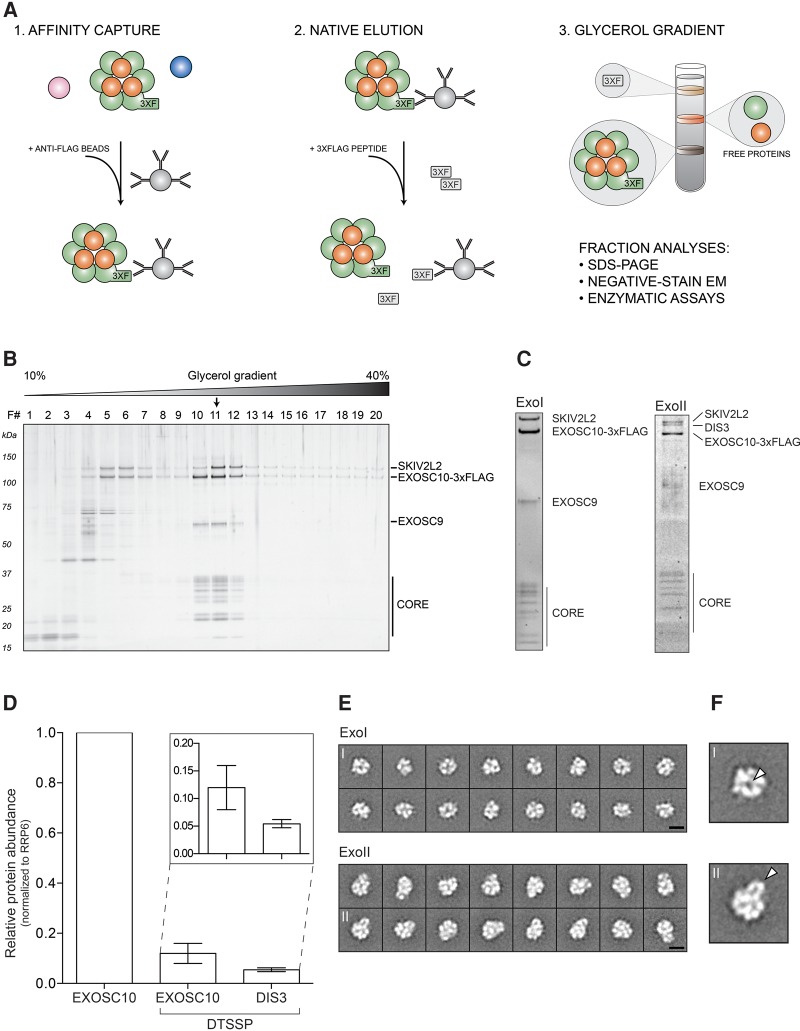
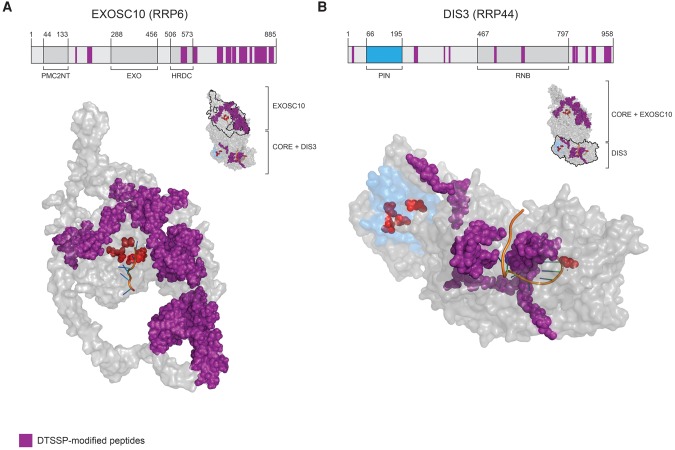
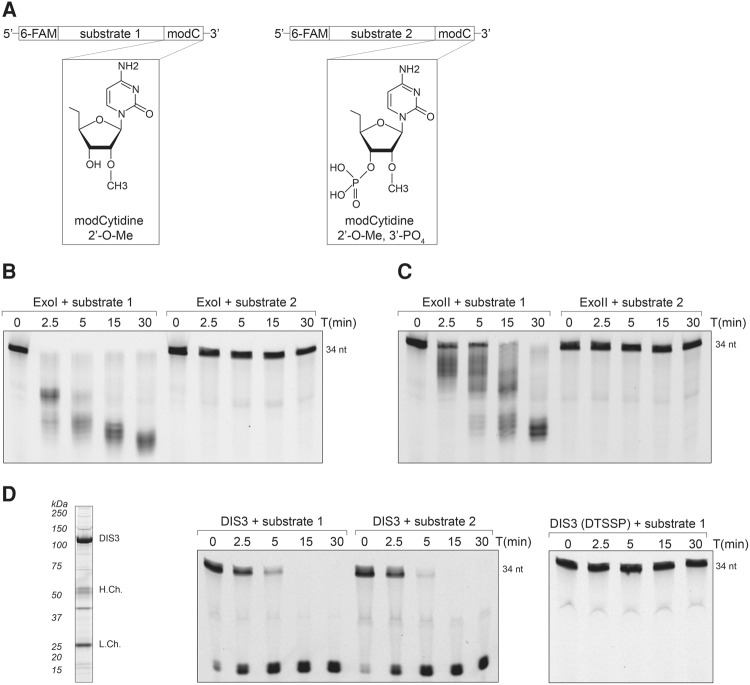
As a result of its importance in key RNA metabolic processes, the ribonucleolytic RNA exosome complex has been the focus of intense study for almost two decades. Research on exosome subunit assembly, cofactor and substrate interaction, enzymatic catalysis and structure have largely been conducted using complexes produced in the yeast Saccharomyces cerevisiae or in bacteria. Here, we examine different populations of endogenous exosomes from human embryonic kidney (HEK) 293 cells and test their enzymatic activity and structural integrity. We describe methods to prepare EXOSC10-containing, enzymatically active endogenous human exosomes at suitable yield and purity for in vitro biochemistry and negative stain transmission electron microscopy. This opens the door for assays designed to test the in vitro effects of putative cofactors on human exosome activity and will enable structural studies of preparations from endogenous sources.
由于核糖核酸分解性RNA外泌体复合物在关键RNA代谢过程中的重要性,近二十年来它一直是深入研究的焦点。对外泌体亚基组装、辅助因子与底物相互作用、酶催化和结构的研究,大多是使用在酿酒酵母或细菌中产生的复合物进行的。在这里,我们检测了来自人胚肾(HEK)293细胞的不同内源性外泌体群体,并测试了它们的酶活性和结构完整性。我们描述了以合适的产量和纯度制备含EXOSC10、具有酶活性的内源性人外泌体的方法,用于体外生物化学和负染透射电子显微镜观察。这为旨在测试假定辅助因子对人外泌体活性的体外效应的分析打开了大门,并将使对内源性来源制剂的结构研究成为可能。