Wu Jianghong, Long Ziwen, Cai Hong, Du Chunyan, Liu Xiaowen, Yu Shengjia, Wang Yanong
Department of Gastric Cancer and Soft Tissue Sarcoma, Fudan University Shanghai Cancer Center, Shanghai 200032, China.
Department of Oncology, Shanghai Medical College, Fudan University, Shanghai 200032, China.
Oncotarget. 2016 Aug 2;7(31):49834-49847. doi: 10.18632/oncotarget.10486.
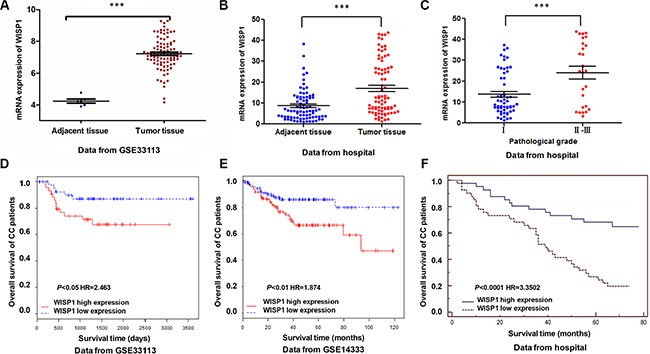
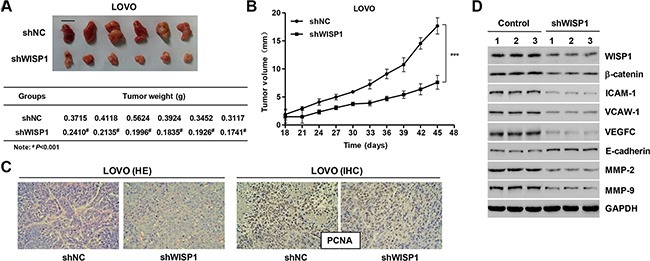
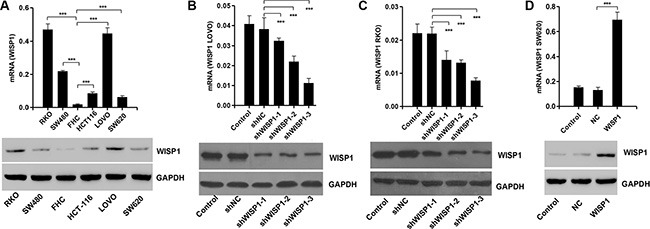
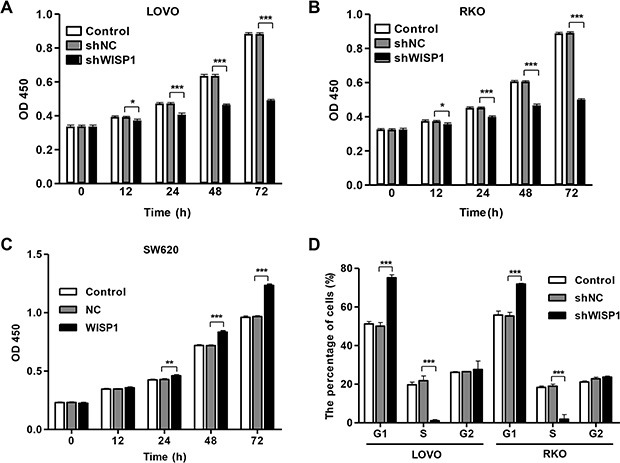
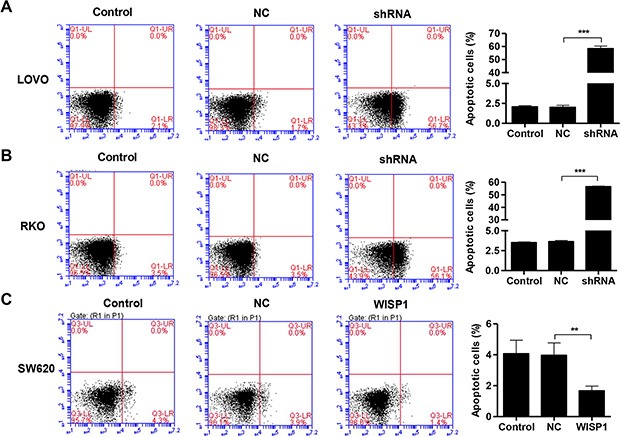
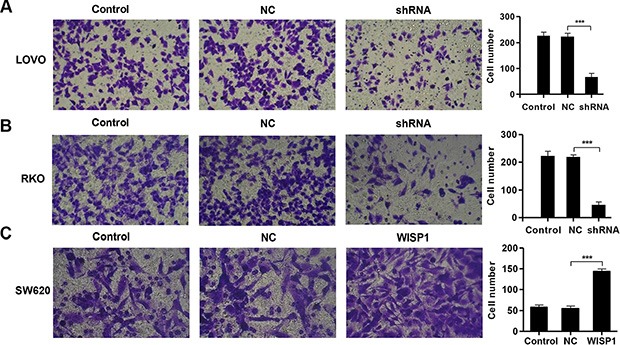
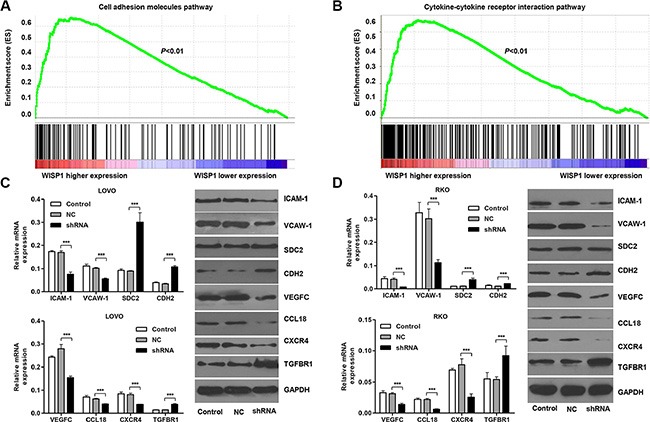
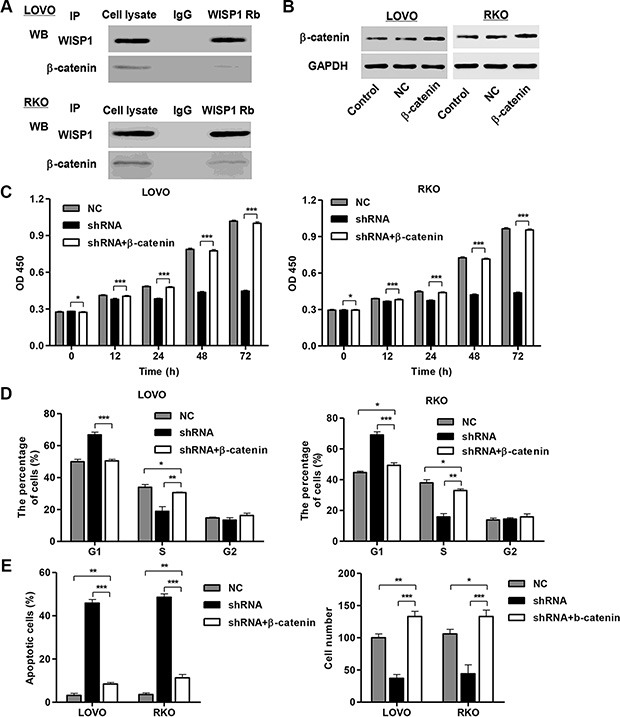
Colon cancer (CC) likes many epithelial-derived cancers, resulting from a complex tumorigenic process. However, the exactly mechanisms of development and progression of CC are still unknown. In this study, integrated analysis in the GSE33113 and Fudan University Shanghai Cancer Center Hospital datasets revealed that WISP1 expression was significantly increased in CC cases, positivity correlated with the advanced pathologic stage and a poor prognosis was more likely in CC patients with higher levels of WISP1. Downregulation of WISP1 inhibited cell proliferation and invasion through increasing apoptosis and blocking cell cycle at G1 phase in CC LOVO and RKO cells. Besides, Gene set enrichment analysis (GSEA) revealed that relative genes involved in the Cell adhesion molecules and Cytokine-cytokine receptor interaction pathways were enriched in WISP1-higher expression patients. Western blot analysis showed that Cell adhesion molecules pathway associated genes (ICAM- 1, VCAM-1, SDC2 and CDH2) and Cytokine-cytokine receptor interaction pathway associated genes (VEGFC, CCL18, CXCR4 and TGFBR1) were also modulated by WISP1 downregulation. Then, we found that the protein β-catenin was identified as a binding partner of WISP1 and mediated the functions of WISP1 through promoting cell proliferation and invasion in LOVO and RKO cells. Further in vivo tumor formation study in nude mice indicated that inhibition of WISP1 delayed the progress of tumor formation and inhibited PCNA expression. These results indicate that WISP1 could act as an oncogene and may serve as a promising therapeutic strategy for colon cancer.
结肠癌(CC)与许多上皮来源的癌症一样,是由复杂的致瘤过程引起的。然而,CC发生发展的确切机制仍不清楚。在本研究中,对GSE33113数据集和复旦大学附属上海肿瘤中心医院数据集的综合分析显示,WISP1在CC病例中的表达显著增加,与病理分期进展呈正相关,WISP1水平较高的CC患者预后更差。WISP1的下调通过增加细胞凋亡和使CC LOVO和RKO细胞的细胞周期阻滞在G1期来抑制细胞增殖和侵袭。此外,基因集富集分析(GSEA)显示,细胞黏附分子和细胞因子-细胞因子受体相互作用途径中的相关基因在WISP1高表达患者中富集。蛋白质印迹分析表明,细胞黏附分子途径相关基因(ICAM-1、VCAM-1、SDC2和CDH2)和细胞因子-细胞因子受体相互作用途径相关基因(VEGFC、CCL18、CXCR4和TGFBR1)也受到WISP1下调的调节。然后,我们发现蛋白质β-连环蛋白被确定为WISP1的结合伴侣,并通过促进LOVO和RKO细胞的增殖和侵袭来介导WISP1的功能。进一步在裸鼠体内进行的肿瘤形成研究表明,抑制WISP1可延缓肿瘤形成进程并抑制PCNA表达。这些结果表明,WISP1可能作为一种癌基因,有望成为结肠癌的治疗策略。