Brito I L, Yilmaz S, Huang K, Xu L, Jupiter S D, Jenkins A P, Naisilisili W, Tamminen M, Smillie C S, Wortman J R, Birren B W, Xavier R J, Blainey P C, Singh A K, Gevers D, Alm E J
Department of Biological Engineering, Massachusetts Institute of Technology, Cambridge, MA.
Broad Institute of MIT and Harvard, Cambridge, MA.
Nature. 2016 Jul 21;535(7612):435-439. doi: 10.1038/nature18927. Epub 2016 Jul 13.
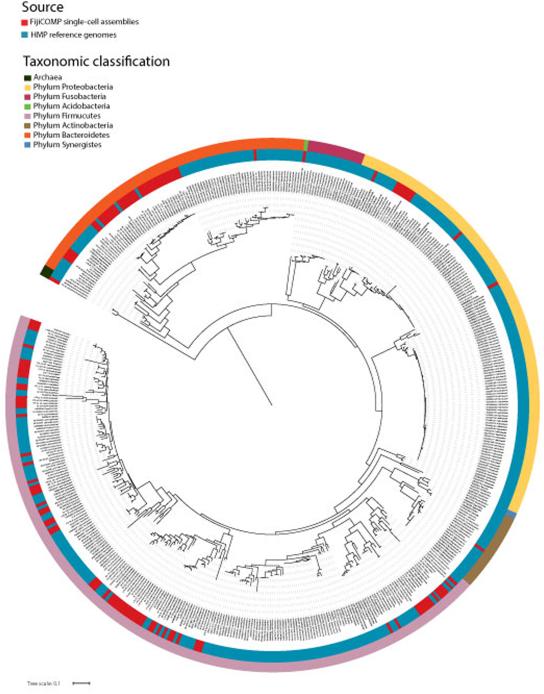
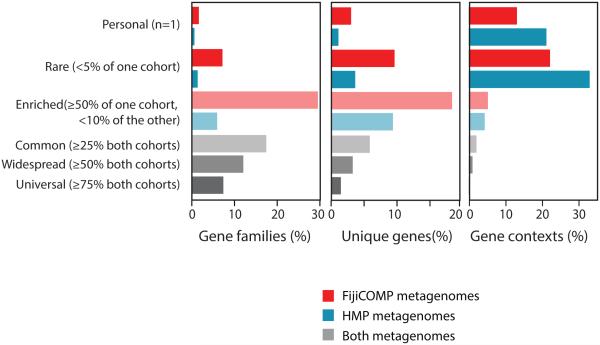
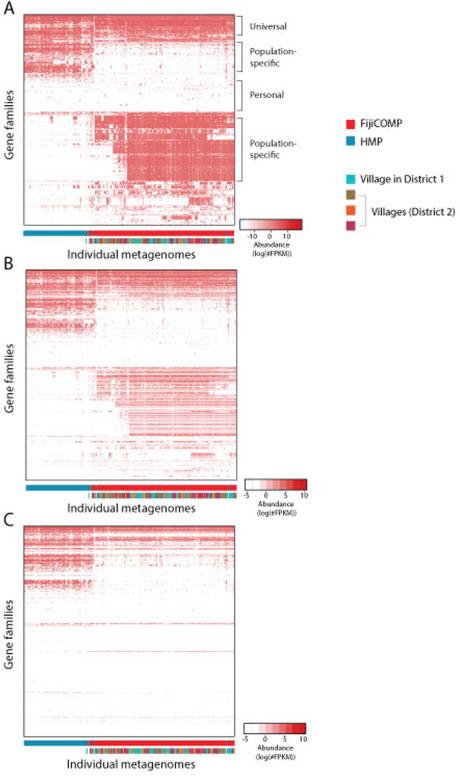
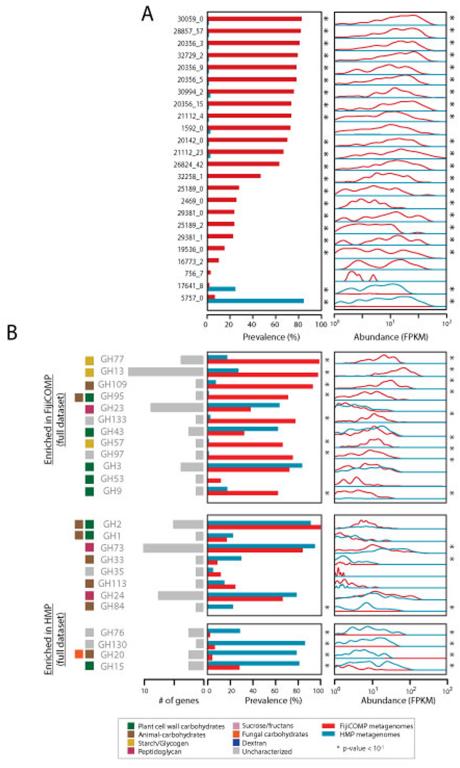
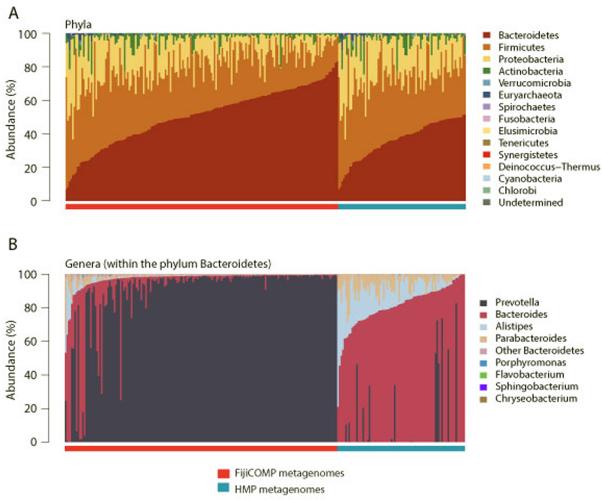
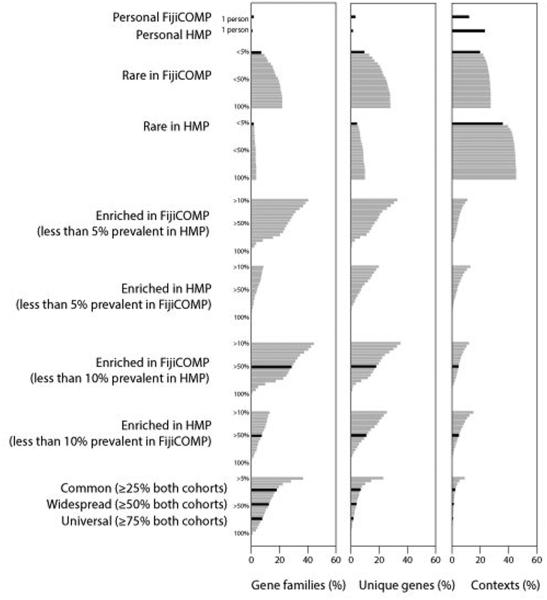
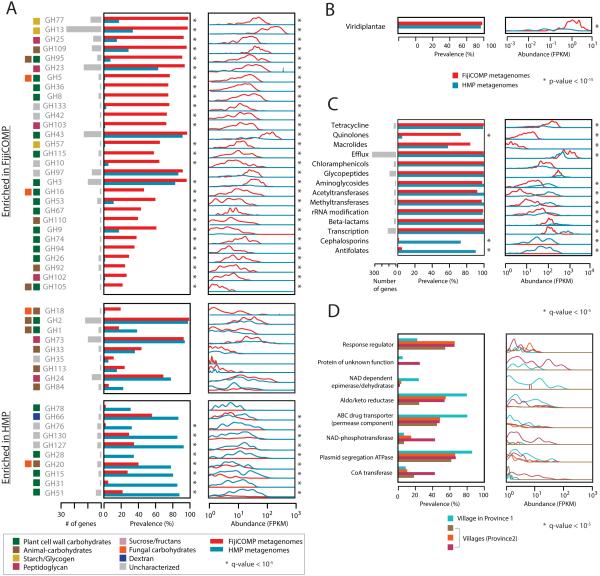
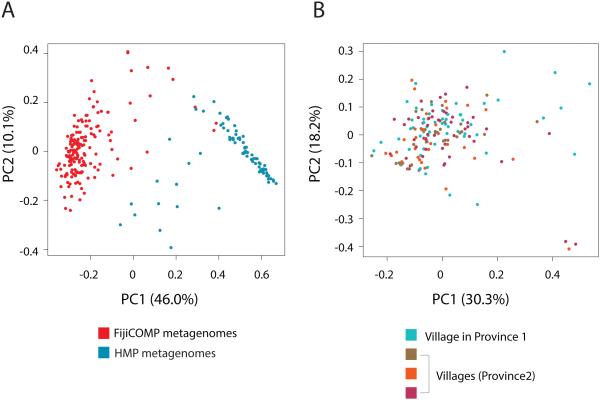
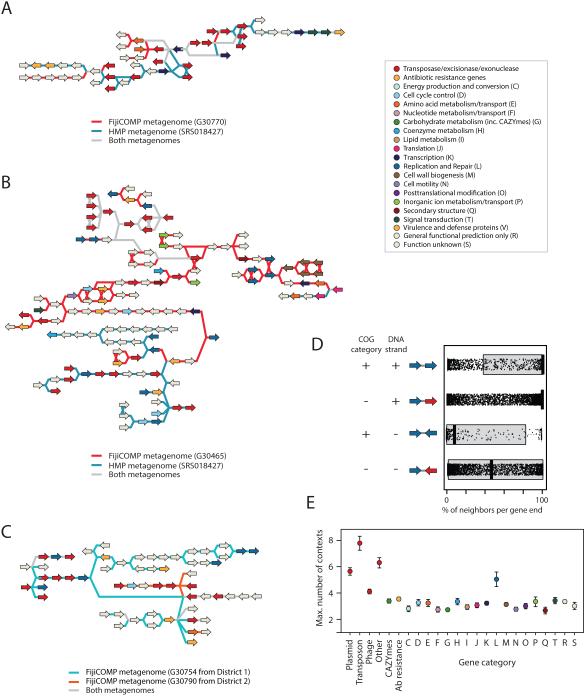
Recent work has underscored the importance of the microbiome in human health, and has largely attributed differences in phenotype to differences in the species present among individuals. However, mobile genes can confer profoundly different phenotypes on different strains of the same species. Little is known about the function and distribution of mobile genes in the human microbiome, and in particular whether the gene pool is globally homogenous or constrained by human population structure. Here, we investigate this question by comparing the mobile genes found in the microbiomes of 81 metropolitan North Americans with those of 172 agrarian Fiji islanders using a combination of single-cell genomics and metagenomics. We find large differences in mobile gene content between the Fijian and North American microbiomes, with functional variation that mirrors known dietary differences such as the excess of plant-based starch degradation genes found in Fijian individuals. Notably, we also observed differences between the mobile gene pools of neighbouring Fijian villages, even though microbiome composition across villages is similar. Finally, we observe high rates of recombination leading to individual-specific mobile elements, suggesting that the abundance of some genes may reflect environmental selection rather than dispersal limitation. Together, these data support the hypothesis that human activities and behaviours provide selective pressures that shape mobile gene pools, and that acquisition of mobile genes is important for colonizing specific human populations.
近期的研究强调了微生物组在人类健康中的重要性,并且很大程度上把表型差异归因于个体间存在的物种差异。然而,移动基因能够赋予同一物种的不同菌株截然不同的表型。人们对人类微生物组中移动基因的功能和分布知之甚少,尤其是基因库在全球范围内是同质化的还是受人类种群结构限制。在此,我们通过结合单细胞基因组学和宏基因组学,比较81名北美大都市居民与172名斐济农业岛民微生物组中的移动基因,来研究这个问题。我们发现斐济人和北美微生物组的移动基因含量存在很大差异,其功能变异反映了已知的饮食差异,比如在斐济个体中发现的植物性淀粉降解基因过多。值得注意的是,我们还观察到相邻斐济村庄的移动基因库之间存在差异,尽管不同村庄的微生物组组成相似。最后,我们观察到导致个体特异性移动元件的重组率很高,这表明某些基因的丰度可能反映环境选择而非扩散限制。总之,这些数据支持这样一种假设,即人类活动和行为提供了塑造移动基因库的选择压力,并且获取移动基因对于特定人类群体的定殖很重要。