Adamiak Mateusz, Moore Joseph B, Zhao John, Abdelbaset-Ismail Ahmed, Grubczak Kamil, Rzeszotek Sylwia, Wysoczynski Marcin, Ratajczak Mariusz Z
Stem Cell Institute at James Graham Brown Cancer Center, University of Louisville, Louisville, KY, USA.
Cell Transplant. 2016;25(7):1265-76. doi: 10.3727/096368915X688957.
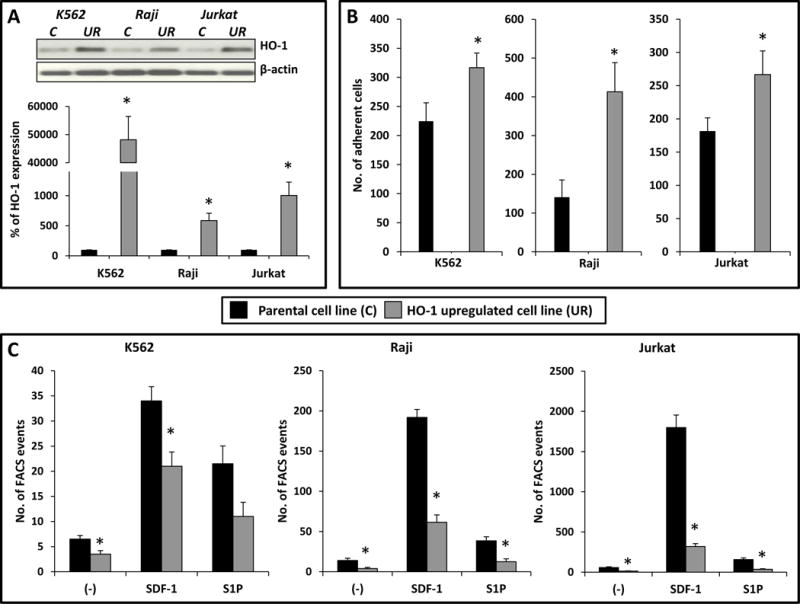
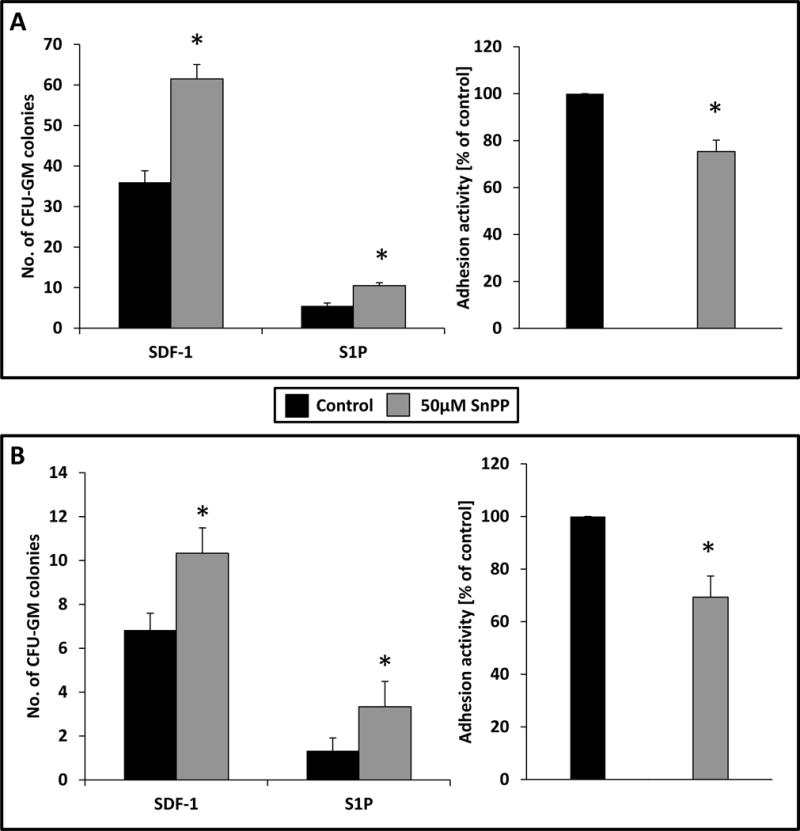
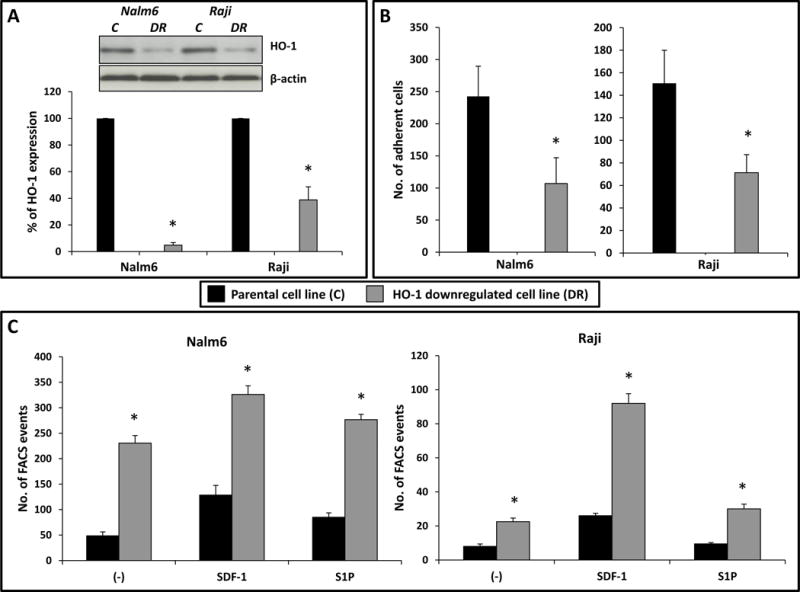
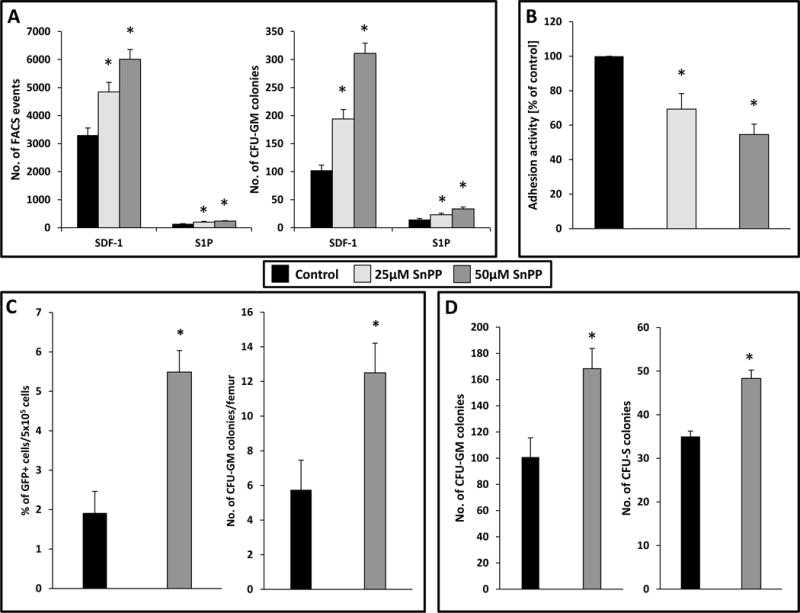
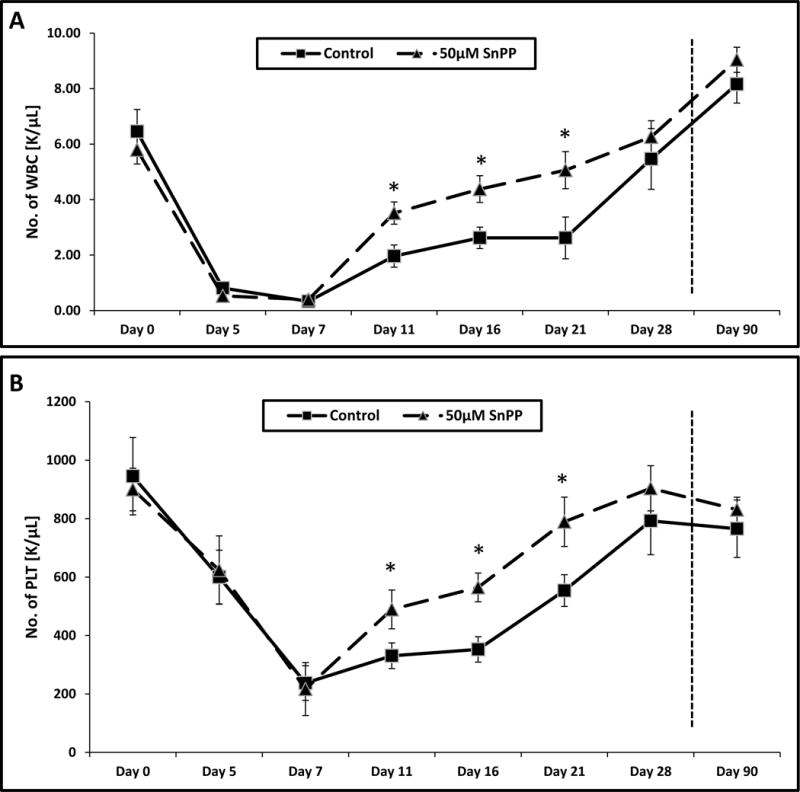
Heme oxygenase 1 (HO-1) is an inducible stress-response enzyme that not only catalyzes the degradation of heme (e.g., released from erythrocytes) but also has an important function in various physiological and pathophysiological states associated with cellular stress, such as ischemic/reperfusion injury. HO-1 has a well-documented anti-inflammatory potential, and HO-1 has been reported to have a negative effect on adhesion and migration of neutrophils in acute inflammation in a model of peritonitis. This finding is supported by our recent observation that hematopoietic stem progenitor cells (HSPCs) from HO-1 KO mice are easy mobilizers, since they respond better to peripheral blood chemotactic gradients than wild-type littermates. Based on these findings, we hypothesized that transient inhibition of HO-1 by nontoxic small-molecule inhibitors would enhance migration of HSPCs in response to bone marrow chemoattractants and thereby facilitate their homing. To directly address this issue, we generated several human hematopoietic cell lines in which HO-1 was upregulated or downregulated. We also exposed murine and human BM-derived cells to small-molecule activators and inhibitors of HO-1. Our results indicate that HO-1 is an inhibitor of hematopoietic cell migration in response to crucial BM homing chemoattractants such as stromal-derived factor 1 (SDF-1) and sphingosine-1-phosphate (S1P). Most importantly, our in vitro and in vivo animal experiments demonstrate for the first time that transiently inhibiting HO-1 activity in HSPCs by small-molecule inhibitors improves HSPC engraftment. We propose that this simple and inexpensive strategy could be employed in the clinical setting to improve engraftment of HSPCs, particularly in those situations in which the number of HSPCs available for transplant is limited (e.g., when transplanting umbilical cord blood).
血红素加氧酶1(HO-1)是一种可诱导的应激反应酶,它不仅催化血红素(如从红细胞中释放的血红素)的降解,而且在与细胞应激相关的各种生理和病理生理状态(如缺血/再灌注损伤)中具有重要作用。HO-1具有充分记录的抗炎潜力,并且在腹膜炎模型中,HO-1已被报道对急性炎症中中性粒细胞的黏附和迁移有负面影响。我们最近的观察结果支持了这一发现,即来自HO-1基因敲除小鼠的造血干祖细胞(HSPCs)是易于动员的细胞,因为它们比野生型同窝小鼠对外周血趋化梯度的反应更好。基于这些发现,我们推测无毒小分子抑制剂对HO-1的短暂抑制将增强HSPCs对骨髓趋化因子的反应性迁移,从而促进它们的归巢。为了直接解决这个问题,我们构建了几种HO-1上调或下调的人造血细胞系。我们还将小鼠和人骨髓来源的细胞暴露于HO-1的小分子激活剂和抑制剂中。我们的结果表明,HO-1是造血细胞对关键的骨髓归巢趋化因子(如基质细胞衍生因子1(SDF-1)和鞘氨醇-1-磷酸(S1P))迁移的抑制剂。最重要的是,我们的体外和体内动物实验首次证明,小分子抑制剂对HSPCs中HO-1活性的短暂抑制可改善HSPCs的植入。我们提出,这种简单且廉价的策略可用于临床环境中,以改善HSPCs的植入,特别是在可用于移植的HSPCs数量有限的情况下(例如,移植脐带血时)。