Qin Angel, Coffey David G, Warren Edus H, Ramnath Nithya
Division of Hematology and Oncology, Department of Medicine, University of Michigan, Ann Arbor, Michigan.
Clinical Research Division, Fred Hutchinson Cancer Research Center, Seattle, Washington.
Cancer Med. 2016 Sep;5(9):2567-78. doi: 10.1002/cam4.819. Epub 2016 Jul 15.
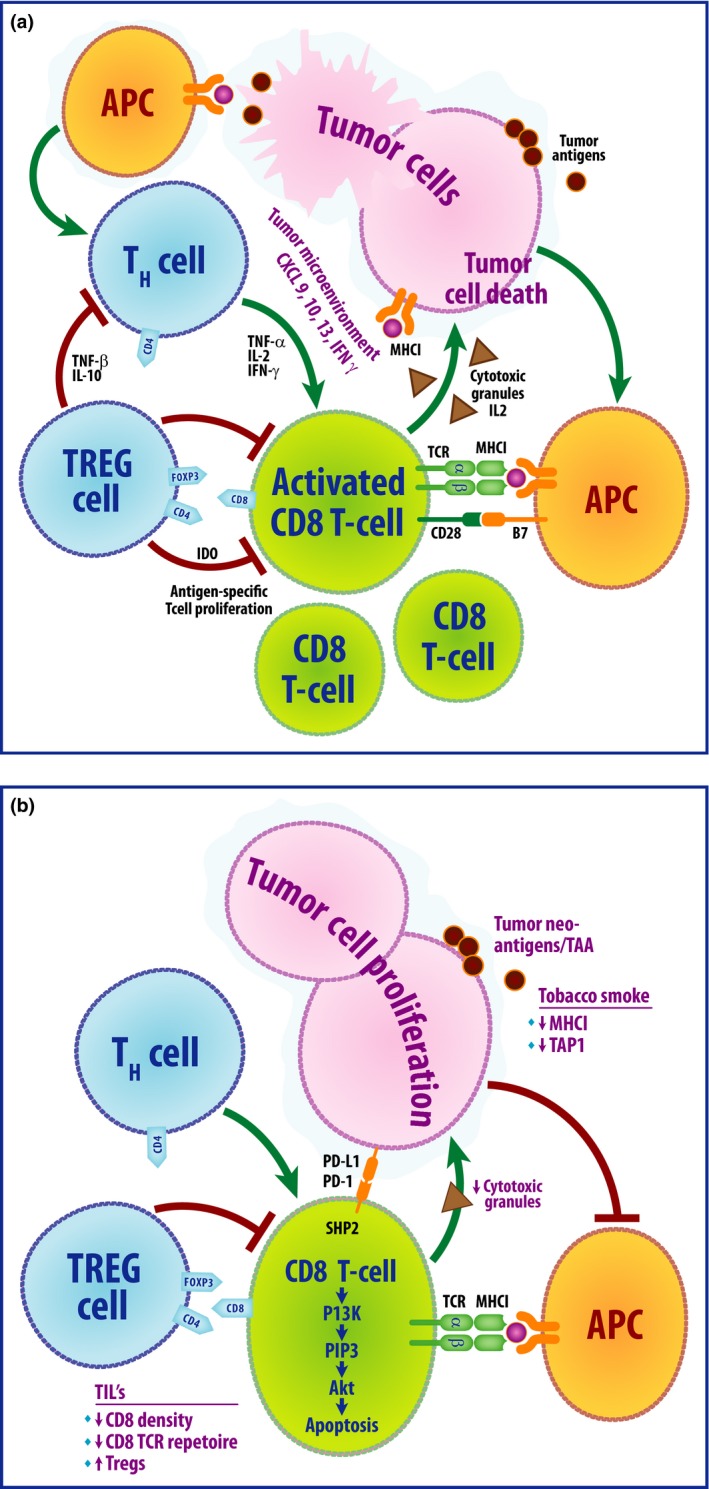
In the past several years, immunotherapy has emerged as a viable treatment option for patients with advanced non-small cell lung cancer (NSCLC) without actionable driver mutations that have progressed on standard chemotherapy. We are also beginning to understand the methods of immune evasion employed by NSCLC which likely contribute to the 20% response rate to immunotherapy. It is also yet unclear what tumor or patient factors predict response to immunotherapy. The objectives of this review are (1) review the immunogenicity of NSCLC (2) describe the mechanisms of immune evasion (3) summarize efforts to target the anti-program death-1 (PD-1) and anti-program death-ligand 1(PD-L1) pathway (4) outline determinants of response to PD-1/PD-L1 therapy and (5) discuss potential future areas for research.
在过去几年中,免疫疗法已成为晚期非小细胞肺癌(NSCLC)患者可行的治疗选择,这些患者没有可操作的驱动基因突变,且在标准化疗中病情进展。我们也开始了解NSCLC所采用的免疫逃逸方法,这可能是导致免疫疗法20%缓解率的原因。目前尚不清楚哪些肿瘤或患者因素可预测对免疫疗法的反应。本综述的目的是:(1)回顾NSCLC的免疫原性;(2)描述免疫逃逸机制;(3)总结针对抗程序性死亡蛋白1(PD-1)和抗程序性死亡配体1(PD-L1)途径的研究成果;(4)概述对PD-1/PD-L1治疗反应的决定因素;(5)讨论未来潜在的研究领域。