Blunden Sarah, Benveniste Tessa, Thompson Kirrilly
Appleton Institute, Central Queensland University, Adelaide South Australia 5000, Australia.
Children (Basel). 2016 Jul 1;3(3):11. doi: 10.3390/children3030011.
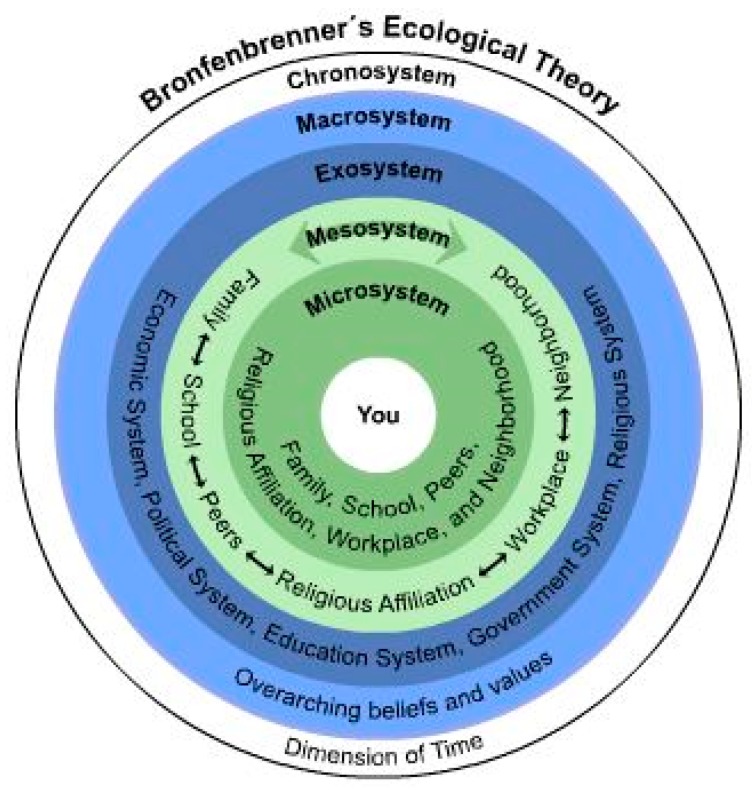
Sleep is critical for the healthy development of children, yet most children simply don't get enough. Whilst school based sleep education programs have been developed for parents and their children, they have had mixed success. We consider how use of behavior change theory in existing school-based sleep education programs can be improved by applying and apply a broader model to these programs. We find that the mixed success of school-based sleep education programs may be due to a plausible but misleading assumption that simply increasing information about the importance of sleep and the risks of insufficient and/or inefficient sleep will necessarily result in improved sleep behaviors. We identify the potential benefits of using behavior change theory in the development of sleep education programs but in particular, there is a need for theories incorporate the multiple biological, environmental and social impacts on children's sleep. Bronfenbrenner's Bioecological model is presented to illustrate how one such behavior change theory could significantly improve the success of sleep education programs and ultimately support the healthy development of children.
睡眠对儿童的健康发育至关重要,但大多数儿童睡眠严重不足。虽然已经为家长及其子女制定了以学校为基础的睡眠教育计划,但效果参差不齐。我们探讨如何通过应用行为改变理论来改进现有以学校为基础的睡眠教育计划,并将更广泛的模型应用于这些计划。我们发现,以学校为基础的睡眠教育计划效果不一,可能是由于一个看似合理但具有误导性的假设,即仅仅增加关于睡眠重要性以及睡眠不足和/或低效睡眠风险的信息,必然会导致睡眠行为改善。我们确定了在睡眠教育计划开发中使用行为改变理论的潜在益处,但特别需要能纳入对儿童睡眠产生多种生物、环境和社会影响的理论。文中介绍了布伦芬布伦纳的生物生态模型,以说明这样一种行为改变理论如何能显著提高睡眠教育计划的成功率,并最终支持儿童的健康发育。