Department of Animal Science, University of Tennessee, Knoxville, TN 37996, USA.
Animals (Basel). 2016 Jul 13;6(7):41. doi: 10.3390/ani6070041.
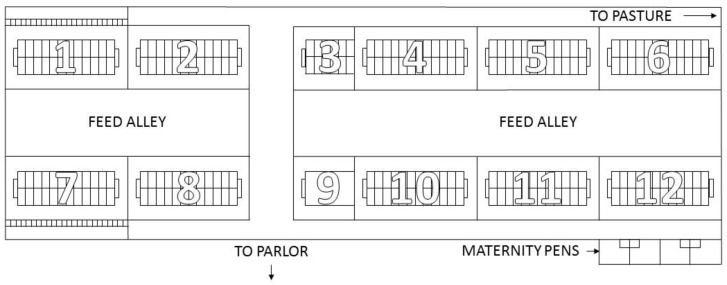
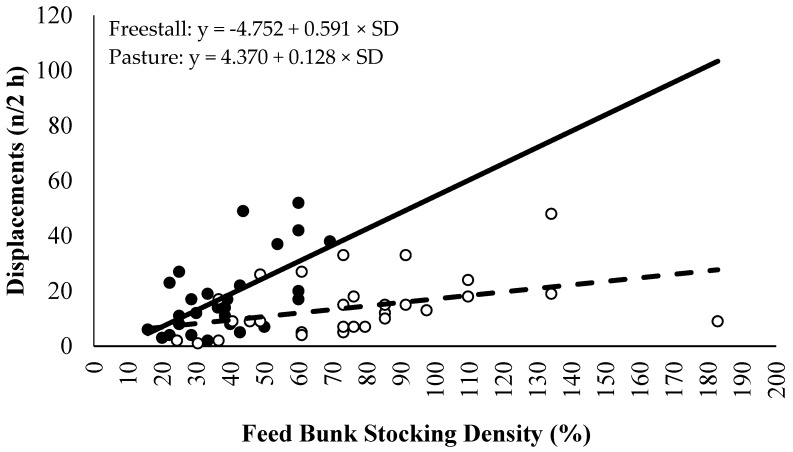
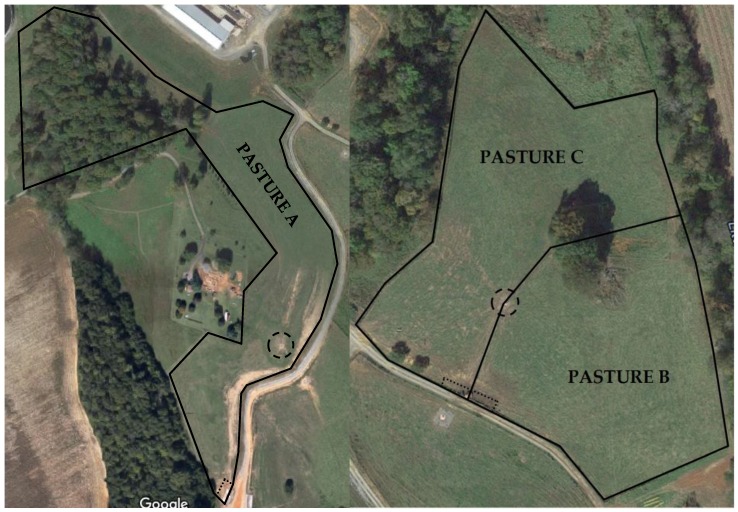
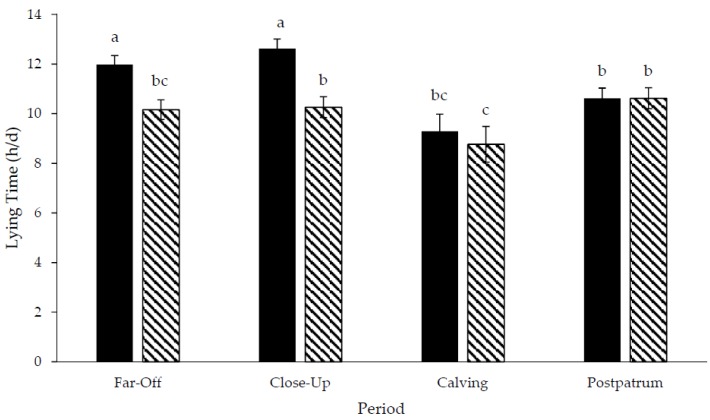
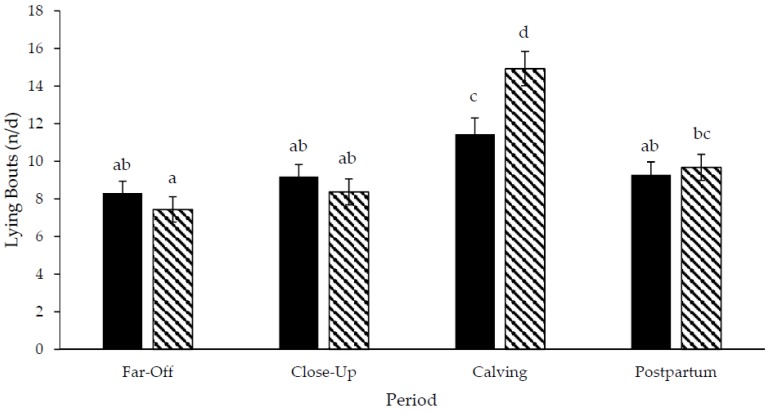
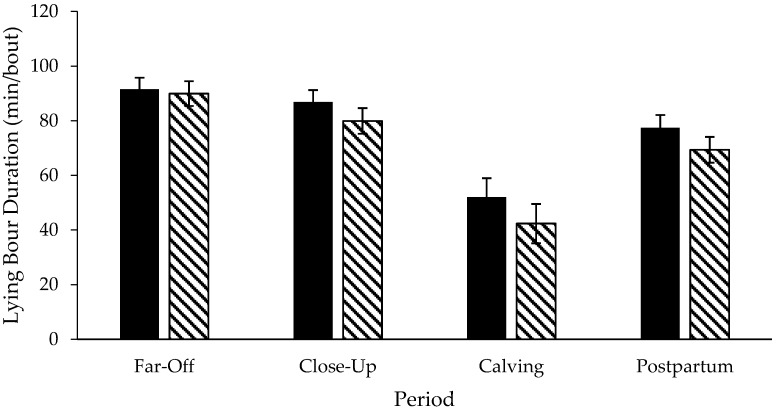
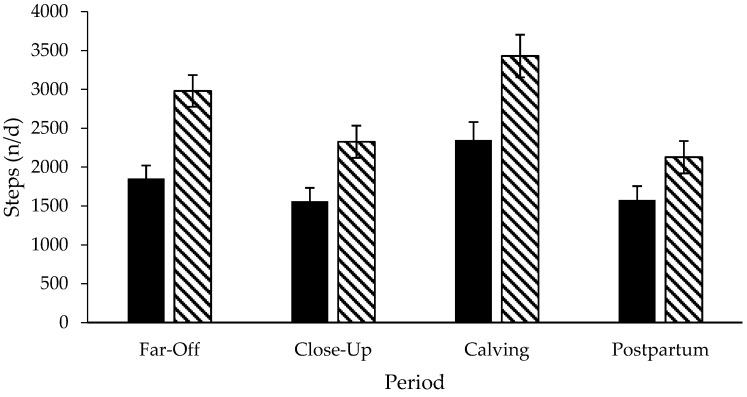
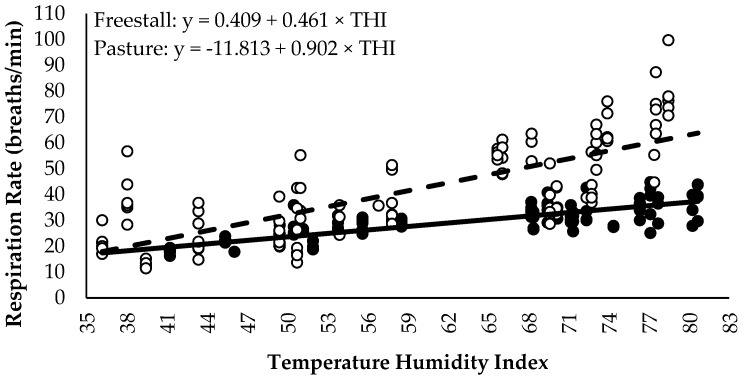
The objectives of this study were to determine the effect of the dry cow management system (pasture or confined) on: (1) lying behaviour and activity; (2) feeding and heat stress behaviours; (3) intramammary infections, postpartum. Non-lactating Holstein cows were assigned to either deep-bedded, sand freestalls ( n = 14) or pasture ( n = 14) using rolling enrollment. At dry-off, cows were equipped with an accelerometer to determine daily lying time (h/d), lying bouts (bouts/d), steps (steps/d) and divided into periods: far-off (60 to 15 d prepartum), close-up (14 to 1 d prepartum), calving (calving date) and postpartum (1 to 14 d postpartum). Respiration rates were recorded once weekly from dry off to calving from 1300 to 1500 h. Feeding displacements were defined as one cow successfully displacing another from the feed bunk and were recorded once per week during the 2 h period, immediately after feeding at 800 h. Pastured cows were fed a commercial dry cow pellet during far-off and total mixed ration during close-up, with free access to hay and grazing. Freestall housed cows were fed a total mixed ration at far-off and close-up. Cows housed in freestalls were moved to a maternity pen with a mattress at commencement of labour. Pastured cows calved in pasture. After calving, all cows were commingled in a pen identical to the freestall housing treatment. Cows housed in freestalls laid down for longer during far-off and close-up periods, had fewer lying bouts during the calving period and took fewer steps throughout the study period when compared to pastured cows. Freestall housed cows experienced more displacements after feeding than did pastured cows. Respiration rates increased with an increasing temperature humidity index, more in pastured cows than in freestall housed cows. Pastured cows altered their lying behaviour and activity, suggesting a shift in time budget priorities between pastured and confined dry cows. Pastured cows also experienced less aggression around feeding but may be more susceptible to heat stress.
本研究旨在确定干奶牛管理系统(放牧或圈养)对以下方面的影响:(1)卧姿和活动;(2)采食和热应激行为;(3)产后乳腺炎。采用滚动入学方式,将非泌乳荷斯坦奶牛分配到深床沙自由卧床(n=14)或放牧(n=14)中。在干奶时,使用加速度计为奶牛佩戴设备,以确定每天的卧躺时间(h/d)、卧躺次数(bouts/d)、步数(steps/d),并分为以下阶段:远干前期(产前 60-15d)、近干前期(产前 14-1d)、分娩(分娩日期)和产后(产后 1-14d)。从干奶到分娩,在每天 1300 至 1500h 记录呼吸频率一次。采食干扰定义为一头牛成功地将另一头牛从饲料槽中赶走,每周记录一次,在 800h 喂料后 2h 期间进行。放牧奶牛在远干前期和近干前期饲喂商品干奶牛颗粒料,自由采食干草和放牧;舍饲奶牛在远干前期和近干前期饲喂全混合日粮。舍饲奶牛在分娩时转移到带有床垫的产房。放牧奶牛在牧场上分娩。分娩后,所有奶牛在与舍饲相同的围栏中混合。舍饲奶牛在远干前期和近干前期的卧躺时间更长,分娩期间的卧躺次数更少,在整个研究期间的步数也更少。与放牧奶牛相比,舍饲奶牛在采食后经历更多的采食干扰。呼吸率随温湿度指数的增加而增加,放牧奶牛的增加幅度大于舍饲奶牛。放牧奶牛改变了卧躺行为和活动,表明放牧和圈养干奶牛之间的时间预算重点发生了转移。放牧奶牛在采食时的攻击性也较小,但可能更容易受到热应激的影响。