Chen Yi-Chen, Liao Jiunn-Wang, Hsu Wei-Li, Chang Shih-Chieh
Department of Veterinary Medicine, College of Veterinary Medicine, National Chung Hsing University, 250 Kuo-Kuang Road, Taichung, 40227, Taiwan.
Graduate Institute of Veterinary Pathobiology, College of Veterinary Medicine, National Chung Hsing University, 250 Kuo-Kuang Road, Taichung, 40227, Taiwan.
BMC Vet Res. 2016 Jul 16;12(1):142. doi: 10.1186/s12917-016-0772-y.
KIT is a tyrosine kinase growth factor receptor. High expression of KIT has been found in several tumors including canine hemangiosarcoma (HSA). This study investigated the correlation of KIT expression and c-kit sequence mutations in canine HSAs and benign hemangiomas (HAs).
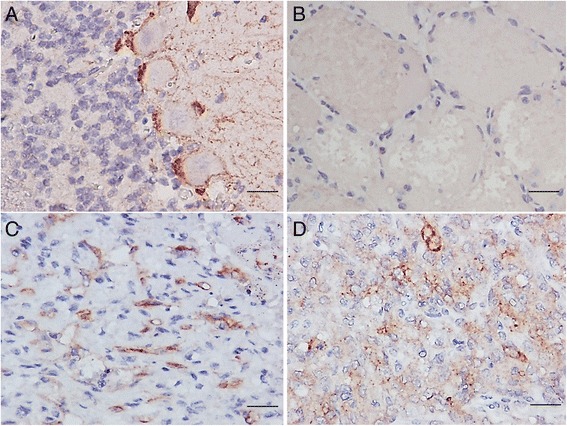
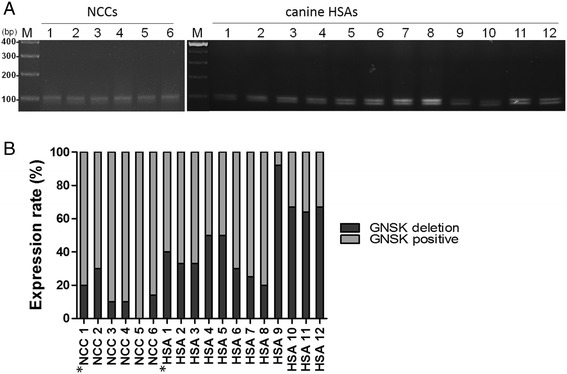
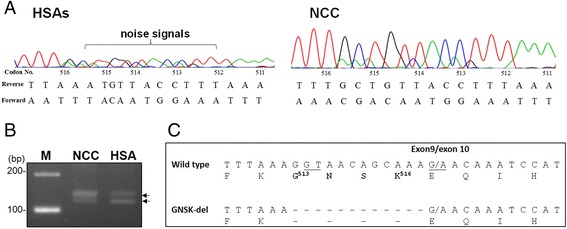
Immunohistochemistry (IHC) staining confirmed KIT expression in 94.4 % (34/36) of HSAs that was significantly higher than 0 % in HAs (0/16). Sequencing the entire c-kit coding region of HSAs and normal canine cerebellums (NCCs) revealed GNSK-deletion in exon 9. As for exon 9 genotyping by TA-cloning strategy, GNSK-deletion c-kit accounted for 48.6 % (68/140) colonies amplified from12 KIT-positive HSAs, a significantly higher frequency than 14.1 % (9/64) of colonies amplified from six NCCs.
Due to the distinct expression pattern revealed by IHC, KIT might be used to distinguish benign or malignant vascular endothelial tumors. Moreover, the high incidence of GNSK-deletion c-kit in canine HSAs implicates KIT isoforms as possibly participating in the tumorigenesis of canine HSAs.
KIT是一种酪氨酸激酶生长因子受体。在包括犬血管肉瘤(HSA)在内的多种肿瘤中均发现KIT高表达。本研究调查了犬HSA和良性血管瘤(HA)中KIT表达与c-kit序列突变的相关性。
免疫组织化学(IHC)染色证实,94.4%(34/36)的HSA中有KIT表达,显著高于HA中的0%(0/16)。对HSA和正常犬小脑(NCC)的整个c-kit编码区进行测序,发现外显子9存在GNSK缺失。采用TA克隆策略对外显子9进行基因分型,从12个KIT阳性HSA扩增的菌落中,GNSK缺失型c-kit占48.6%(68/140),显著高于从6个NCC扩增的菌落中的14.1%(9/64)。
由于IHC显示出不同的表达模式,KIT可能用于区分良性或恶性血管内皮肿瘤。此外,犬HSA中GNSK缺失型c-kit的高发生率表明KIT异构体可能参与了犬HSA的肿瘤发生。