Inoriza Jose M, Ibañez Annabel, Pérez-Berruezo Xavier, Inoriza-Nadal Cristina, Coderch Jordi
Hospital de Palamós, Serveis de Salut Integrats Baix Empordà (SSIBE), Palamós, Girona, España; Grup de Recerca en Serveis Sanitaris i Resultats en Salut (GRESSIRES).
ABS Torroella de Montgrí, Serveis de Salut Integrats Baix Empordà (SSIBE), Torroella de Montgrí, Girona, España.
Aten Primaria. 2017 Mar;49(3):131-139. doi: 10.1016/j.aprim.2016.04.004. Epub 2016 Aug 8.
To evaluate if insulin-treated type 2 diabetic patients with blood glucose self-monitoring (DIA), included in a program of integrated management of diabetes mellitus (DM), achieve a better level of metabolic control with telemedicine support than with conventional support, after 12 months follow-up. The impact on the use and cost of healthcare services, pharmaceutical expenditure, and consumption of test strips for blood glucose, was also assessed.
A prospective parallel cohorts study.
Four basic health areas of an integrated healthcare organisation.
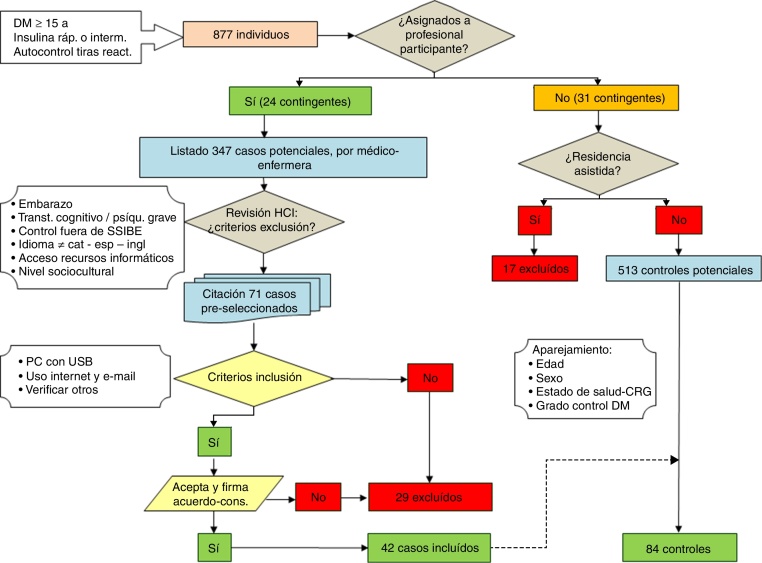
The study included 126 DIA patients aged 15 or more years, treated with rapid or intermediate Insulin and blood glucose self-monitoring, grouped into 42 cases and 84 controls, matched according to age, sex, level of metabolic control, and morbidity profile.
Telematics physician-patient communication and download of blood glucose self-monitoring data through the Emminens eConecta platform; test strips home delivered according to consumption. Hidden controls with usual follow-up.
Glycosylated haemoglobin (%HbA1c); perception of quality of life (EuroQol-5 and EsDQOL); cardiovascular risk; use of healthcare resources; consumption of test strips; pharmaceutical and healthcare expenditure.
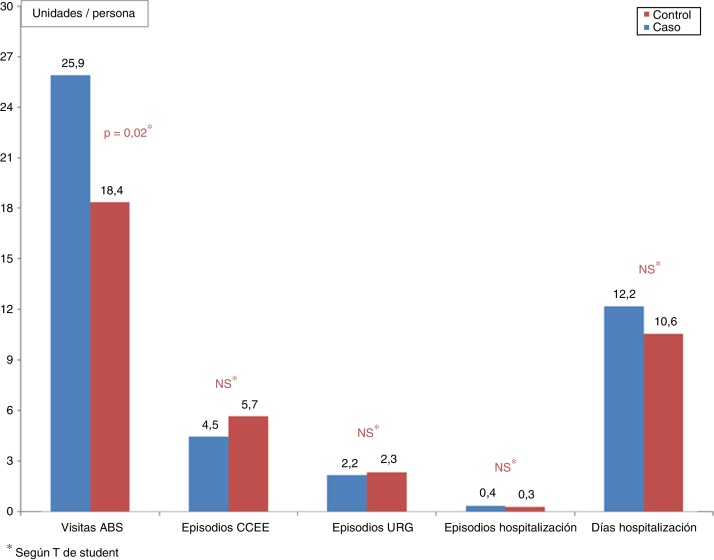
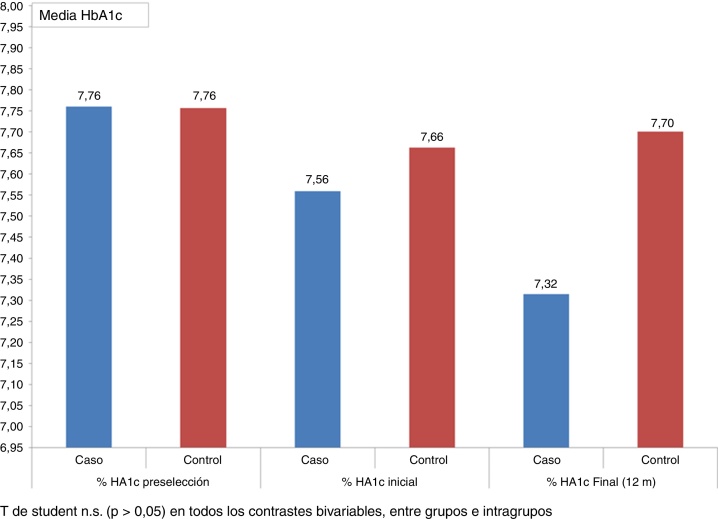
Reduction of 0.38% in HbA1c in the cases (95% CI:-0.89% to 0.12%). No significant differences with regard to any of the activities registered, or any significant change in the quality of life.
The results obtained are similar to other equivalent studies. The profile of the patient is elderly and with multiple morbidities, who still have technological limitations. To surpass these barriers, it would be necessary to devote more time to the training and to the resolution of possible technological problems.
评估纳入糖尿病综合管理项目的接受胰岛素治疗且进行血糖自我监测的2型糖尿病患者(DIA),在接受12个月随访后,与传统支持方式相比,远程医疗支持是否能使他们达到更好的代谢控制水平。同时评估其对医疗服务使用和成本、药物支出以及血糖测试条消耗的影响。
一项前瞻性平行队列研究。
一个综合医疗保健机构的四个基本健康区域。
该研究纳入了126名年龄在15岁及以上、接受速效或中效胰岛素治疗且进行血糖自我监测的DIA患者,分为42例病例组和84例对照组,根据年龄、性别、代谢控制水平和发病情况进行匹配。
通过Emminens eConecta平台进行远程医患沟通并下载血糖自我监测数据;根据消耗量将测试条送货上门。对照组采用常规随访。
糖化血红蛋白(%HbA1c);生活质量感知(欧洲五维度健康量表和糖尿病特异性生活质量量表);心血管风险;医疗资源使用情况;测试条消耗量;药物和医疗支出。
病例组HbA1c降低了0.38%(95%置信区间:-0.89%至0.12%)。在记录的任何活动方面均无显著差异,生活质量也无显著变化。
获得的结果与其他同类研究相似。患者群体为老年人且患有多种疾病,仍存在技术限制。为克服这些障碍,有必要投入更多时间进行培训并解决可能出现的技术问题。