Inoriza José M, Pérez Marc, Cols Montse, Sánchez Inma, Carreras Marc, Coderch Jordi
Avaluació i Recerca, Serveis de Salut Integrats Baix Empordà, Palamós, Girona, España; Grup de Recerca en Serveis Sanitaris i Resultats en Salut (GRESSiRES), España.
Aten Primaria. 2013 Nov;45(9):461-75. doi: 10.1016/j.aprim.2013.04.007. Epub 2013 Jul 3.
To describe the characteristics of a diabetic population, morbidity profile, resource consumption, complications and degree of metabolic control.
Cross-sectional study during 2010.
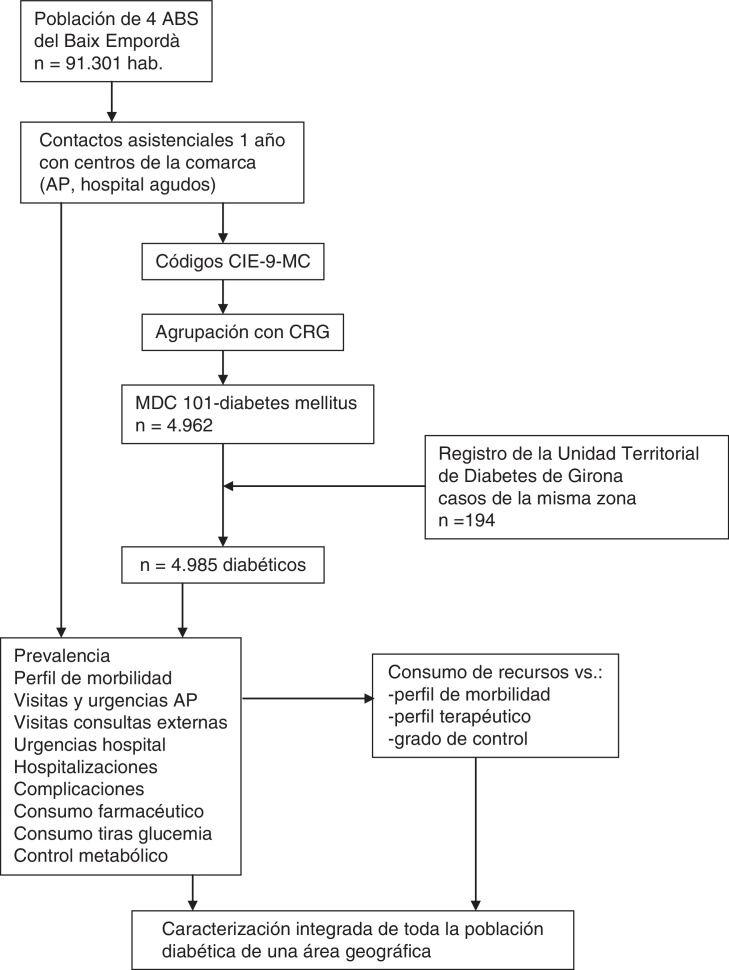
Four Health Areas (91.301 people) where the integrated management organization Serveis de Salut integrated Baix Empordà completely provide healthcare assistance.
4.985 diabetic individuals, identified through clinical codes using the ICD-9-MC classification and the 3M? Clinical Risk Groups software.
Morbidity profile, related complications and degree of metabolic control were obtained for the target diabetic population. We analyzed the consumption of healthcare resources, pharmaceutical and blood glucose reagent strips. All measurements obtained at individual level.
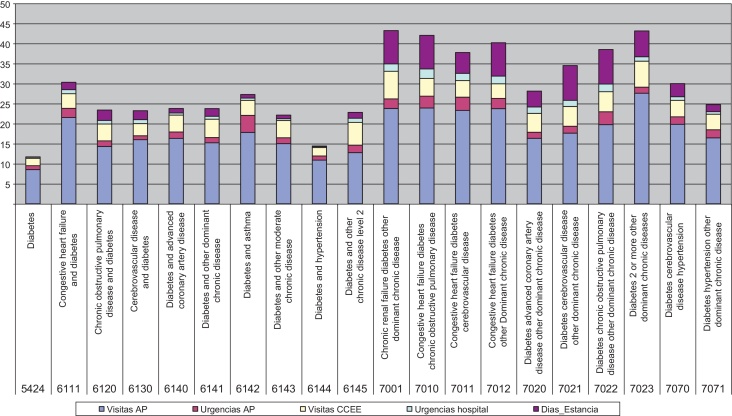
99.3% of the diabetic population were attended at least once at a primary care center (14.9% of visits). 39.5% of primary care visits and less than 10% of the other scanned resources were related to the management of diabetes. The pharmaceutical expenditure was 25.4% of the population consumption (average cost ?1.014,57). 36.5% of diabetics consumed reagents strips (average cost ?120,65). The more frequent CRG are 5424-Diabetes (27%); 6144-Diabetes and Hypertension (25,5%) and 6143-Diabetes and Other Moderate Chronic Disease (17,2%). The degree of disease control is better in patients not consumers of antidiabetic drugs or treated with oral antidiabetic agents not secretagogues.
Comorbidity is decisive in the consumption of resources. Just a few part of this consumption is specifically related to the management of diabetes. Results obtained provide a whole population approach to the main existing studies in our national and regional context.
描述糖尿病患者群体的特征、发病情况、资源消耗、并发症及代谢控制程度。
2010年的横断面研究。
四个健康区域(91301人),综合管理机构塞尔维斯拉特完全提供医疗援助的下恩波达地区。
4985名糖尿病患者,通过使用ICD-9-MC分类和3M临床风险组软件的临床编码识别。
获取目标糖尿病患者群体的发病情况、相关并发症及代谢控制程度。我们分析了医疗资源、药品和血糖试纸条的消耗情况。所有测量均在个体层面进行。
99.3%的糖尿病患者至少在初级保健中心就诊过一次(占就诊次数的14.9%)。39.5%的初级保健就诊以及不到10%的其他筛查资源与糖尿病管理有关。药品支出占人群消费的25.4%(平均成本1014.57欧元)。36.5%的糖尿病患者使用试纸条(平均成本120.65欧元)。最常见的临床风险组是5424 - 糖尿病(27%);6144 - 糖尿病和高血压(25.5%)以及6143 - 糖尿病和其他中度慢性病(17.2%)。未使用抗糖尿病药物或使用非促分泌剂口服抗糖尿病药物治疗的患者疾病控制程度更好。
合并症在资源消耗中起决定性作用。这种消耗中只有一小部分与糖尿病管理具体相关。所获得的结果为我们国家和地区背景下现有的主要研究提供了一种全人群方法。