Liu Yuan-Fang, Wang Bai-Yan, Zhang Wei-Na, Huang Jin-Yan, Li Ben-Shang, Zhang Ming, Jiang Lu, Li Jian-Feng, Wang Ming-Jie, Dai Yu-Jun, Zhang Zi-Guan, Wang Qiang, Kong Jie, Chen Bing, Zhu Yong-Mei, Weng Xiang-Qin, Shen Zhi-Xiang, Li Jun-Min, Wang Jin, Yan Xiao-Jing, Li Yan, Liang Ying-Min, Liu Li, Chen Xie-Qun, Zhang Wang-Gang, Yan Jin-Song, Hu Jian-Da, Shen Shu-Hong, Chen Jing, Gu Long-Jun, Pei Deqing, Li Yongjin, Wu Gang, Zhou Xin, Ren Rui-Bao, Cheng Cheng, Yang Jun J, Wang Kan-Kan, Wang Sheng-Yue, Zhang Jinghui, Mi Jian-Qing, Pui Ching-Hon, Tang Jing-Yan, Chen Zhu, Chen Sai-Juan
State Key Laboratory of Medical Genomics, Shanghai Institute of Hematology, Rui Jin Hospital Affiliated to Shanghai Jiao Tong University School of Medicine, 197 Rui Jin Road II, Shanghai 200025, China.
State Key Laboratory of Medical Genomics, Shanghai Institute of Hematology, Rui Jin Hospital Affiliated to Shanghai Jiao Tong University School of Medicine, 197 Rui Jin Road II, Shanghai 200025, China; Department of Hematology, The Second Affiliated Hospital of Xi'an Jiaotong University School of Medicine, Xi'an, Shaan Xi 710004, China.
EBioMedicine. 2016 Jun;8:173-183. doi: 10.1016/j.ebiom.2016.04.038. Epub 2016 May 13.
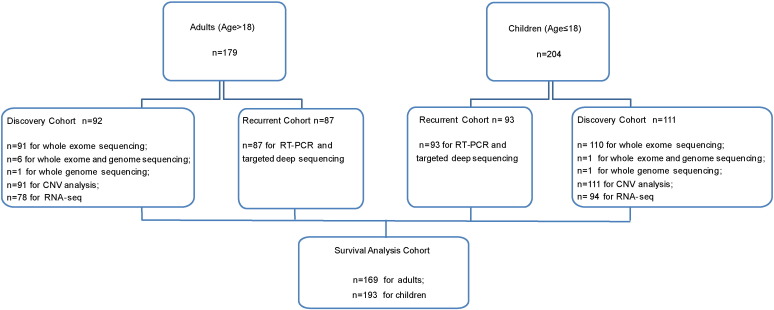
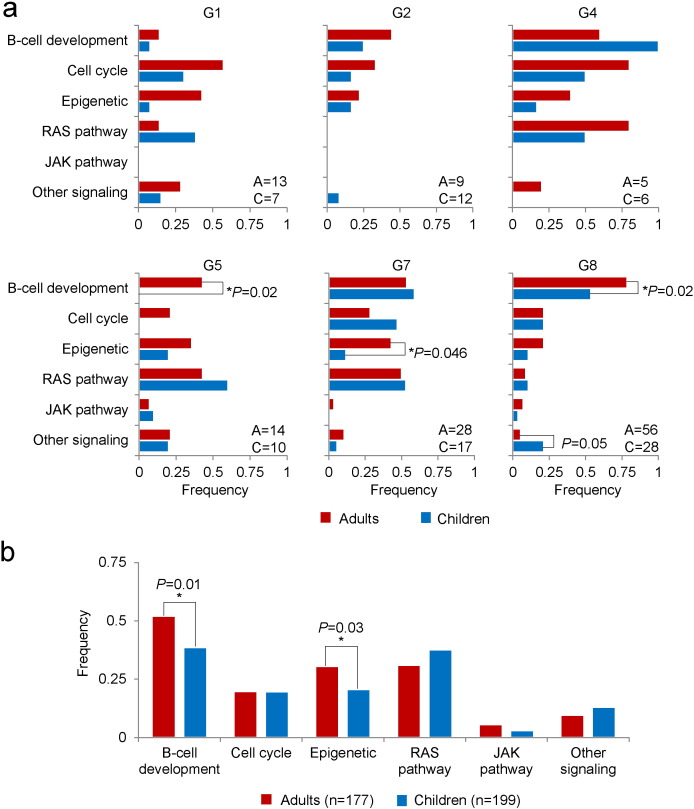
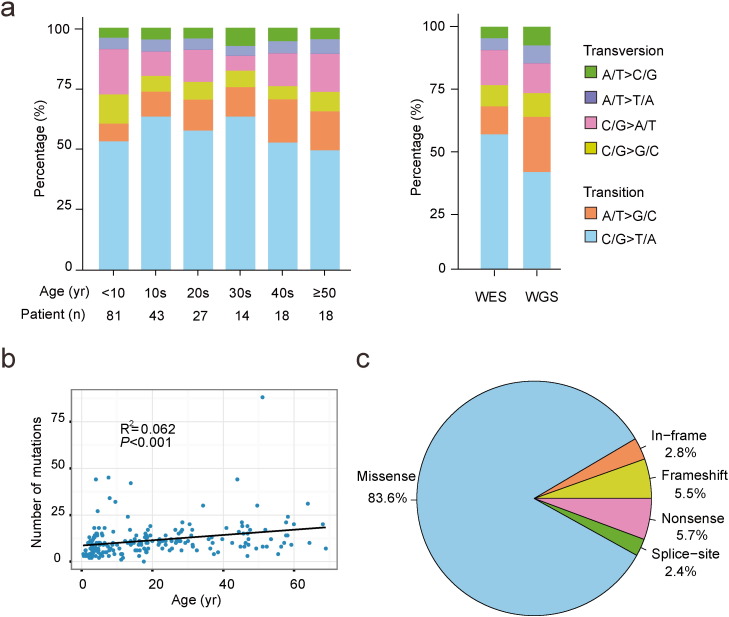
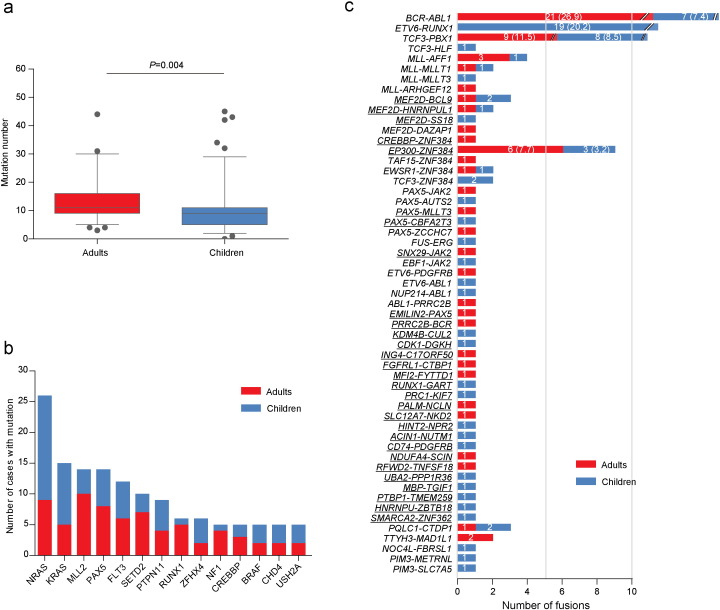
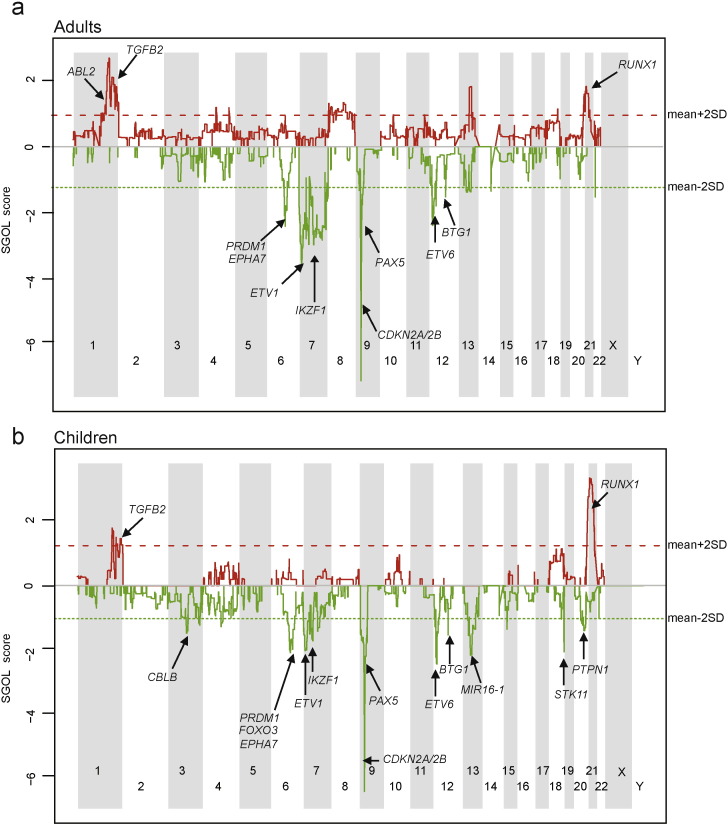
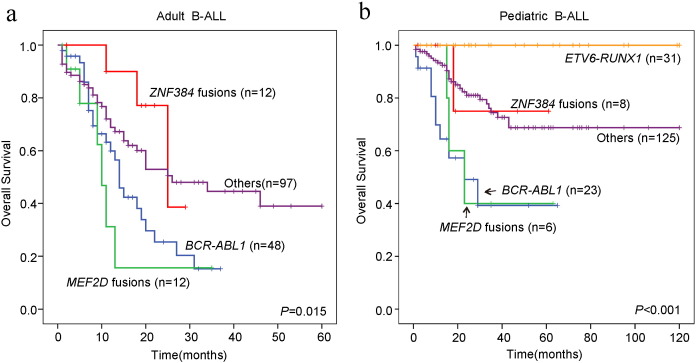
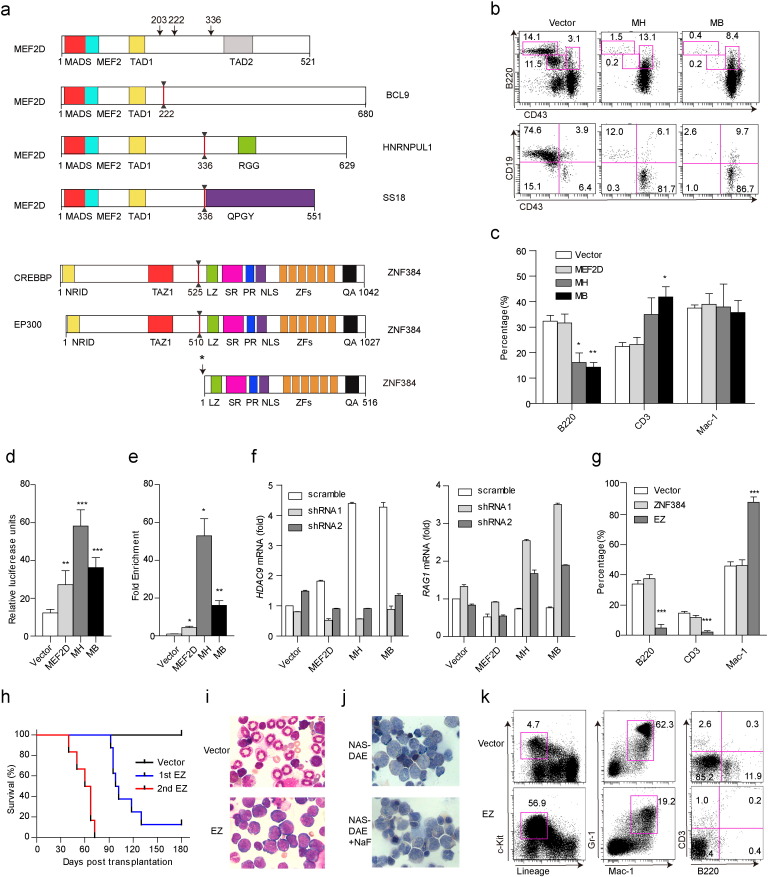
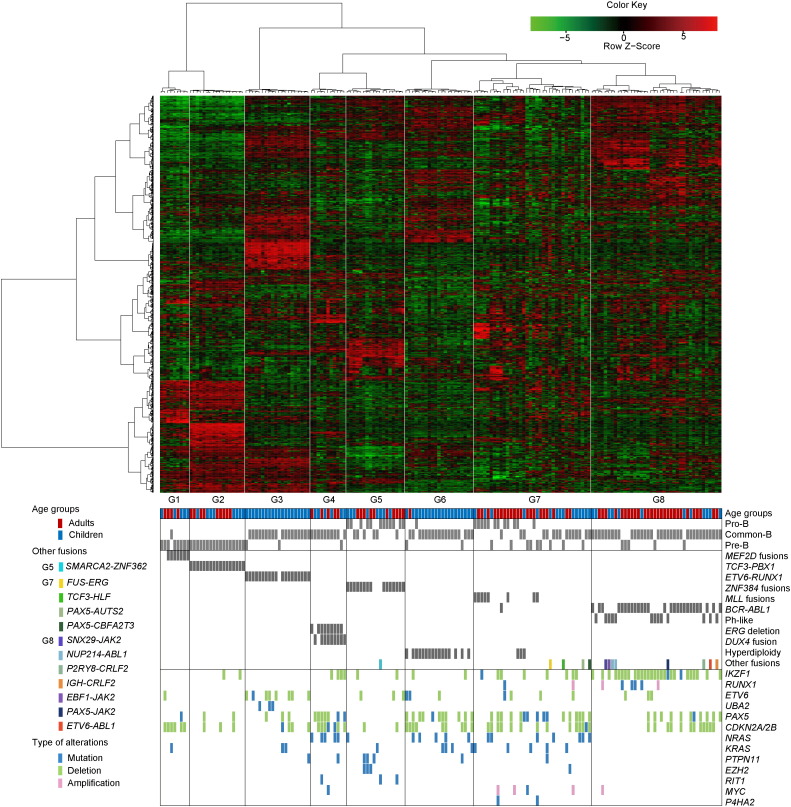
Genomic landscapes of 92 adult and 111 pediatric patients with B-cell acute lymphoblastic leukemia (B-ALL) were investigated using next-generation sequencing and copy number alteration analysis. Recurrent gene mutations and fusions were tested in an additional 87 adult and 93 pediatric patients. Among the 29 newly identified in-frame gene fusions, those involving MEF2D and ZNF384 were clinically relevant and were demonstrated to perturb B-cell differentiation, with EP300-ZNF384 inducing leukemia in mice. Eight gene expression subgroups associated with characteristic genetic abnormalities were identified, including leukemia with MEF2D and ZNF384 fusions in two distinct clusters. In subgroup G4 which was characterized by ERG deletion, DUX4-IGH fusion was detected in most cases. This comprehensive dataset allowed us to compare the features of molecular pathogenesis between adult and pediatric B-ALL and to identify signatures possibly related to the inferior outcome of adults to that of children. We found that, besides the known discrepancies in frequencies of prognostic markers, adult patients had more cooperative mutations and greater enrichment for alterations of epigenetic modifiers and genes linked to B-cell development, suggesting difference in the target cells of transformation between adult and pediatric patients and may explain in part the disparity in their responses to treatment.
使用下一代测序和拷贝数改变分析,对92例成年和111例儿童B细胞急性淋巴细胞白血病(B-ALL)患者的基因组图谱进行了研究。在另外87例成年和93例儿童患者中检测了复发性基因突变和融合。在29个新发现的框内基因融合中,涉及MEF2D和ZNF384的那些具有临床相关性,并被证明会干扰B细胞分化,其中EP300-ZNF384在小鼠中诱导白血病。鉴定出了与特征性遗传异常相关的八个基因表达亚组,包括在两个不同簇中具有MEF2D和ZNF384融合的白血病。在以ERG缺失为特征的G4亚组中,大多数病例检测到DUX4-IGH融合。这个全面的数据集使我们能够比较成人和儿童B-ALL分子发病机制的特征,并确定可能与成人比儿童预后较差相关的特征。我们发现,除了预后标志物频率方面已知的差异外,成年患者有更多协同突变,并且表观遗传修饰因子和与B细胞发育相关基因的改变更富集,这表明成人和儿童患者转化的靶细胞存在差异,并且可能部分解释了他们对治疗反应的差异。