Department of Ecology and Evolution, University of Chicago, 1101 East 57th Street, Chicago, Illinois 60637, USA.
Nat Plants. 2016 Jul 18;2:16110. doi: 10.1038/nplants.2016.110.
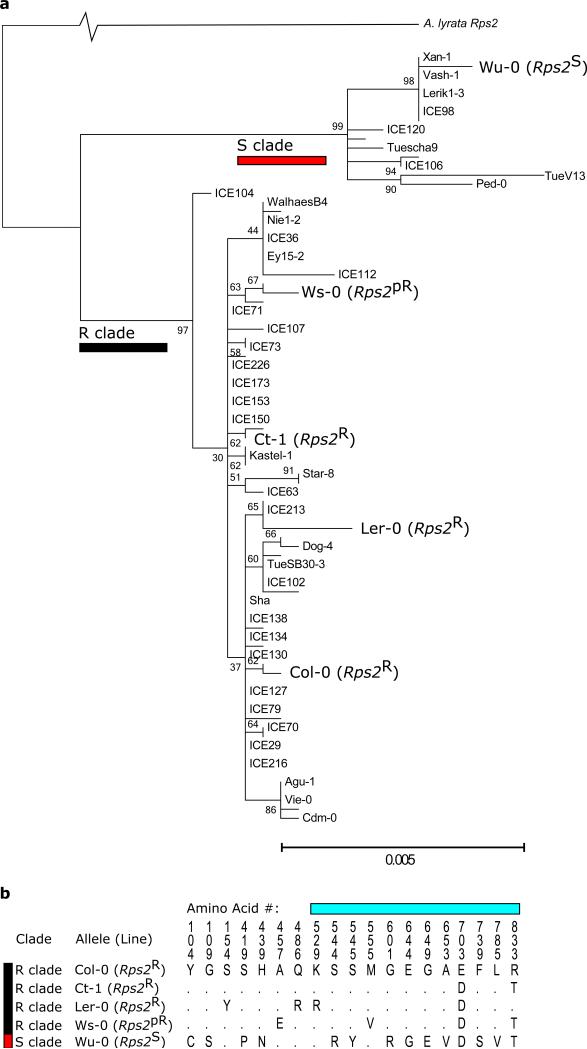
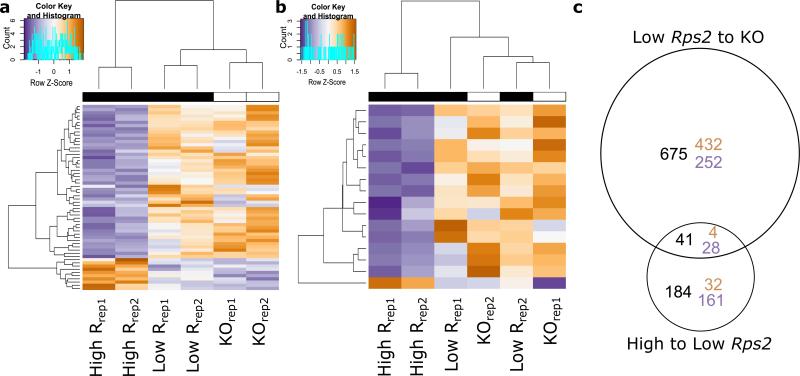
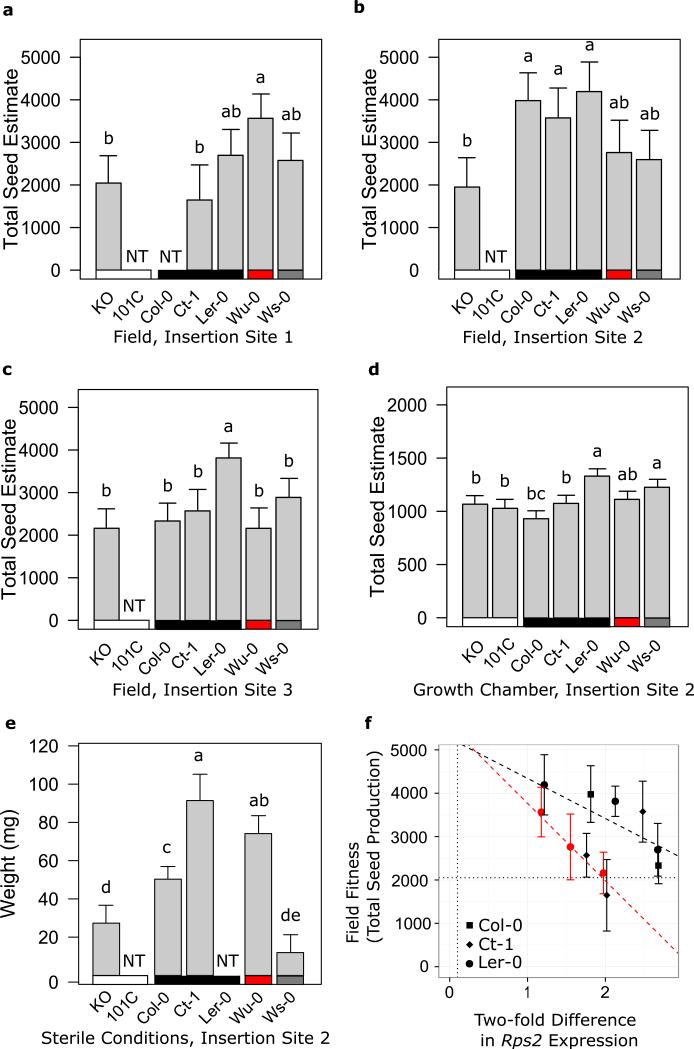
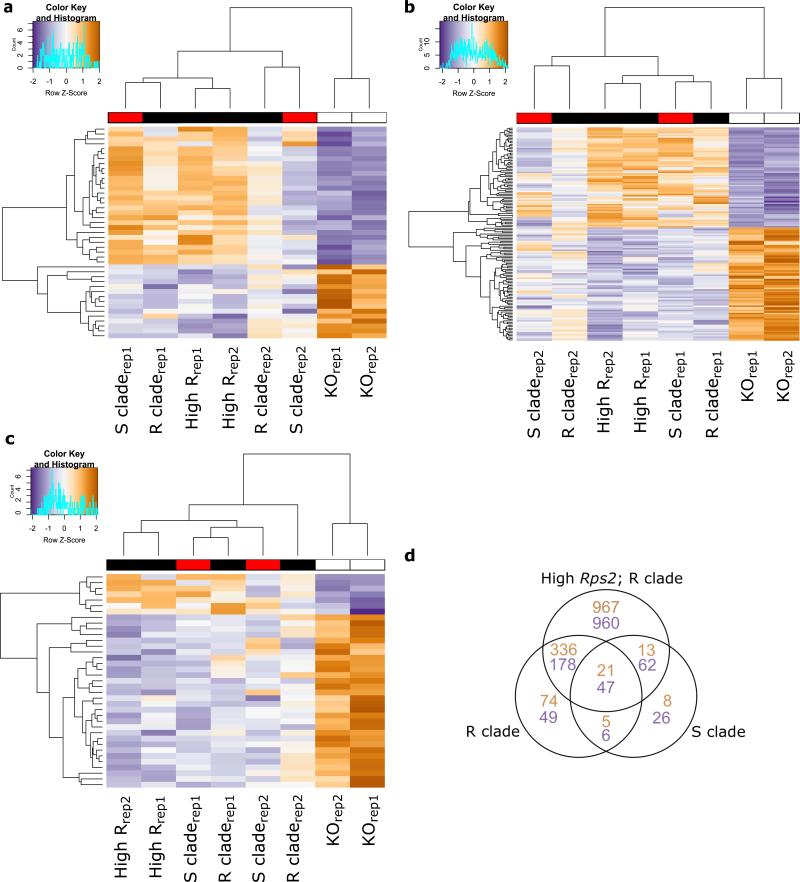
The mounting evidence that R genes incur large fitness costs raises a question: how can there be a 5-10% fitness reduction for all 149 R genes in the Arabidopsis thaliana genome? The R genes tested to date segregate for insertion-deletion (indel) polymorphisms where susceptible alleles are complete deletions. Since costs of resistance are measured as the differential fitness of isolines carrying resistant and susceptible alleles, indels reveal costs that may be masked when susceptible alleles are expressed. Rps2 segregates for two expressed clades of alleles, one resistant and one susceptible. Plants with resistant Rps2 are not less fit than those with a susceptible Rps2 allele in the absence of disease. Instead, all alleles provide a fitness benefit relative to an artificial deletion because of the role of RPS2 as a negative regulator of defence. Our results highlight the interplay between genomic architecture and the magnitude of costs of resistance.
越来越多的证据表明 R 基因会带来较大的适应代价,这就产生了一个问题:在拟南芥基因组的 149 个 R 基因中,怎么可能会有 5-10%的适应代价降低?迄今为止,所测试的 R 基因在插入缺失(indel)多态性中分离,其中易感等位基因是完全缺失。由于抗性的代价被衡量为携带抗性和易感等位基因的近等系的差异适应度,因此当易感等位基因表达时,indel 揭示了可能被掩盖的代价。Rps2 分离出两个表达的等位基因簇,一个是抗性的,一个是易感的。在没有疾病的情况下,具有抗性 Rps2 的植物与具有易感 Rps2 等位基因的植物的适应度没有降低。相反,由于 RPS2 作为防御的负调节剂的作用,所有等位基因相对于人工缺失都提供了适应度上的好处。我们的结果强调了基因组结构和抗性代价大小之间的相互作用。