Karlsson Green Kristina, Stenberg Johan A, Lankinen Åsa
Department of Plant Protection Biology Swedish University of Agricultural Sciences Alnarp Sweden.
Evol Appl. 2020 Aug 20;13(8):1791-1805. doi: 10.1111/eva.13067. eCollection 2020 Sep.
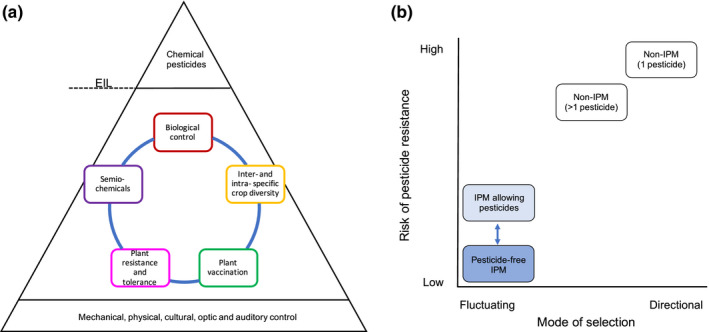
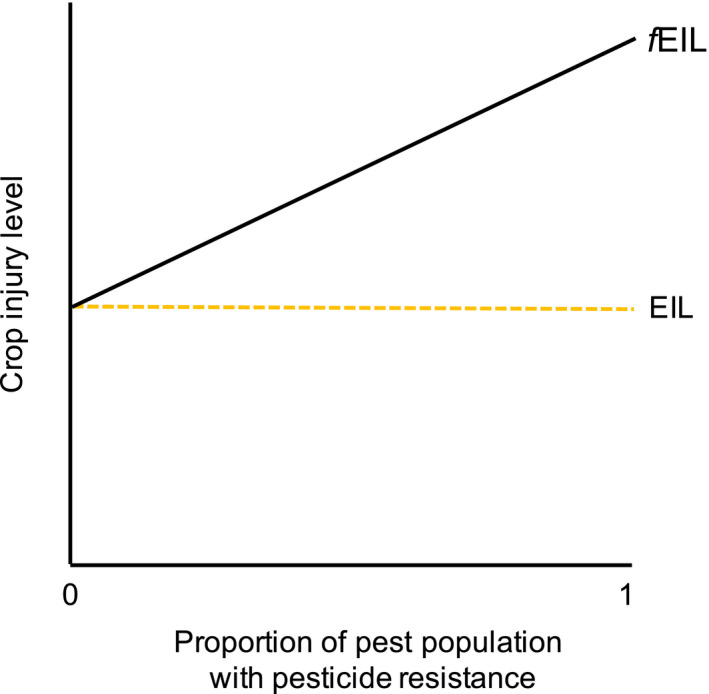
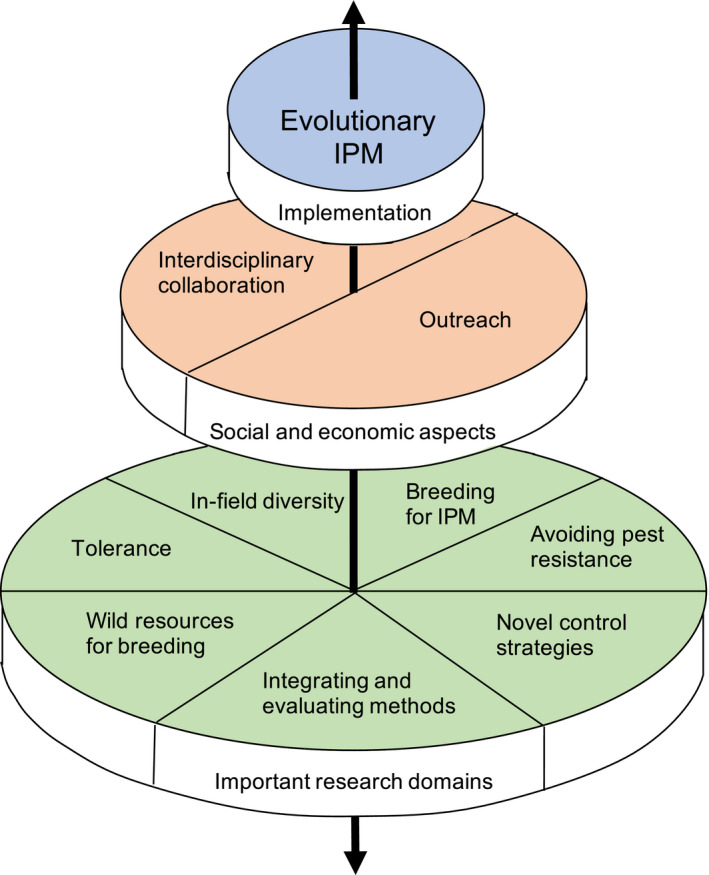
Integrated Pest Management (IPM) is a holistic approach to combat pests (including herbivores, pathogens, and weeds) using a combination of preventive and curative actions, and only applying synthetic pesticides when there is an urgent need. Just as the recent recognition that an evolutionary perspective is useful in medicine to understand and predict interactions between hosts, diseases, and medical treatments, we argue that it is crucial to integrate an evolutionary framework in IPM to develop efficient and reliable crop protection strategies that do not lead to resistance development in herbivores, pathogens, and weeds. Such a framework would not only delay resistance evolution in pests, but also optimize each element of the management and increase the synergies between them. Here, we outline key areas within IPM that would especially benefit from a thorough evolutionary understanding. In addition, we discuss the difficulties and advantages of enhancing communication among research communities rooted in different biological disciplines and between researchers and society. Furthermore, we present suggestions that could advance implementation of evolutionary principles in IPM and thus contribute to the development of sustainable agriculture that is resilient to current and emerging pests.
综合虫害管理(IPM)是一种全面的方法,用于防治害虫(包括食草动物、病原体和杂草),它结合了预防和治疗措施,并且仅在紧急情况下才使用合成农药。正如最近人们认识到进化视角在医学中有助于理解和预测宿主、疾病及医学治疗之间的相互作用一样,我们认为在综合虫害管理中纳入进化框架对于制定高效且可靠的作物保护策略至关重要,这些策略不会导致食草动物、病原体和杂草产生抗性。这样一个框架不仅会延缓害虫抗性的进化,还会优化管理的各个要素并增强它们之间的协同作用。在此,我们概述了综合虫害管理中特别受益于深入进化理解的关键领域。此外,我们讨论了加强植根于不同生物学学科的研究群体之间以及研究人员与社会之间沟通的困难和优势。此外,我们提出了一些建议,这些建议可以推动进化原则在综合虫害管理中的实施,从而有助于发展对当前和新出现的害虫具有抗性的可持续农业。