Zhang Xiaotian, Su Jianzhong, Jeong Mira, Ko Myunggon, Huang Yun, Park Hyun Jung, Guzman Anna, Lei Yong, Huang Yung-Hsin, Rao Anjana, Li Wei, Goodell Margaret A
Stem Cells and Regenerative Medicine Center, Baylor College of Medicine, Houston, Texas, USA.
Center for Cell and Gene Therapy, Baylor College of Medicine, Houston, Texas, USA.
Nat Genet. 2016 Sep;48(9):1014-23. doi: 10.1038/ng.3610. Epub 2016 Jul 18.
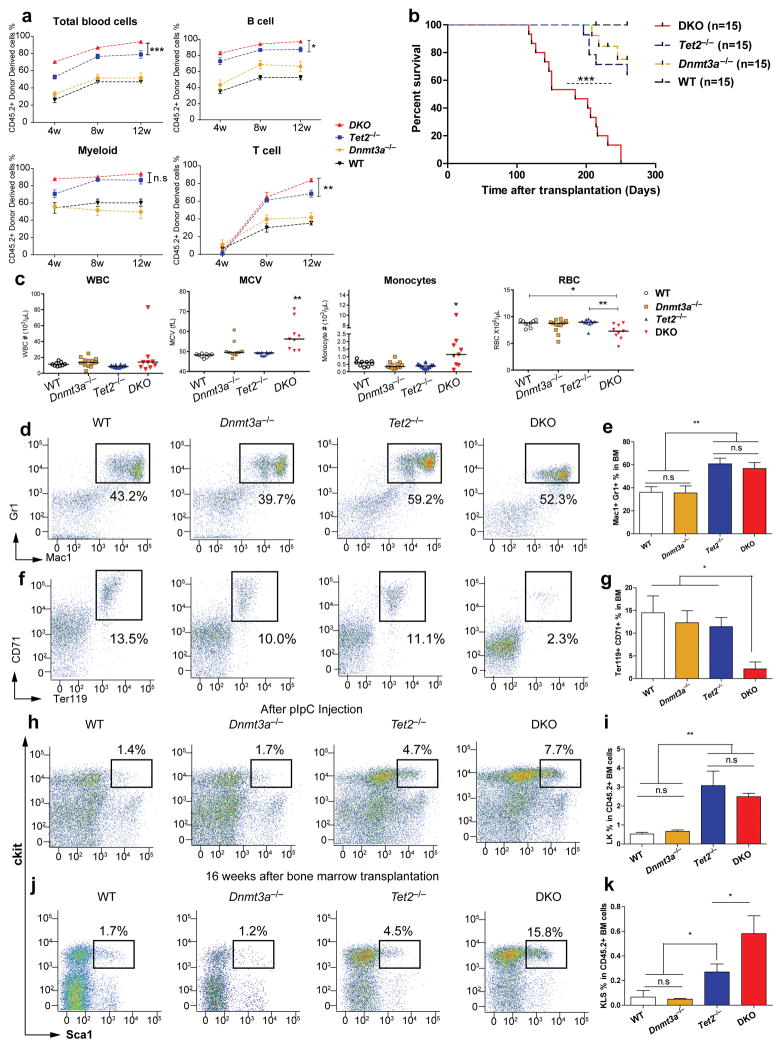
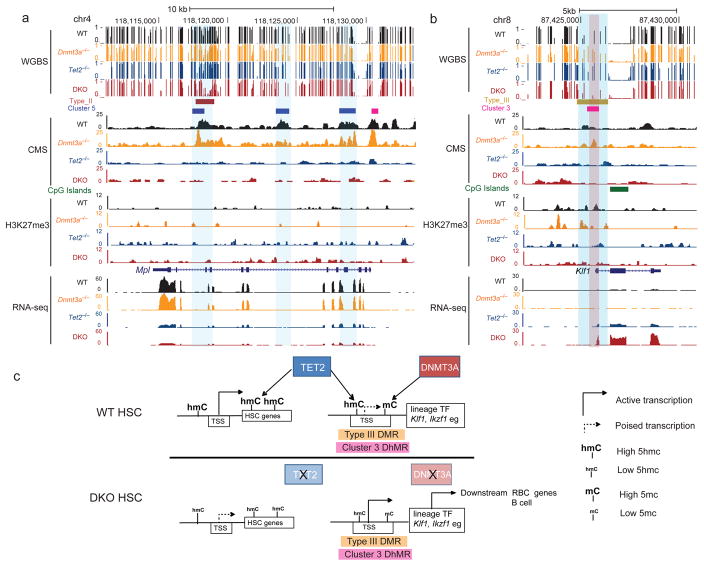
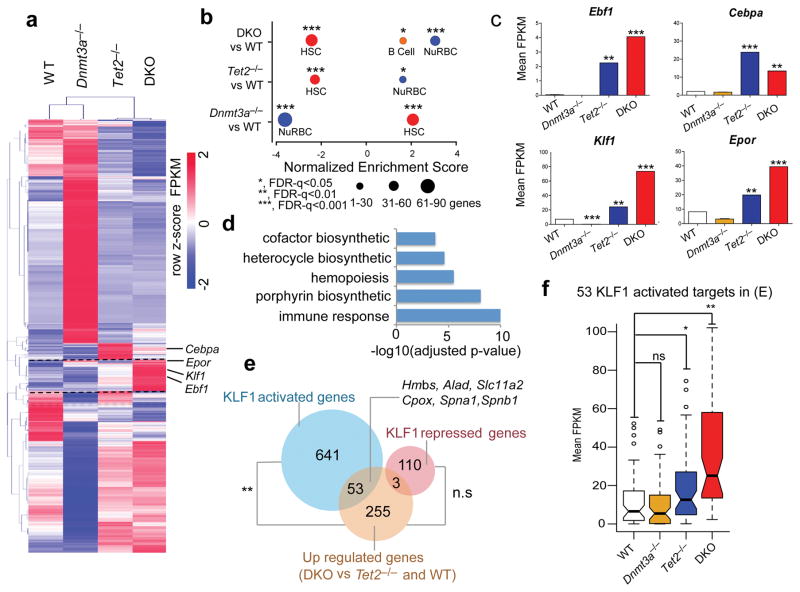
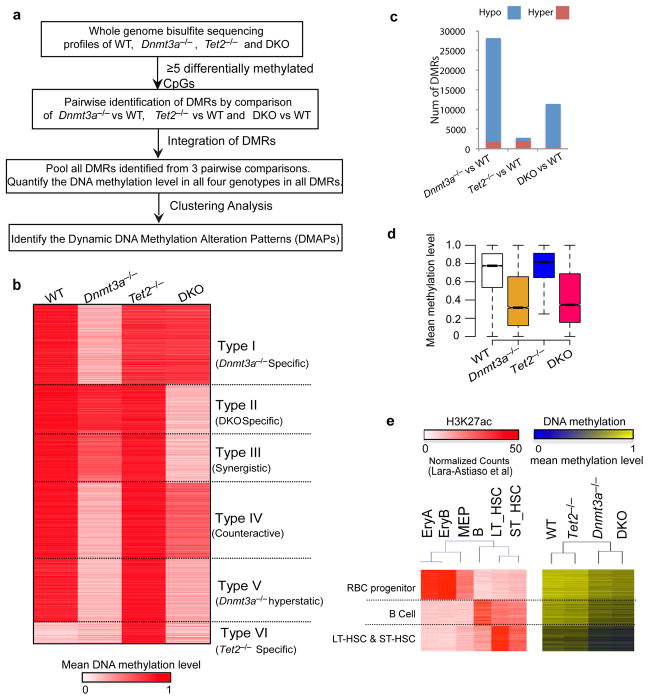
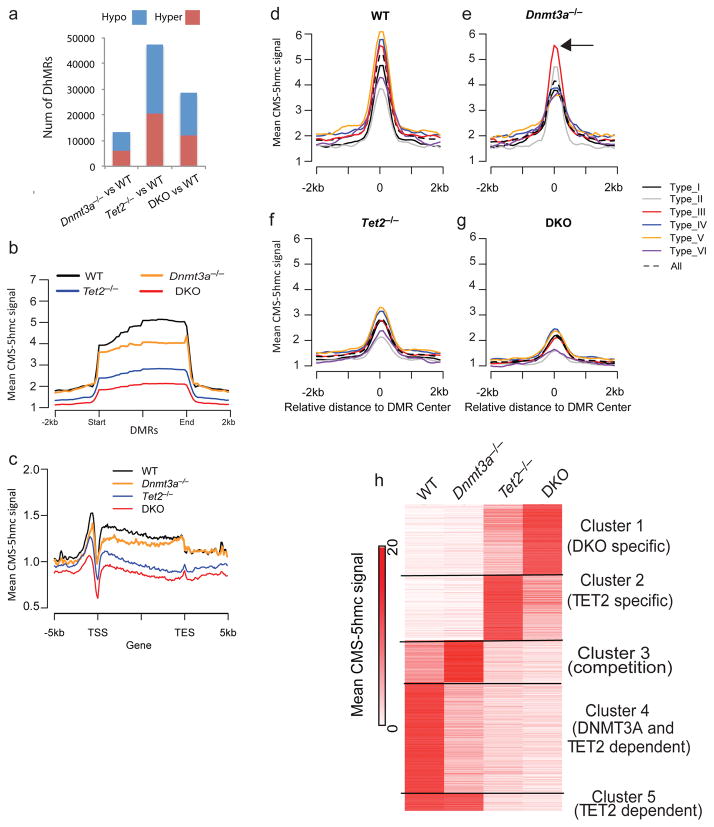
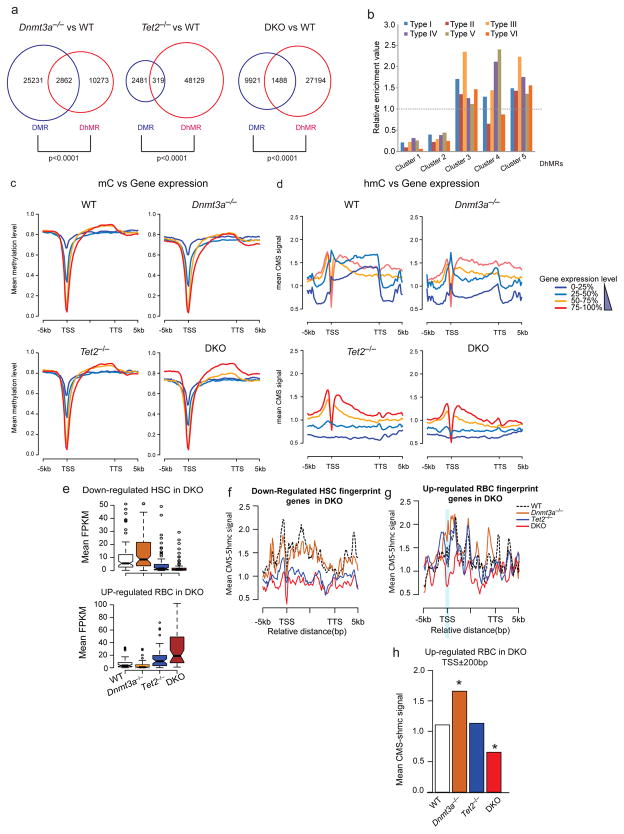
Mutations in the epigenetic modifiers DNMT3A and TET2 non-randomly co-occur in lymphoma and leukemia despite their epistasis in the methylation-hydroxymethylation pathway. Using Dnmt3a and Tet2 double-knockout mice in which the development of malignancy is accelerated, we show that the double-knockout methylome reflects regions of independent, competitive and cooperative activity. Expression of lineage-specific transcription factors, including the erythroid regulators Klf1 and Epor, is upregulated in double-knockout hematopoietic stem cells (HSCs). DNMT3A and TET2 both repress Klf1, suggesting a model of cooperative inhibition by epigenetic modifiers. These data demonstrate a dual role for TET2 in promoting and inhibiting HSC differentiation, the loss of which, along with DNMT3A, obstructs differentiation, leading to transformation.
尽管表观遗传修饰因子DNMT3A和TET2在甲基化-羟甲基化途径中存在上位性,但它们的突变在淋巴瘤和白血病中并非随机共发生。利用Dnmt3a和Tet2双敲除小鼠(其恶性肿瘤发展加速),我们发现双敲除甲基化组反映了独立、竞争和协同活性区域。包括红系调节因子Klf1和Epor在内的谱系特异性转录因子的表达在双敲除造血干细胞(HSC)中上调。DNMT3A和TET2均抑制Klf1,提示表观遗传修饰因子协同抑制模型。这些数据证明TET2在促进和抑制HSC分化中具有双重作用,其与DNMT3A一起缺失会阻碍分化,导致细胞转化。